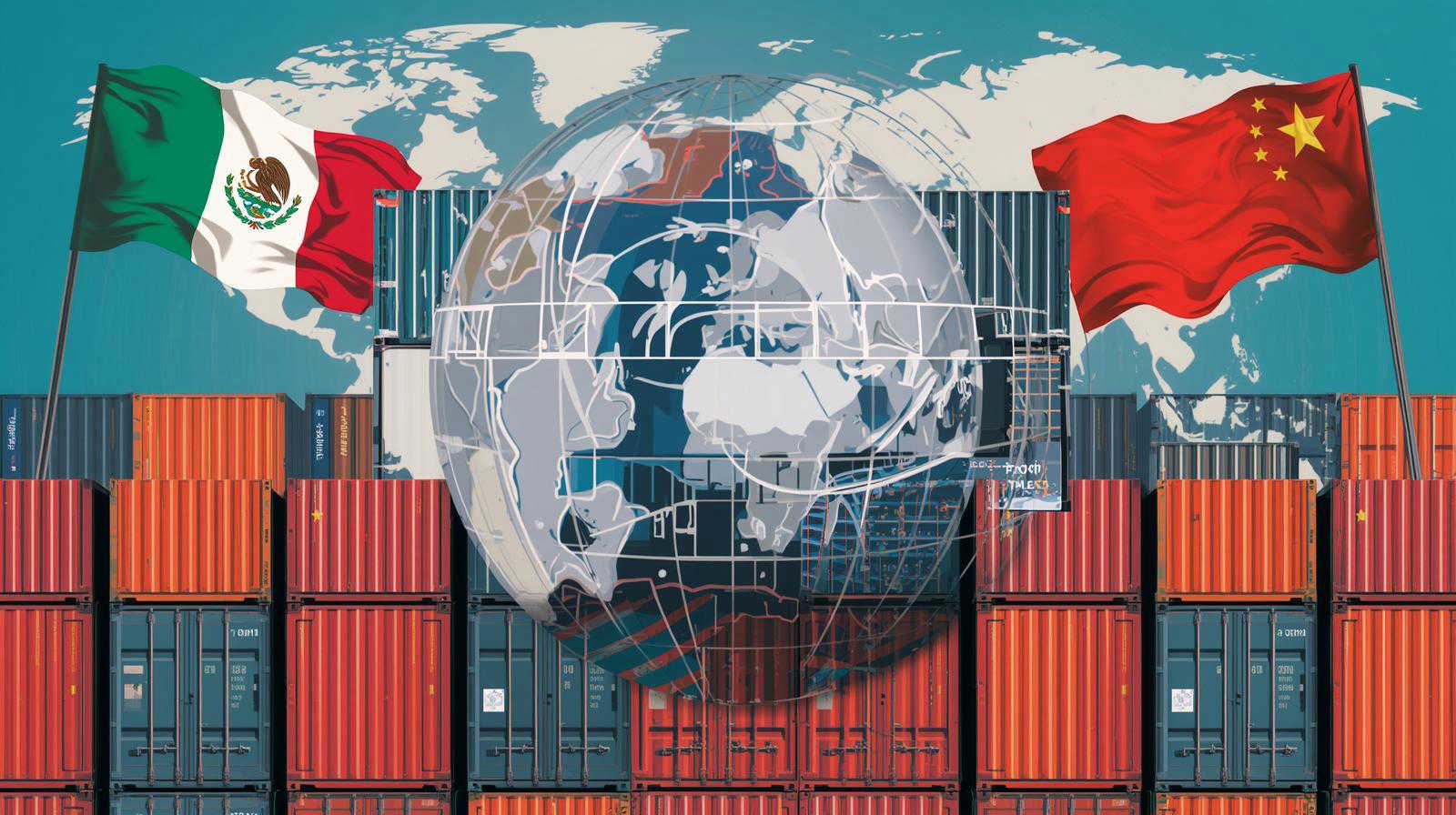
Mexico has approved sweeping new import tariffs of up to 50% on goods from Asian countries that do not have trade agreements with it, including India and China. The move marks one of Mexico’s most significant shifts in trade policy in decades.
According to a Bloomberg report, Mexico’s Senate passed the tariff bill on Wednesday with 76 votes in favour, five against, and 35 abstentions. The new duties ranging between 5% and 50% will apply to more than 1,400 products, including textiles, metals and auto components, starting next year.
A move showing US pressure on China
Bloomberg reported that the tariffs were approved while President Claudia Sheinbaum holds high-stakes trade discussions with US President Donald Trump. Although Sheinbaum publicly denied coordinating the policy with Washington, Bloomberg noted that the tariff structure closely resembles the United States’ push to tighten barriers on Chinese exports.
Mexico’s finance ministry, as cited by Bloomberg, expects the tariffs to generate 52 billion pesos (USD 2.8 billion) in additional revenue next year.
Business lobbies and Asian governments had opposed the measure, Bloomberg said, warning that higher import costs on goods from China, India, South Korea and others could raise manufacturing expenses and fuel inflation.
Auto sector faces steepest duties
Bloomberg reported that Chinese cars will face the highest tariff at 50%. China currently holds 20% of Mexico’s automobile market, a sharp rise from minimal imports six years ago. Local auto associations backed the higher duties to safeguard domestic vehicle manufacturing, which remains central to Mexico’s industrial output.
Chinese officials have criticised the new levies, calling them unwarranted and potentially harmful to bilateral ties, according to Bloomberg.
A shift from Mexico’s long history of free trade
Bloomberg pointed out that Mexico has long been one of the most trade-open countries in the Americas, with numerous free trade agreements across the globe. Sheinbaum’s Morena party is now steering policy in a more protectionist direction, marking a departure from decades of openness.
The approved bill also gives Mexico’s Economy Ministry the authority to modify import levies as needed. This flexibility will be crucial as Mexico prepares for next year’s USMCA review with the US and Canada.
Officials told Bloomberg that the mechanism will help ensure supplies of essential imports while keeping prices competitive, even as Mexico faces increased pressure to curb the “transshipment” of Chinese goods into North America.