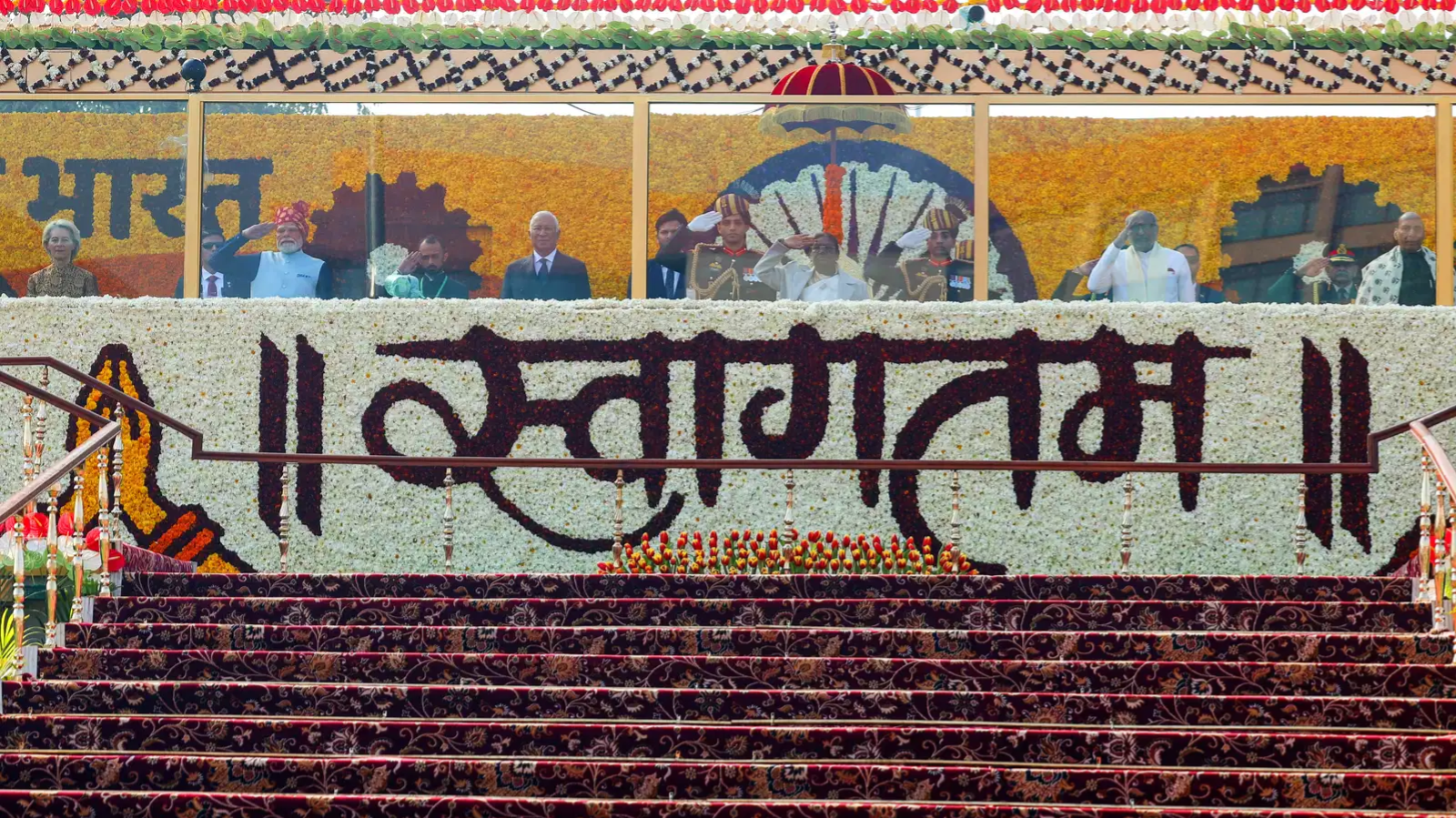
On January 26, India celebrated its 77th Republic Day with flag ceremonies, parades, and formal events honoring the 1950 Constitution's adoption. While the celebrations are widespread, the rules governing the Indian national flag and the timings of the Republic Day ceremony follow a strict protocol laid down by the government.
This year’s celebrations assume added significance with the President of the European Union attending as the chief guest, coinciding with the India–EU summit, according to official announcements.
Republic Day flag ceremony: Timings and sequence
The main Republic Day event takes place at Kartavya Path, New Delhi, beginning at 9:00 am, after the arrival of the President of India, the Prime Minister and other dignitaries. Entry for spectators typically starts in the early hours of the morning, with many attendees reaching the venue by 5:00 am.
Also Read | Padma Awards 2026 announced: 113 honoured with Padma Shri ahead of Republic Day
On Republic Day, the President of India unfurls the national flag, not hoists it. The unfurling usually takes place between 9:00 am and 10:30 am, followed by the playing of the national anthem, Jana Gana Mana. A 21-gun salute by the Indian Army Regiment of Artillery takes place after which a parade featuring the armed forces, state tableaux and cultural performances.
Across states, districts, schools and institutions, flag ceremonies are typically held between 8:00 am and 11:00 am, in line with local administration guidelines.
What is the difference between flag unfurling and hoisting
The distinction between flag unfurling and flag hoisting is central to Republic Day protocol.
On Republic Day (January 26), the flag is unfurled. It is already tied at the top of the flagpole and opened out ceremonially and on Independence Day (August 15), the flag is hoisted, meaning it is raised from the bottom of the pole.
This difference symbolises India’s status as a sovereign republic governed by its Constitution, rather than the moment of freedom from colonial rule.
Rules for hoisting and displaying the national flag
As per the Flag Code of India, the following rules apply on Republic Day:
The flag must be rectangular, with the correct saffron, white and green proportions and the navy-blue Ashoka Chakra in the centre.
The Tricolour must be hoisted or unfurled briskly and lowered slowly and with dignity.
It must not touch the ground, water or floor at any point.
The flag must not be used as drapery, decoration, clothing or table cover.
When displayed at night, the flag must be properly illuminated.
The national anthem must be played during official ceremonies, and all present must stand in attention.
Government offices, schools and institutions are expected to strictly follow these guidelines.
Conduct during flag ceremonies
There is no mandatory dress code for the public, but citizens are encouraged to wear decent and respectful attire, often in traditional clothing or national colours.
During the ceremony:
Stand respectfully during the national anthem
Avoid mobile phone use
Follow instructions issued by organisers or local authorities
Security restrictions apply at major venues such as Kartavya Path, where prohibited items are not allowed.
Also Read | Who are this year's chief guests at India’s 77th Republic Day?
Why the rules matter
Republic Day ceremonies are governed by protocol to reflect the constitutional values of discipline, unity and respect for national symbols. Adhering to flag etiquette and prescribed timings is considered essential to preserving the dignity of the occasion.