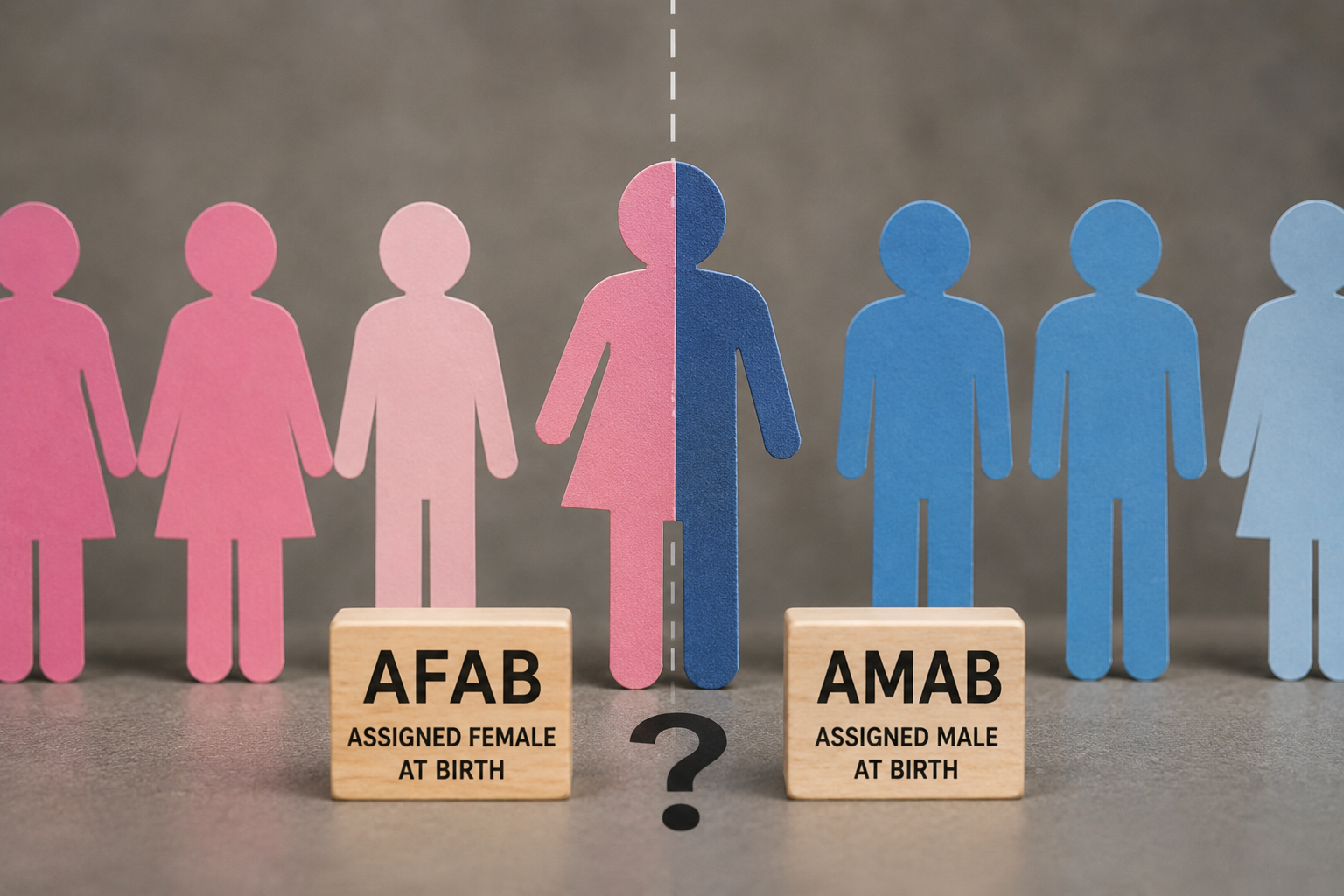
As conversations around gender identity continue to evolve, terms such as AFAB and AMAB are becoming increasingly common in both LGBTQ+ communities and mainstream discussions. While many people may have encountered the acronyms online or in conversations about gender, their meaning is often misunderstood.
Experts say the terms help distinguish between a person's assigned sex at birth and their gender identity, offering a more precise way to discuss gender experiences.
What do AFAB and AMAB mean?
AFAB stands for "Assigned Female At Birth," while AMAB means "Assigned Male At Birth." The terms refer to the sex designation given to a child at birth, typically based on physical characteristics observed by medical professionals. According to sex educator and author Lucie Fielding, the emphasis is on the act of assignment rather than identity itself.
Also Read | The ‘situationswitch’ may explain why situationship breakups sting
"When we talk about assigned female or assigned male at birth, the focus is on the assignment — the fact that something is being assigned to you," Fielding explained in comments published by Cosmopolitan.
The terminology is increasingly used because it separates biological sex assignment from an individual's lived gender identity or gender expression.
Why are the terms being used more frequently?
Experts say AFAB and AMAB have gradually replaced older terms such as FTM (female-to-male) and MTF (male-to-female) in many gender-diverse spaces.
Fielding noted that older labels could imply that a person's gender once aligned with the sex assigned at birth, which may not reflect everyone's experience.
Relationship and sex therapist Claudia Johnson said the distinction is important because biological sex and gender identity are not necessarily the same.
 AI Generated
 The newer terms are also considered more inclusive because they can apply to transgender, non-binary, agender and cisgender individuals alike.
How are AFAB and AMAB different from 'Cis'?
Experts stress that AFAB and AMAB are descriptors rather than gender identities. A person may be AFAB and identify as a woman, man, non-binary, agender or another gender identity. Similarly, someone who is AMAB may identify in a variety of ways.
The term "cisgender" refers to individuals whose gender identity aligns with the sex they were assigned at birth, while AFAB and AMAB simply describe that initial assignment.
According to experts, the purpose of these terms is to encourage a more nuanced understanding of gender and identity rather than reinforce binary categories.
Also Read | Why singles are choosing self-reflection over situationships
Growing focus on gender language
The growing use of AFAB and AMAB reflects broader discussions about how language shapes understanding of identity and social experiences.
Researchers and advocates argue that expanding gender-related vocabulary allows people to describe their experiences more accurately and creates space for identities that may not fit within traditional definitions.
As conversations around gender continue to evolve, experts believe terminology will likely continue to change as communities seek language that better reflects a wide range of lived experiences.
FAQs
Q1. What do AFAB and AMAB mean?
AFAB means "Assigned Female At Birth," while AMAB means "Assigned Male At Birth."
Q2. Are AFAB and AMAB gender identities?
No. They describe a person's sex assigned at birth, not their gender identity.