US President Donald Trump faced a major setback in the Supreme Court of the United States, where his dreams of reshaping global trade with sweeping tariffs were struck down on Friday. America’s top court stated that the tariffs were illegal.
Some diplomatic analysts claim that as a result of this verdict, no country, including India, will have to pay tariffs anymore. However, nothing definitive has been clarified so far.
Also Read | How severely could ex-Prince Andrew’s arrest impact the Royal Family’s reputation?
Supreme Court declares tariffs illegal
Trump had imposed tariffs under the powers of the National Emergency Act. On this day, US Supreme Court Chief Justice John Roberts said that the US President exceeded the limits of his power in imposing tariffs. A case regarding tariffs was ongoing before a bench of nine justices led by the Chief Justice. On this day, six Justices ruled that the tariffs were illegal, while three Justices were in favour of them.
Questions over emergency economic powers
This 1977 law gives the President the power to make decisions in the country's commercial sector during national emergencies. However, it does not directly mention imposing tariffs. Trump’s claim was that this would reduce the trade deficit and increase government revenue. But this decision created instability in the international market.
In the verdict, Roberts clearly wrote, "the president must 'point to clear congressional authorization' to justify his extraordinary assertion of the power to impose tariffs."
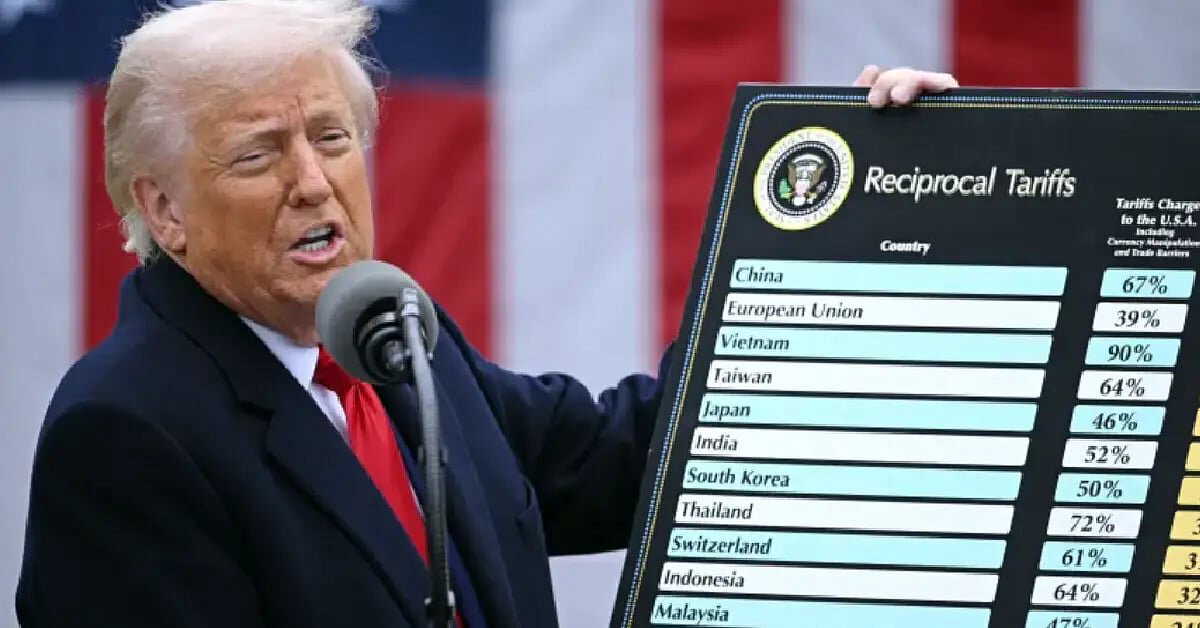
According to the US Constitution, the power to impose taxes and duties lies with Congress. But Trump bypassed them and used IEEPA to impose tariffs on almost all countries, 25 per cent on some and 50 per cent on others. This not only disrupted trade but also affected bilateral relations. Diplomats from various countries had also held discussions with Trump on this matter. But nothing came of it.
Also Read | Iran issues stark warning: US bases 'legitimate targets' if conflict escalates
Legal battle from lower courts to top court
It should be noted that businessmen and governors of 12 Democrat-ruled states first filed a case in lower courts against the tariffs. At that time, the court observed that Trump exceeded the limits of his authority while imposing tariffs on various countries using his emergency economic powers. The lower court itself had ruled the tariffs illegal. The Federal Circuit Court of Appeals upheld that verdict. The Trump administration then went to the Supreme Court, challenging that decision. There too, Trump faced a setback.