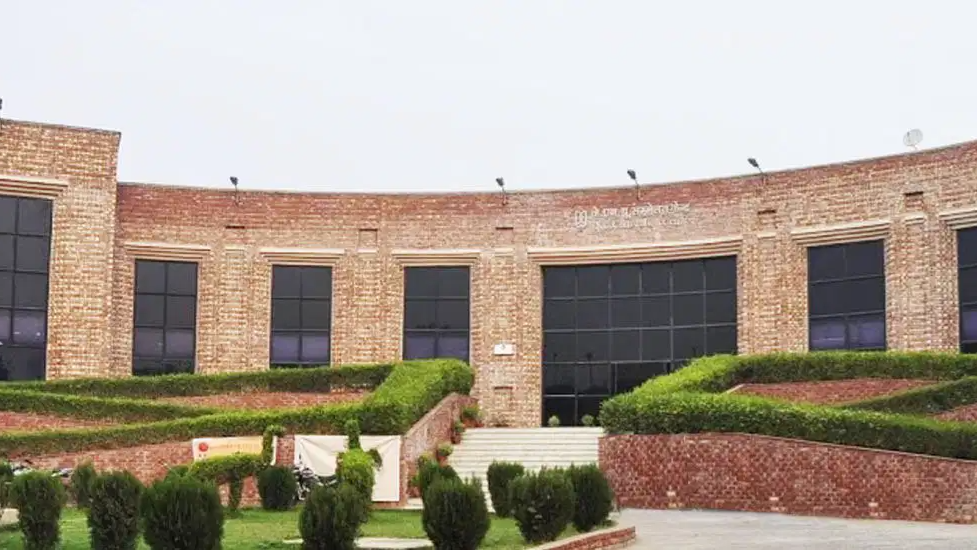
It’s already the end of 2025, and amidst Delhi's cacophony and air choking the lungs of inhabitants, stands JNU. The Jawaharlal Nehru University grabs headlines all throughout the year for its student politics, academics and alumni. Beyond the clutter lies a serene campus on the southern ridge of the Aravalli Hill range.
The NCR-based campus is synonymous with camaraderie, friendship, and love to thousands of students who have spent some of their best years there. For many, JNU is the first taste of the forbidden fruit, the first whiff of fresh air, a saw that cuts through differences imposed otherwise.
News Ei Samay talked to a few of the students of the esteemed academic institution, all established in their respective fields, and asked about their experiences, the campus culture at JNU, and the indelible mark the institution has left on them.
Also Read | NBEMS FMGE December 2025: Edit window; admit card release date announced
How JNU stands out
"When I entered JNU in the '90s, I saw students from all strata of society being able to afford education. This came as a fresh gust of air. All of us went there (JNU) from various backgrounds, and saw a manifestation of the unity and diversity of India at the university," said Indranath Mukherjee, an alumnus of the institution and co-founder of 'The Paperclip.' He said that he got to know India better because of JNU.
"Another thing that stood out for me at JNU was this informal generosity that pervaded every level. Even the 'karmacharis' in the campus taught me so much about how to live and what kind of person to try to be even before I stepped into a classroom," Indranath Mukherjee said.
In 2023, the Department of Economics at JNU marked its golden jubilee. At the reunion of the department, the first-ever batch was invited, and the whole department tried to relive the time they spent on campus. When asked about a particular moment of special remembrance, Mukherjee said that it's not about a moment, but a journey. The entire time he spent at JNU could not be returned to at one reunion, and the full journey will be remembered forever.
Mukherjee notes that every time he enters the campus, the same good feeling strikes him, and the feeling hasn't changed a bit through all these years. He remembered that cycling through the uneven terrain of the campus was an experience in itself, though he used to walk to attend classes. The Parthasarathy Rock, or PSR as it is known, remains a fond memory as a place to celebrate everything - from birthdays as a student, or revisiting the place during the reunion. The place, which is Delhi's highest point, is named after the first Vice-Chancellor of the institution, G. Parthasarathy. Mukherjee reminisced about getting lost in the huge campus and about a cave, the entrance of which was very hard to find. The memory of the bougainvillaea bloom in February remains crisp in Mukherjee's memories.
Also Read | Centre increases MBBS seats along with medical colleges
Dipsita Dhar, another noted alumnus, also described JNU as "mini India." "I made my first friends from Kerala, Arunachal, and Uttar Pradesh there. It was a very different population that we were interacting with. We got to know about different cultures, food habits at JNU," Dhar said. She added that her initial days were full of excitement, newness, and unlearning.
Dhar talked about two things about the natural setting of JNU that influenced her. Foremost, she mentioned the Parthasarathy Rocks, and their overreaching effect on students. "If you're sad, you go to the Parthasarathy Rocks; if you're happy, you go to PSR. If you want to cry, celebrate a birthday, go on a date - PSR would be our place for a lot of things." She noted that Delhi doesn't get a lot of rain, and wherever it rains, the campus turns into a different place altogether. She remembered going on walks around the campus after it rained, along with the "whole campus." "Whenever a bus used to pass, it used to create ripples in the water, and we used to think that we were in Goa," reminisced Dhar.
Sumanta Roy is a doctoral student at Washington State University in the United States, who did his master's and MPhil from JNU. "The campus has shaped me a lot, and that's why I'm talking to you from the West of the States now. The campus just doesn't teach you, but makes you grow," said Roy. Like Indranath Mukherjee, he noted that no one forces you to study or to attend classes, and that leads to even more attendance in classes. A student, whether from Odisha's Kalahandi or West Bengal's Purulia, can dream and get an education in a city like Delhi, where one has to shell out big money to study.
Also Read | State to publish books in 68 languages alongside Bengali
On the beauty of the campus, Roy noted, "I have spent my most precious days at JNU. The academic blocks are surrounded by trees, you get tea at various stalls, you can go to PSR if you're sad and listen to music, ride around the campus on a motorcycle or a bicycle, or go to the cave. We have our means to mend our sad minds on campus." In relation to the United States, where he says that no one interacts with anyone, people talk to each other and ask if they're doing well at JNU, notes Roy. He remembered the helpfulness of teachers and seniors alike, and how they helped newcomers overcome the initial barriers.
The Jawaharlal Nehru University remains a vivid memory in the minds of everyone who studied there, at least once. Education doesn't necessarily have to correspond with conformity, and JNU remains a bright example of that philosophy.