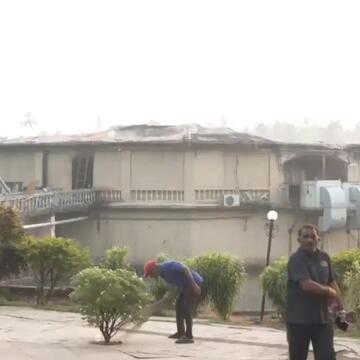
The dance floor of the Birch by Romeo Lane nightclub in North Goa was packed with nearly 100 people when the devastating fire broke out, which has claimed at least 25 lives till now. The instant panic drove many towards the kitchen, located in the basement of the nightclub premises, leading them to get trapped there with the staff, Hindustan Times reported, citing eyewitness accounts. Out of the 25 dead, 14 have been identified as staff members, and 4 have been confirmed to be tourists.
While it is being claimed that a cylinder blast after midnight on Sunday triggered the nightclub blaze, some eyewitness accounts paint a different picture. They say that the fire started on the dance floor first, which was packed with clubbers, Hindustan Times reported.
Also Read | 25 dead as gas cylinder explosion triggers nightclub blaze in North Goa
Fatima Shaikh, a tourist from Hyderabad, told PTI, "There was a sudden commotion as the flames started erupting. We rushed out of the club only to see that the entire structure was up in flames."
It is being said that the nightclub was full to the brim as it was a weekend, with at least a hundred people on the dance floor when the fire broke out. The panic induced by the fire led a number of clubbers to run downstairs to the kitchen to find refuge, where they got trapped. Many of the tourists manage to escape the premises, Fatima Shaikh told PTI. A senior Fire and Emergency Services official told PTI that the narrow approach to the nightclub severely hampered access, making it difficult for teams to reach the site and bring the blaze under control. He added that most of the victims died of suffocation, as they were trapped on the ground floor with no way out.
Also Read | IndiGo fiasco: Government imposes airfare caps to reduce the high-priced tickets
Birch by Romeo Lane, a well-known party spot in Arpora village located about 25 KM from the state capital Panaji, sits along the backwaters of the Arpora river and is accessible only through narrow lanes. The club has a cramped entry and exit, and firefighters were unable to reach the premises due to the small entrances. As a result, the engines had to be parked nearly 400 metres away from the site.