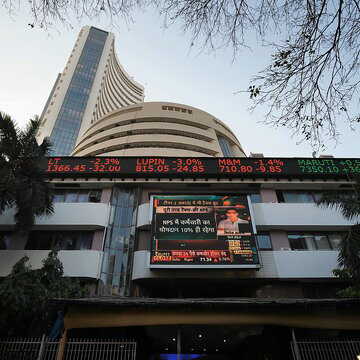
A sharp selloff in Indian IT stocks following fresh developments in artificial intelligence has been described as a market overreaction by brokerage Nirmal Bang Institutional Equities, which believes the correction could offer a selective entry point for investors.
In a note issued on Wednesday, Nirmal Bang termed the fall in shares of Infosys, Tata Consultancy Services (TCS) and other IT majors a “DeepSeek 2.0 moment”. The brokerage said the decline was driven by global contagion rather than any deterioration in the fundamentals of Indian companies.
According to the note, the pressure on Indian IT stocks followed a sharp derating in US enterprise software and consulting firms, triggered by growing investor unease over how quickly AI is reshaping workflows and pricing models across industries.
Why Anthropic rattled tech stocks
Nirmal Bang referred to the recent product releases by Anthropic, especially its Claude co-worker plugins, as one of the major catalysts for the current risk aversion cycle. These products showcased the speed at which foundation model companies can implement end-to-end processes in areas such as legal, sales, and analytics.
Also Read | IT stocks crack as global tech jitters hit Dalal Street
“When execution shifts to the model layer, wrapper software and services lose insulation almost instantly,” the brokerage firm added, explaining that products that are essentially interfaces to third-party AI APIs can become obsolete overnight.
The brokerage note also referred to Palantir’s assertion that large-scale enterprise transitions, such as SAP ECC to S/4, can now be accomplished in weeks rather than years. This condensing of time horizons makes these processes less labor-intensive and less conducive to long-term client lock-in, which is a major benefit of traditional IT services.
Indian IT: wake-up call, not an earnings shock
Despite the selloff, Nirmal Bang stressed that this is “not an earnings cliff” for Indian IT companies. The brokerage highlighted that near-term revenue visibility remains stable, even though the Nifty IT index fell 5.9%.
However, it pointed out a strategic worry. The total contract value (TCV) announcements for Tier-1 Indian IT companies have remained stagnant since the first quarter of FY25, without any sequential improvement that would indicate the beginning of a new investment cycle. TCV, the brokerage explained, is a forward-looking indicator of growth.
“Management commentary has leaned heavily on AI-led deal momentum, but the aggregate numbers remain restrained,” the note said. It attributed this to two reasons: cautious discretionary spending by US corporates in a macro and political environment of uncertainty, and the inherent limitations of the current use cases of AI.
Why deals are not scaling yet
The brokerage said AI, while powerful, is still unreliable in complex enterprise settings. Issues such as error rates, hallucinations and immature governance frameworks continue to slow adoption.
It also underlined a key vulnerability for Indian IT firms. “Indian IT companies, lacking proprietary large language models, are largely operating as integrators of third-party intelligence,” the note said. Most offerings are built around APIs from companies like OpenAI or Anthropic, limiting differentiation and client confidence.
Also Read | IT stocks tumble as Infosys, TCS fall nearly 6 percent: Here’s why
This dynamic, Nirmal Bang argued, is now being recognised by CIOs, leading to smaller deal sizes and slower decision-making — even as AI rhetoric grows louder.
Opportunity amid volatility
Although recognising the risks, the brokerage firm argued that the current sell-off is driven by fear rather than a structural change in earnings. The brokerage firm sees the repricing as an opportunity for investors who are willing to look beyond the short-term volatility, even as the Indian IT sector is forced to rethink strategies and move beyond “wrapper-level” adoption of AI.
{News Ei Samay does not provide investment advice anywhere. Investment and trading in the share market or any field involve risk. Proper study and expert advice are recommended beforehand. This news is published for educational and awareness purposes.}