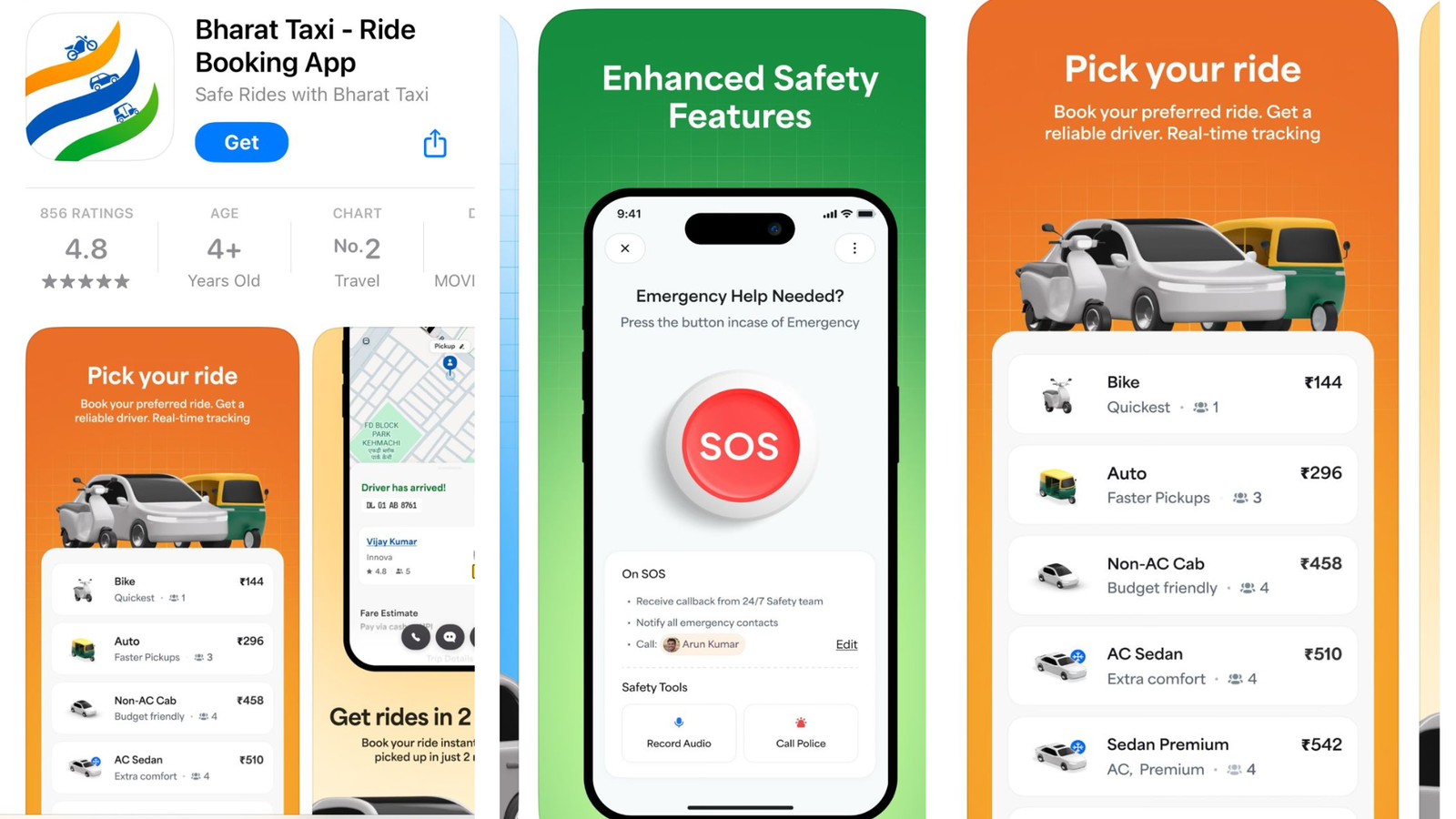
Union minister of Cooperation, Amit Shah, on Thursday officially launched 'Bharat Taxi' at an event held at Plenary Hall, Vigyan Bhavan, New Delhi.
A Bharat Taxi rally was held, with drivers and customers joining to celebrate the launch of the service. During the launch, Shah said Bharat Taxi "gives drivers ownership of profits and brings them respect and dignity".
Also Read | India masters SFDR missile technology, joins elite club alongside US, Russia, China and France
The service will be rolled out in Delhi-NCR and Gujarat initially and in the next two to three years, it will be expanded to all states and Union Territories, as per a report by The Times of India.
What is Bharat Taxi?
Bharat Taxi is run by Sahakar Taxi Cooperative Ltd (STCL), a multi-state cooperative, in partnership with the National Cooperative Development Corporation (NCDC). It has support from various organisations, including Amul and NABARD. Representatives from these organisations are part of the interim board.
In January, the government requested "cooperation" from Central and state ministries, departments, public sector companies and autonomous bodies, to "to facilitate appropriate promotional support for Bharat Taxi within official premises and communication channels, without disrupting routine functioning", Indian Express quoted a press release from January 14.
"Departments have also been encouraged to sensitise officers and staff about the availability of Bharat Taxi as a cooperative mobility option and to share institutional feedback to aid service improvement prior to wider rollout," as per the government.
About 4 lakh drivers join platform
Indian Express reported that since the pilot launch, around 4,00,000 drivers have joined the Bharat Taxi platform. The government announced that over 10,000 rides are completed daily on the platform. They aim to make it operational across the country by 2029 and make it the largest ride-hailing app in India.
Also Read | President’s Rule officially over in Manipur as assembly session convenes today
To increase visibility, the app is mainly focusing on busy areas with heavy foot traffic, such as the airport, Metro and Railway stations. At the Delhi airport, Bharat Taxi has taken over the pre-paid taxi booths.
Based on cooperative model
Bharat Taxi has a unique model. Each driver, known as a "Sarathi", owns five shares in the cooperative. Unlike private companies like Ola and Uber, no commission is taken from each fare. It allows drivers to receive the entire fare they collect.
This method aims to tackle long-standing complaints from drivers about high commission rates and limited control on platforms like Uber and Ola.
According to Bharat Taxi Chief Operating Officer (COO) Vivek Pandey, the ride-hailing service does not currently charge drivers any fees. However, drivers might have to pay a daily fee of Rs 25 to Rs 30 in the near future. Pandey noted that this amount is lower than the high commission fees charged by private cab aggregators.
Also Read | 'Sorry, Papa...we cannot leave Korea': Ghaziabad sisters leave chilling suicide note with crying emoji
Riders can expect lower fares. Officials estimate that Bharat Taxi's prices can be up to 30 per cent cheaper than those of private competitors. Traditional ride-hailing apps usually take Rs 30-50 as commission per ride, but Bharat Taxi's no-commission model allows for these savings to go to passengers.
Vivek Pandey was quoted as saying by Indian Express that "the company gets a lot of perks since it is government backed. For instance, Amul has thousands of booths across the country, where we can market… or we can get our insurance through IFFCO Tokio. We signed an agreement with Delhi Metro to get preferential treatment at 10 stations."
When signing up, drivers can purchase shares in the cooperative. A minimum of five shares cost Rs 500. This will ensure that drivers receive dividends when the company becomes profitable, according to Pandey.