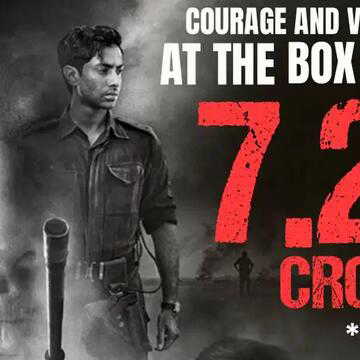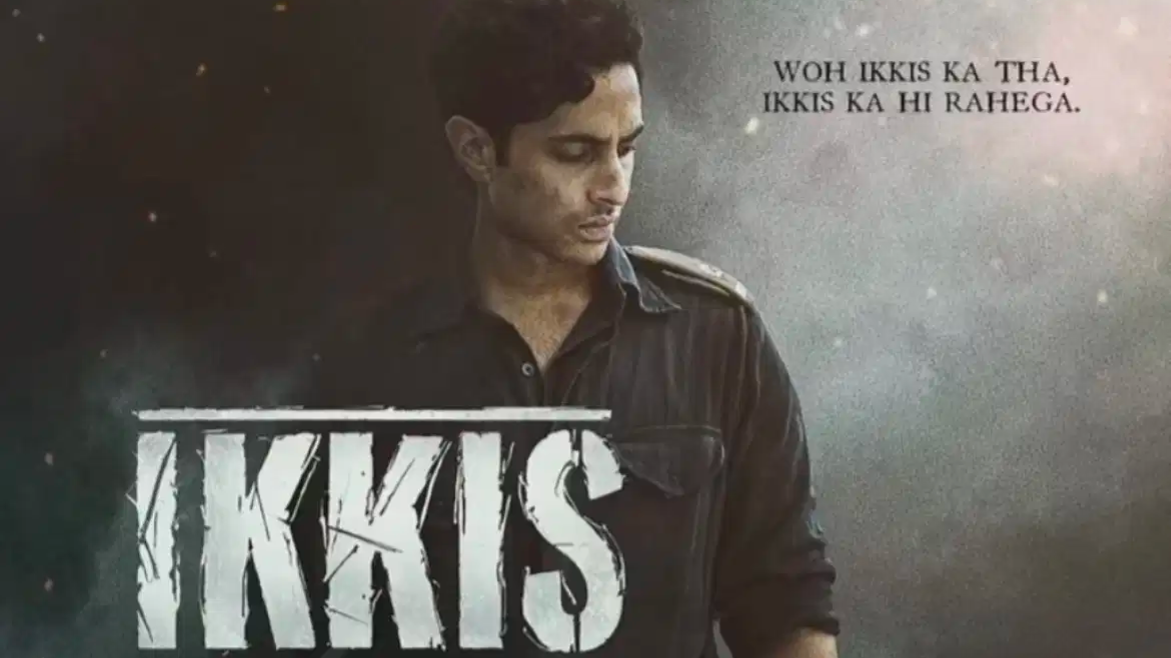
Ikkis, Sriram Raghavan’s latest film, opens the year on a reflective note, stepping away from the chest-thumping tone that has come to define many recent war dramas. Anchored by Agastya Nanda and veteran actor Dharmendra, the film revisits the story of Second Lieutenant Arun Khetarpal, the youngest recipient of the Param Vir Chakra, who was killed in action during the 1971 Indo-Pak war.
Rather than turning Khetarpal’s bravery into a loud battlefield spectacle, Ikkis focuses on what conflict leaves behind, the grief, memory and lives permanently altered.
Also Read | Big screens, bigger expectations: Here's a list of Bollywood’s most anticipated films of 2026
Agastya Nanda plays the young officer with a quiet earnestness that suits the role. His Arun is eager, inexperienced and still finding his footing, qualities that lend credibility to his transformation once the fighting begins. Dharmendra, in what is being described as his final screen appearance, plays Arun’s father, retired Brigadier Madan Khetarpal, with visible restraint and emotional weight.
Where the film truly finds its voice
The film’s most striking choice is its refusal to glorify violence. Raghavan’s narrative repeatedly underlines that duty does not erase loss, and that no side truly emerges unscathed.
The story moves between the battlefield and Madan Khetarpal’s later journey to retrace his son’s final days. That journey brings him face-to-face with Brigadier Khwaja Mohammad Naseer, played by Jaideep Ahlawat, a Pakistani officer carrying his own burden from the war. Ahlawat delivers one of the film’s most layered performances, balancing regret with dignity.
The film's shifting timelines occasionally appear abrupt, and Dharmendra's slower dialogue delivery occasionally affects the flow. However, the emotional core is still present, especially in sequences that reflect a common history rather than rigid divisions.
Sikander Kher stands out among the supporting cast, while Simar Bhatia’s role as Arun’s romantic interest adds warmth without overwhelming the narrative.
Ikkis does not argue that war can be noble. Instead, it suggests that humanity survives in fleeting moments, between comrades, families and even former enemies.