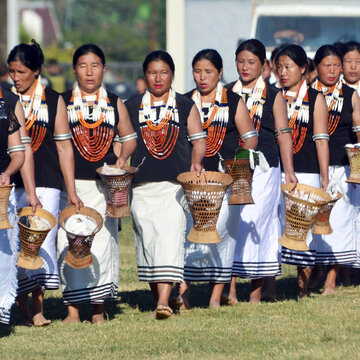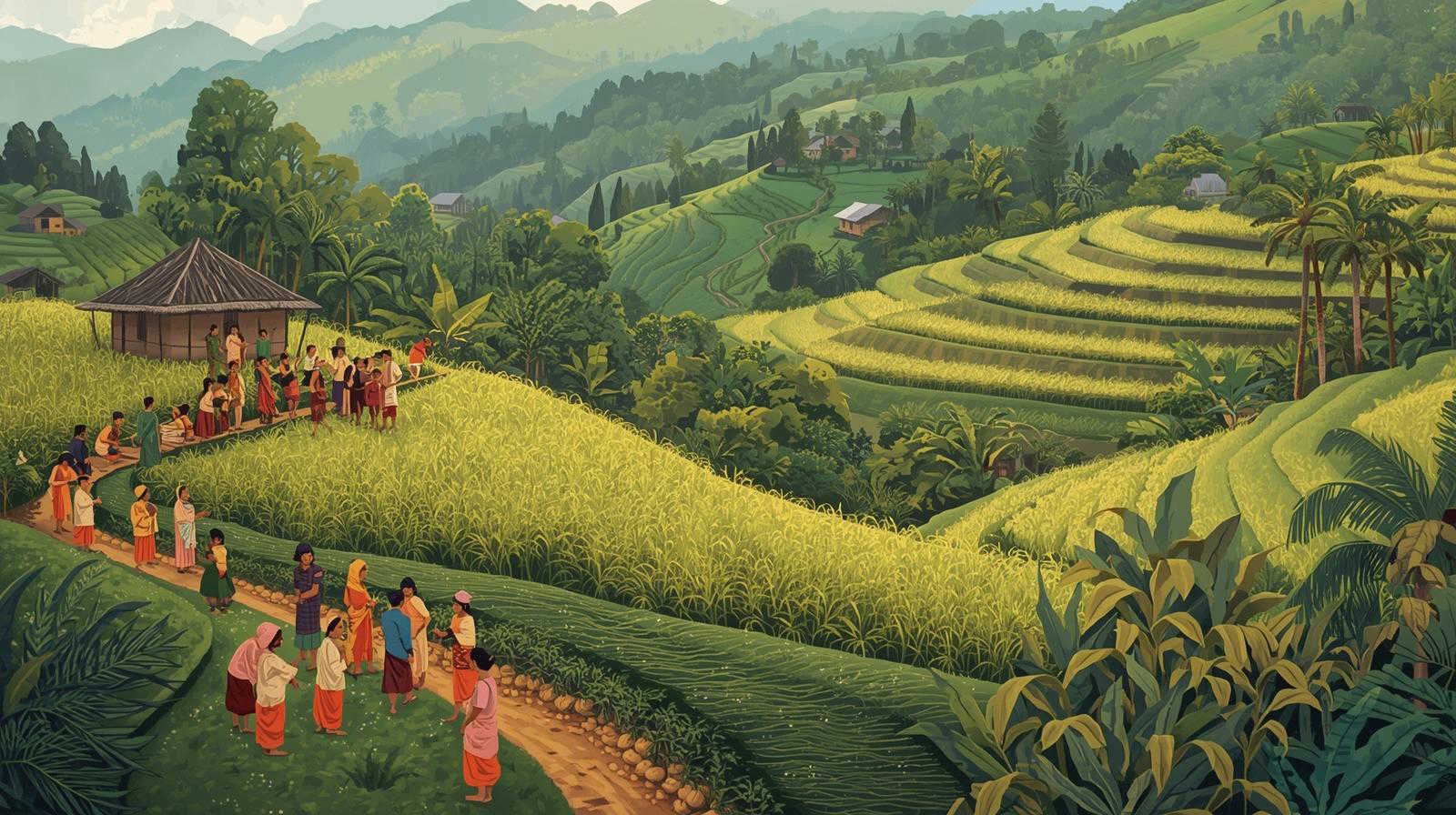
A small village in Nagaland’s Longleng district has taken a big step to bring back a traditional crop that once protected its people from famine. Pongo Village has launched a two-day Taro Festival, an event that organisers believe can become a model for community-led agricultural revival.
The festival was held on December 5 and 6 as part of the 26th Hornbill Festival. Farmers, self-help groups, youth groups and villagers gathered to showcase more than 10 varieties of taro, including Khedoong, a well-known local favourite famous for its flavour, texture and long shelf life.
Also Read | Nagaland gets boost of Rs 4.78 crore from NEC for culture, tourism and skill development
During the opening ceremony, village head P Khangyong reminded everyone why this crop matters so much to their history. "Our forefathers survived famine because of taro, and this story has now become an important folklore of our village," he said. He also shared memories from his childhood when taro was often the only food available, as per a report of India Today NE.
The festival was largely organised by the youth of the village with support from the Department of Horticulture. The focus was on farmers rather than commercial stalls. Festival convenor Along H Phom said most of the earnings went directly to farmers. "We prioritised farmers' knowledge at the forefront," he said. "Our aim is to help farmers see taro as a cash crop with economic potential."
Agriculture stalls showcased products from entrepreneurs and self-help groups. Farmers demonstrated how every part of the plant is useful, from the leaves to the corms. Local artisans also shared that parts of the taro plant are used in the village’s traditional black clay pottery.
Also Read | Kaziranga welcomes 35 critically endangered vultures back to the wild
Local MLA A Pongshi Phom, who attended as the chief guest, encouraged young people to explore opportunities in farming and agro tourism.
On the second day, scientists from ICAR regional centres led technical sessions on improving taro production, value addition and developing new varieties. District agriculture officer Maongsangla also spoke about the crop’s nutritional benefits and its role in climate resilience.
The long-term plan is to strengthen market linkages, promote scientific backing and document indigenous knowledge so that taro farming can thrive again in the region.