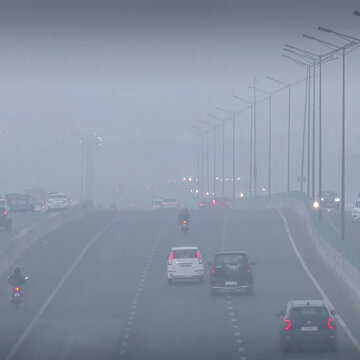
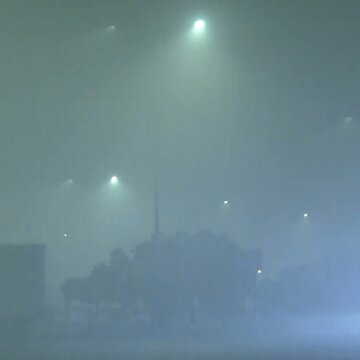
Delhi started Monday off with another day of toxicity in the air, with the overall Air Quality Index touching 318 at 7 am per the Central Pollution Control Board (CPCB). The national capital continued to be shrouded under a thick layer of smog and has thus offered little or no respite in either visibility or air quality.
Also Read | Why is IndiGo cancelling flights nationwide? Explained
Smog covers key areas across the capital
Thick haze engulfed various areas in the city, such as Anand Vihar, India Gate, Dwarka and ITO. Many of these places also showed considerably less visibility in the mornings. According to CPCB, several regions in Delhi were in the ‘very poor’ category due to the extent of pollution.
The ITO area recorded an AQI of 354, which is categorised as “Very Poor”. India Gate and Kartavya Path were also barely visible as they remained shrouded in dense smog. This comes just a day after the city recorded an AQI of 397, also in the ‘very poor’ range.
Multiple stations in ‘very poor’ category
The other major monitoring stations recorded similar readings. Ashok Vihar, Bawana, Burari, Chandani Chowk and Dwarka remained in the “very poor” bracket with records of 338, 368, 327, 321 and 325, respectively, indicating how deeply pollution has spread across the capital.
Also Read | 25 dead as gas cylinder explosion triggers nightclub blaze in North Goa
AQI, ranging from 0 to 500, is divided into six categories. As per a report by Moneycontrol, an AQI between 0 and 50 is considered “Good”, while 51 to 100 is “Satisfactory”, where only sensitive groups may feel slight discomfort.
The "Moderate" range, from 101 to 200, indicates increased pollution, which may cause breathing problems for individuals with asthma, lung disease, or heart disease. Levels between 201 and 300 fall into the "Poor" category, where long-term exposure can cause breathing discomfort for most people.