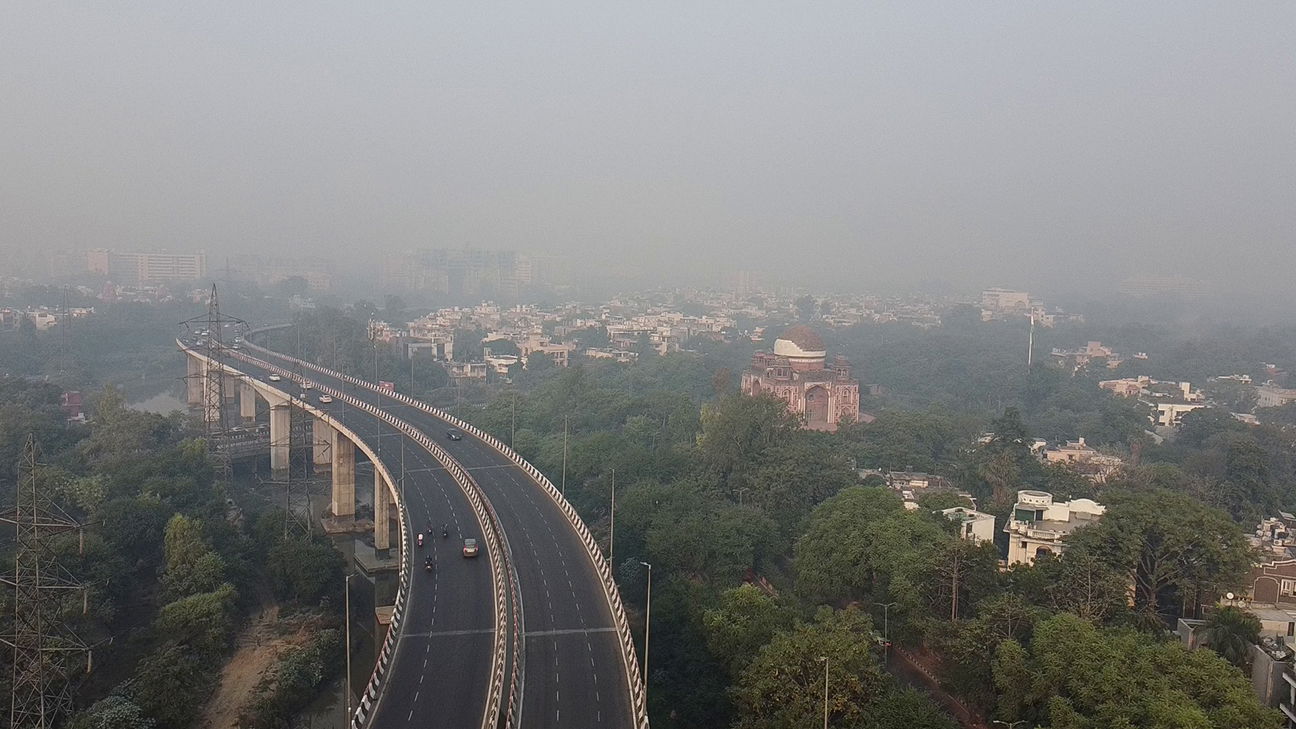
The national capital saw a slight improvement in air quality on Saturday morning, and the Air Quality Index has slipped to the “poor” category. As per the CPCB data, at around 7:00 AM, the AQI was recorded at 222.
The relief comes after days of severe pollution, which has been further assisted by high winds and appropriate weather conditions since the new year, to spread the pollution over the national capital region.
Also Read | Gangasagar Mela 2026: Full list of special trains, routes and timings announced
Most monitoring stations report ‘poor’ air
Most air quality monitoring stations in Delhi recorded “poor” air on Saturday. Jahangirpuri was the only area that recorded “very poor” air quality, as its AQI was 302. Of the total 37air quality monitoring stations in Delhi, 11 recorded “moderate” levels on January 3. Mandir Marg recorded the cleanest air in the capital with an AQI of 126 in the morning.
GRAP Stage III restrictions lifted, lower stages continue
After the improvement on Friday, the Commission for Air Quality Management (CAQM) lifted the restrictions imposed on Stage 3 within the Graded Response Action Plan (GRAP) in the Delhi-NCR. Meanwhile, the measures related to the air quality control process within the stages of GRAP Stages I and II will persist.
However, it may be noted that despite this relief, warnings were issued about air quality deterioration.
Authorities warn of possible deterioration ahead
The CAQM, while citing meteorological forecasts, said, "The AQI of Delhi has shown significant improvement owing to strong winds and favourable meteorological conditions and has been recorded 236 on 02.01.2026. Further, the forecast by IMD/ IITM predicts the AQI to remain in poor to very poor category in coming days."
Analysis of the data from the Decision Support System (DSS) revealed that emissions from vehicles contributed the most to pollution in Delhi, which was around 11.11 per cent of the total pollutant contribution. This was followed by peripheral industries (8.4 per cent), residential sectors (2.8 percent), construction activities (1.4 per cent), and burning of refuse (1 percent).
A yellow alert has been forecast by the India Meteorological Department (IMD) on January 3 and 4. However, the visibility at Indira Gandhi International Airport is 1,800 meters at 5:30 am. There has been no impact on the flights yet.
Also Read | Himachal college student dies after sexual assault; professor and 3 female students booked
Cold wave conditions likely over next three days
There is also a forecast of cold wave conditions in the capital for the next three days, duly influenced by a Western Disturbance. According to IMD, a cold wave is declared when the minimum temperature falls 4.5°C to 6.5°C below the normal average.
As per the latest IMD bulletin: “Mainly clear sky. Moderate fog at many places with dense fog at isolated places during morning hours. The maximum and minimum temperatures in Delhi are likely to be in the ranges of 17°C to 19°C and 6°C to 8°C, respectively. The minimum temperature will be near normal, and the maximum temperatures will be above normal (0.3°C to 2.3°C) over Delhi.”