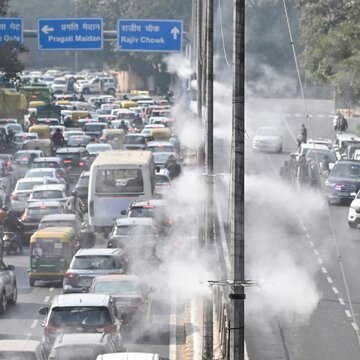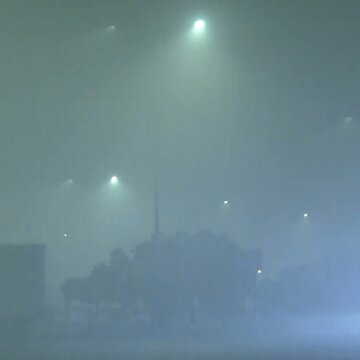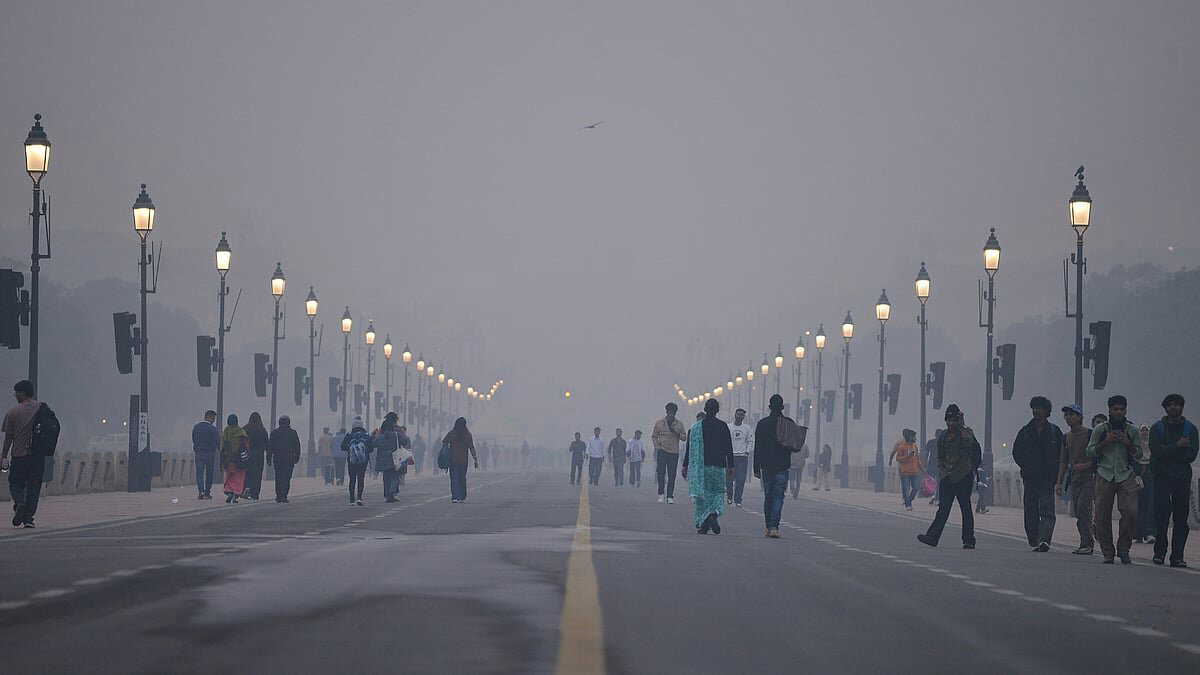
Air pollution has taken a terrifying form in the capital. A blanket of toxic dust now covers the city. According to Central Pollution Control Board (CPCB) data, the Air Quality Index (AQI) in this region has reached 488, which is extremely hazardous. Due to the deteriorating situation, the Commission for Air Quality Management (CAQM) has implemented the fourth stage of GRAP in the Delhi-NCR region. Experts have advised against exercising outdoors or taking morning walks in this situation.

Air quality touches danger levels
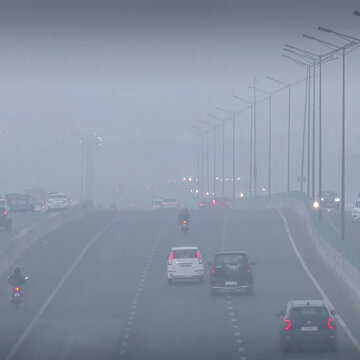
Air quality is extremely dangerous at all 40 monitoring stations in Delhi. CPCB reported that on Sunday morning, northwest Delhi's Rohini recorded the highest AQI of 499. This is followed by Jahangirpuri and Vivek Vihar, where the AQI was 495. Delhi's air contains fog along with dust. Due to this, visibility has decreased in multiple areas of the capital. Capital residents have to drive carefully with car headlights on, even in the morning.
AQI is an index for measuring air pollution. India's AQI scale is capped at 500. According to CPCB data, if AQI is between 401 to 500, that air is called 'severe'. 300 to 400 is 'very poor', 201 to 300 is 'poor'. 101 to 200 is 'moderate', 51 to 100 is 'satisfactory' and 0 to 50 is called 'good'.
However, even if AQI exceeds 500, it is considered extremely dangerous. Currently, the capital's AQI is nearly touching 500. For this reason, the fourth stage of GRAP has been implemented to handle the situation. However, experts have stated that when AQI goes above 400, it becomes dangerous.

GRAP-3 to GRAP-4 for combating pollution
To combat increasing air pollution in the Delhi-NCR area, the Commission for Air Quality Management (CAQM) had reissued the third stage of the Graded Response Action Plan (GRAP) on Saturday. However, as the situation worsened, the fourth stage was implemented.
CAQM stated that the reason for the sudden increase in pollution levels is weak western disturbances coming from northwest India. Reduced wind speed, changing wind direction and increased humidity in the lower atmospheric layers have created adverse conditions.

GRAP 4 restrictions
- Entry of all freight or LNG, CNG, electric trucks is banned in Delhi except for essential goods or services.
- Delhi BS-IV or older commercial vehicles are temporarily banned unless connected to emergency services. Additionally, the minimal use of EV, CNG vehicles has been advised as much as possible.
- Construction work must also be stopped. All construction and demolition work, including government projects will be halted.
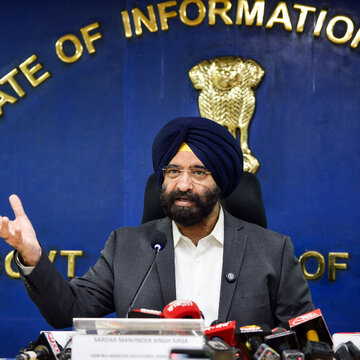
- The Delhi government has instructed all schools in the state to conduct online classes. Additionally, 50% of all office employees have been advised to work from home.