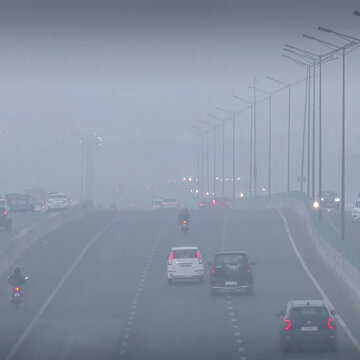
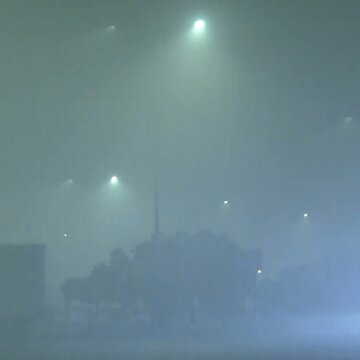
Delhi's pollution worsened on Wednesday morning as several parts of the city slid into the 'severe' air quality category. According to CPCB data from 40 monitoring stations, 14 locations reported an AQI above 401 at 7:05 am. The average AQI of the city was recorded at 376 on December 3.
This spike follows a steady decline in air quality over the past few days: AQI was 279 on November 30, 304 on December 1 and 372 on December 2. With a smog layer settling over the capital, most regions recorded air quality in the ‘very poor’ bracket.
Also Read | Mumbai pulls out its pollution-control trump card; GRAP-4 now active: All you need to know
Worst-affected areas
According to CPCB data, the following places recorded ‘severe’ air quality:
Anand Vihar – 405
Ashok Vihar – 403
Bawana – 408
Chandni Chowk – 431
Dr Karni Singh Shooting Range – 406
Jahangirpuri – 406
Jawaharlal Nehru Stadium – 405
Nehru Nagar – 436
Okhla – 404
RK Puram – 420
Rohini – 417
Sirifort – 408
Vivek Vihar – 415
Wazirpur – 406
CPCB's Sameer app showed NSIT Dwarka as the only location recording AQI in the ‘poor' range. All other 25 stations recorded ‘very poor' levels, with Nehru Nagar and Chandni Chowk emerging as the worst performers.
CSE flags rising toxicity, stagnant trends
A recent report by the Centre for Science and Environment (CSE), analysing the air quality trends in October–November, flagged the growing toxicity in Delhi's early winter air. The report noted, "More worrying is the daily synchronised rise of PM2.5 and other toxic gases of nitrogen dioxide (NO2) and carbon monoxide (CO) largely from vehicles and combustion sources, creating a toxic cocktail that has gone unnoticed." It added that air quality trends have "plateaued without showing improvement," signalling the need for systemic emission-cutting measures.
The report also pointed to deteriorating air in smaller NCR towns, stating, "The tinier towns in the region display more intense and longer-lasting smog buildup."
Also Read | ‘Breathless is a song, not my reality’: Mumbai activists form human chain at Carter Road to demand clean air
IMD issues cold wave alert
The IMD reported cyclonic circulation over South Himachal Pradesh extending up to 1.5 km above mean sea level. A yellow alert for a cold wave has been issued for December 5. According to the IMD, “A fresh feeble Western Disturbance is likely to influence the western Himalayan region from 05th December 2025." Maximum temperatures are expected between 23-25°C and minimum temperatures between 07-09°C, both below the normal of the region.