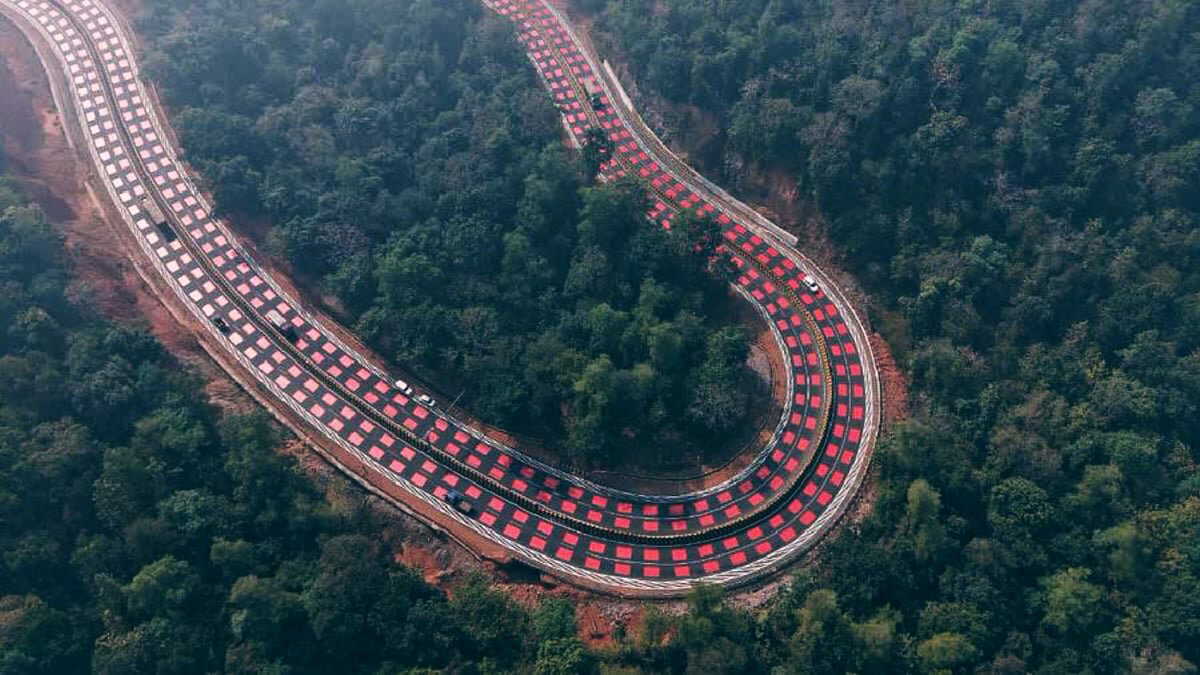
The National Highway Authority of India (NHAI) has added a new chapter to India's wildlife conservation history. For the first time, special red-marked 'Tabletop' roads have been constructed on the Jabalpur-Bhopal highway in Madhya Pradesh, keeping the safety of tigers and other wildlife in mind. While roads usually feature white or yellow markings, this is the first time a 12-kilometre stretch of highway has been marked with red colour.
This highway passes through the heart of Nauradehi Wildlife Sanctuary. The sanctuary is a free-roaming ground for tigers, deer and other wildlife. This innovative step aims to alert drivers in order to prevent wildlife deaths from collision with speeding vehicles. NHAI has stated that this bright red 'Tabletop' marking will 'psychologically' influence drivers and compel them to reduce speed.
Also Read | Diwali added to UNESCO World Cultural Heritage list; PM Modi extends greetings
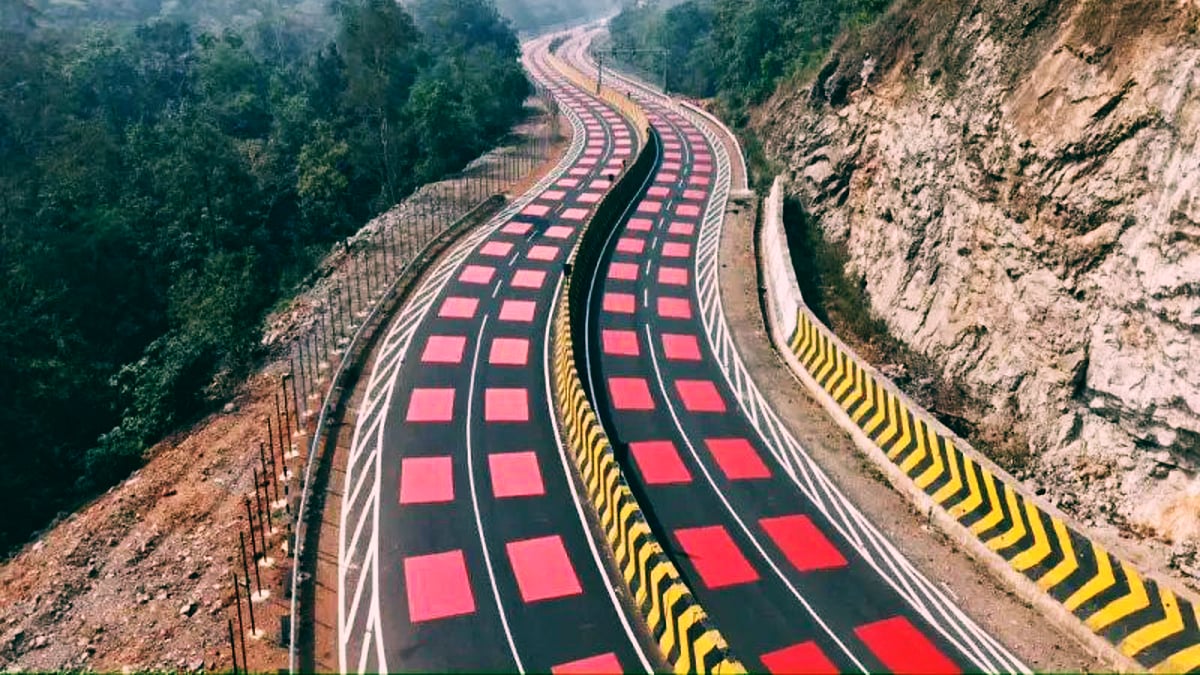 NHAI hopes the bright red 'Tabletop' markings will 'psychologically' influence drivers
Despite having 8-foot-high iron fencing on both sides of the road and 25 underpasses for safe wildlife movement, the risk of accidents was persistant on the winding mountain path. This project has been undertaken at a cost of ₹122 crore to reduce that risk. The red colour will serve as a danger signal on this highway. So that drivers understand this is a dangerous area and tigers or other animals may cross the road at any moment.
Also Read | DGCA orders on-site checks at 11 airports after massive IndiGo disruptions
This road project is scheduled to be completed by 2025. This is a unique example of India's wildlife-friendly infrastructural development.