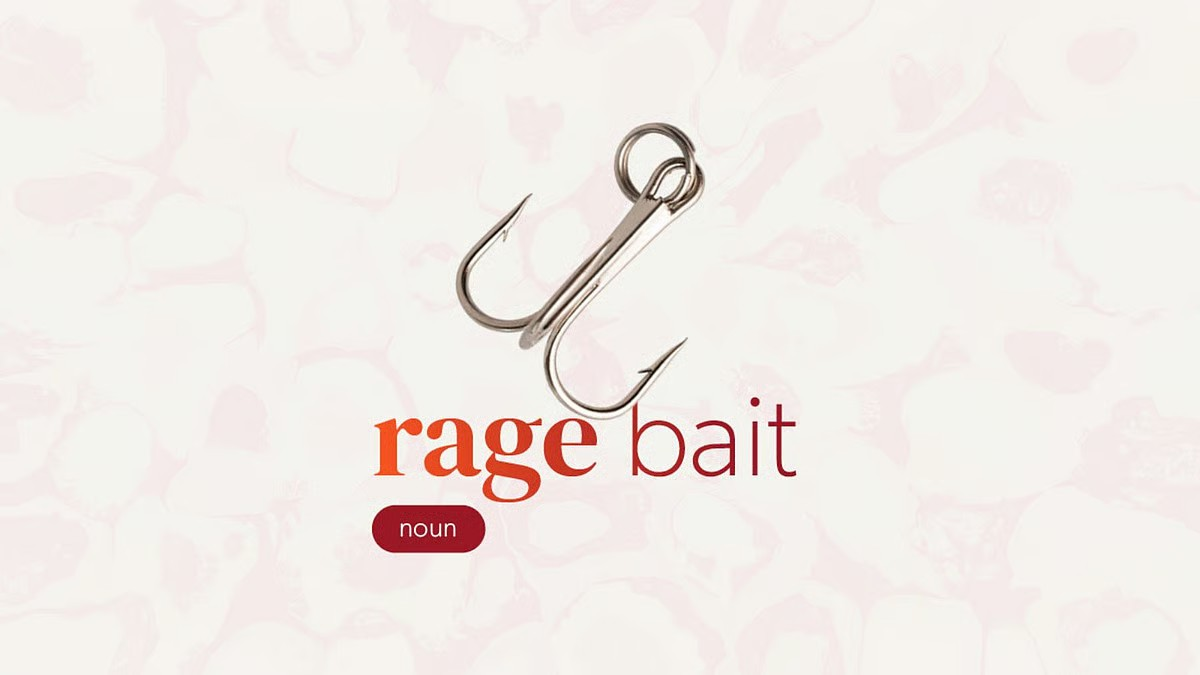
From ages 8 to 80, almost everyone spends at least some time on social media every day. But have you noticed something? While scrolling, you suddenly feel annoyed without any apparent reason, or some post or comment unexpectedly makes your blood boil. This happens in all our lives at some point or the other. But it would be a mistake to dismiss it as a mere coincidence. Actually, this is a kind of online trap, commonly known as a “Rage Bait.”
Recently, Oxford University Press named "Rage Bait" their Word of the Year. But what exactly is Rage Bait?
Also Read | Cambridge dictionary names THIS as 2025 word of the year- all thanks to Taylor Swift!
What is Rage Bait?
According to Oxford University Press, Rage Bait is online content that is intentionally crafted to make people angry or frustrated. Such content is provocative, insulting, or irritating on purpose. Usually, it is posted with the intention of increasing traffic or engagement to a certain webpage or social media platform.
Quite simply, Rage Bait content is designed to make people angry-and frequently does so. Angry people tend to comment more and share the content far and wide, while spending increased time on the post or site trying to make their point. The result: increased engagement in all forms.
Why does Rage Bait spread?
This kind of content pays off. It evokes fast and intense responses. When people get irritated or upset, they comment without thinking, further increasing the number of comments. The more comments a post gets, the wider it spreads. More reach means more followers, and very often, money and influence.
And that is not all: Rage Bait is not confined to online spaces; it can well occur in real-life social settings. That is, you may actually Rage Bait a friend or companion deliberately.
The usage of the term has sharply risen. Oxford University Press reported that in the past year alone, its use has more than tripled, showing how common Rage Bait has become online.
Caspar Grathwohl, President of Oxford Languages, said, “The existence of the term ‘Rage Bait’ and its dramatic rise in use reflect how deeply we are drawn into strategies that influence people online, and at the same time, how awareness of such tactics is growing.”
He added, “Earlier, the internet would spark our curiosity in exchange for clicks. Today, it manipulates emotions. In an online culture and a tech-driven world, perhaps this is to be expected.
Rage Bait was not alone in this year's shortlist; there were two other words in the running:
Aura farming: It involves curating one's online presence to project confidence, charisma, or mystery that invites others to pay attention. Essentially, shaping your digital image to draw interest in yourself.
Biohacking: It means the method of changing one's diet, working out, lifestyle, and supplementation with aids in technology to improve physical and mental performance, health and well-being. Among the three, Rage Bait was the winner.