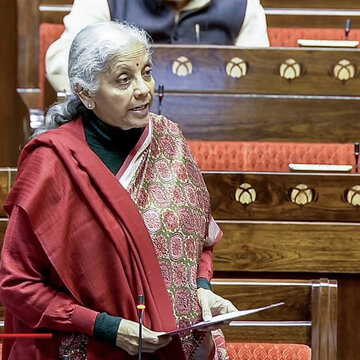
Finance Minister Nirmala Sitharaman is getting ready to present the Union Budget 2026–27 for the ninth in a row, so all eyes will once again turn to Parliament on Sunday, February 1.
For most people, the Budget often means just a few big questions: Will income tax change? Will fuel prices come down? Will there be more spending on jobs, infrastructure and welfare? But the real meaning of the Budget goes far beyond the speech delivered.
The Union Budget is not a single statement; it is a detailed set of documents that together explain how the government plans to earn money, where it plans to spend it, how much it will borrow, and what legal or tax changes are needed to support these plans.
In simple terms, the Budget answers four basic questions: expected income, planned spending, borrowing needs, and policy changes.
To understand the government’s intent quickly, it helps to look at the bigger numbers. Figures like the fiscal deficit, total expenditure and capital expenditure give a clear sense of direction. Capital expenditure shows how much the government is investing in long-term assets like roads, railways and infrastructure, while revenue expenditure reflects routine spending such as subsidies, salaries and interest payments.
ALSO READ | Union Budget 2026: Here’s when and where you can watch Nirmala Sitharaman’s full speech
How does the budget work?
The Budget speech itself is divided into two parts. The first outlines economic priorities, welfare schemes and sector-wise focus. The second deals with tax proposals, including income tax and indirect taxes. However, these announcements only take legal shape once Parliament passes the Finance Bill.
For a deeper understanding, documents like the Budget at a Glance, Annual Financial Statement, Expenditure Budget and Receipts Budget offer a clear picture of how every rupee is planned. Adding to this, the Economic Survey, released ahead of the Budget, provides valuable background on the economy.
ALSO READ | Union Budget 2026: Can lower duties and GST make gold affordable again?
Now, if you want to understand the budget simply, you don’t need to be an economist to understand the Union Budget. You just need to know what to look for and what matters to you. Here’s a simple, no-jargon guide to help you decode Union Budget 2026 with ease.
Look at what affects your pocket
Skip the heavy documents at first and focus on areas that directly impact daily life-
Income tax slabs and deductions
Prices of fuel, LPG, and essentials
Allocations for health, education, housing, and transport
Changes in interest rates, savings schemes, or subsidies
Focus on
New schemes are actually funded
Changes in existing schemes
Clear timelines or targets
If money is allocated, it’s serious. If it’s just mentioned, it’s a promise.
See how the Budget affects jobs and MSMEs, farmers and rural areas, the middle class and salaried employees, markets and investors.
The Union Budget is not just a document for economists or policy experts; it is a plan that affects the everyday life of citizens, it is calculated from how much tax you pay to how roads, hospitals and schools are built. So you don’t need technical knowledge or complicated calculations to understand it. All you need is to know what matters to you and where to look, with a little patience and the right lens.