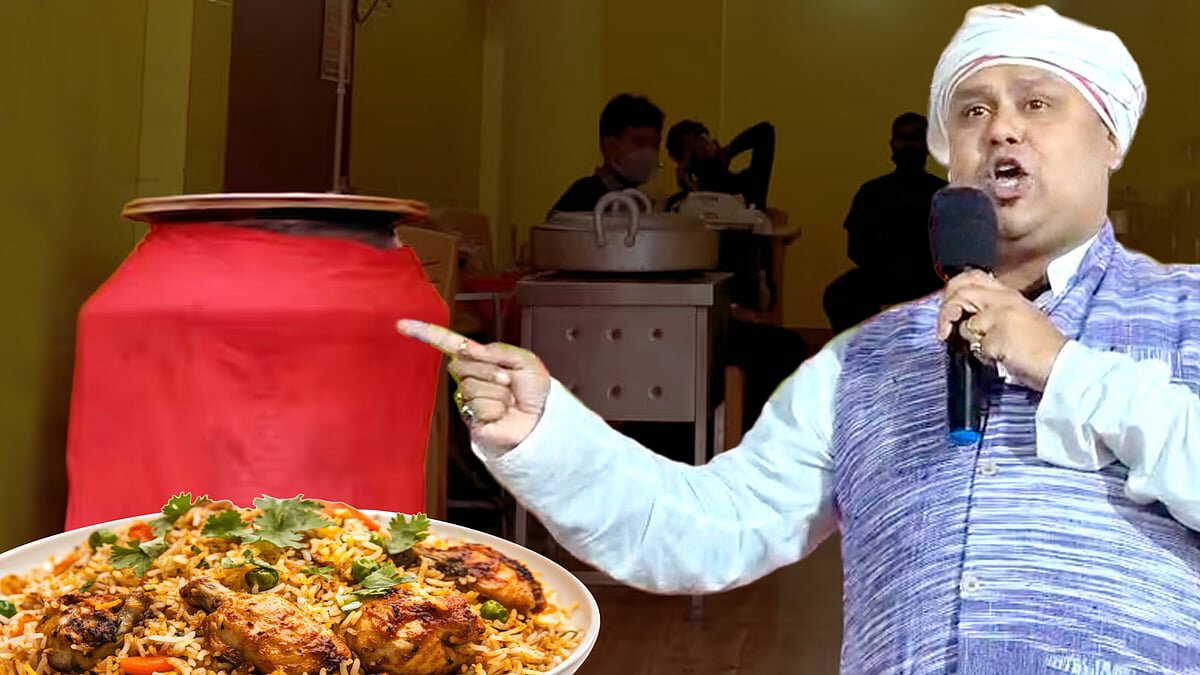
Biryani, long a beloved dish in Bengal for celebrations, family gatherings, and festivals, has unexpectedly entered the political arena. The controversy erupted after BJP leader Koustav Bagchi made remarks at the ‘Parivartan Sankalp Yatra’ in Titagarh, which have since gone viral on social media.
At the event, Koustav stated that Hindus should come together and support each other in their daily choices. He mentioned that he prefers to buy biryani from Hindu-owned shops when possible and suggested that meat could similarly be purchased from Hindu businesses. He also expressed a preference for casting choices in Tollywood to prioritise local artists.
Also Read | TMC MP Derek O'Brien moves Supreme Court seeking extension of SIR deadline
Commenting further, the BJP leader clarified that he was not against eating biryani itself, but wished to encourage support for Hindu shops. He said his remarks were intended to represent Hindu interests and added that if these comments were seen as communal, he would accept it with humility.
The remarks drew criticism from the Trinamool Congress. Barrackpore Municipality Mayor Uttam Das remarked that such statements could disturb communal harmony and that voters would respond thoughtfully during elections. Trinamool leader Riju Dutta added that political parties should focus on public service rather than trying to influence personal choices.
Meanwhile, reactions from within BJP were more measured. Charles Nandi, state president of BJP’s minority wing, said that Koustav Bagchi was sharing a personal opinion and emphasised that the party does not practice religion-based politics. He noted that religion, for them, is about democracy, and politics is about development, while personal choices like food and clothing remain individual decisions.
Also Read | Mamata threatens to move Supreme Court against SIR, says 'I will plead personally'
An anonymous state BJP leader also highlighted that the party is committed to secular values. When contacted, state BJP president Shamik Bhattacharya declined to comment.
The controversy underscores the sensitive intersection of food, culture, and politics in Bengal, with both parties using Koustav Bagchi’s statements to advance their respective narratives ahead of upcoming elections.