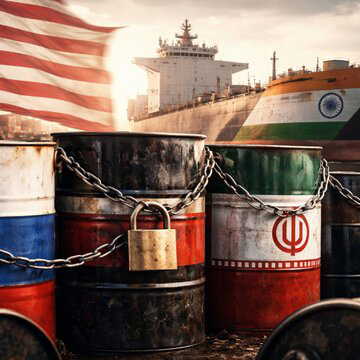
More than $100 billion worth of Iranian assets frozen overseas have once again become a key issue as the United States and Iran prepare for another round of talks to extend their fragile ceasefire.
According to a report by Al Jazeera, Tehran has made access to at least a portion of these funds a central demand, with officials pushing for the release of $6 billion as a confidence-building measure ahead of further negotiations.
Frozen funds at the heart of ceasefire diplomacy
As diplomatic efforts intensify, the Iranian authorities have stressed the need to unfreeze foreign assets for any concrete progress. Before previous rounds of talks, Iran’s parliamentary speaker Mohammad Bagher Ghalibaf had stated that the release of these funds should precede negotiations.
Also Read | Russia unleashes over 600 drones, missiles on Ukraine in deadly overnight assault
Although some reports indicated that there might be potential relaxation of sanctions, it has been confirmed that no such decision has been made yet. As the deadline for the ceasefire draws near, this issue will probably become one of the most important issues in further negotiations.
What are 'frozen assets'?
Frozen assets are funds or money which a government or financial institution freezes due to various reasons.
Such actions ensure that these funds cannot be accessed or transferred by a particular country or entity. This usually happens due to national security threats, violation of international laws, and other geopolitical tensions. Some examples include sanctions against countries such as Russia, North Korea, Venezuela, and Cuba.
Scale of Iran’s blocked funds
According to estimates, the total value of Iran's foreign-held wealth exceeds $100 billion, though this varies depending on specific estimates.
It is worth noting that this sum is substantial, almost comparable to a few years' hydrocarbons earnings for Iran and therefore forms a crucial economic component.
On the other hand, analysts have observed that even after the lifting of sanctions, it is impossible to access all the funds since some might be already committed.
Where do Iran's assets rest?
Iran's frozen assets are distributed in numerous countries, making access difficult. The following figures represent their distribution by country:
China: $20+ billion
India: $7 billion
Iraq: $6 billion
Qatar: $6 billion (originally from South Korea)
Japan: $1.5 billion
Luxembourg: $1.6 billion
US: $2 billion
Given that these assets are distributed in several countries, the release will need a coordinated effort between the governments.
Also Read | 'After 34 years': Trump announces rare Israel-Lebanon meeting after decades of silence
Why access to funds is crucial for Iran
The economy of Iran has been under pressure due to the sanctions imposed on it, which have had a significant impact on oil production, investment flow, and even currency stability.
According to the experts interviewed in the report, the release of frozen funds may help ensure liquidity in important sectors such as the energy sector, infrastructure development, and even in the provision of government services. This will also stabilise the currency.
However, the release of frozen assets is a step that will have important political consequences.