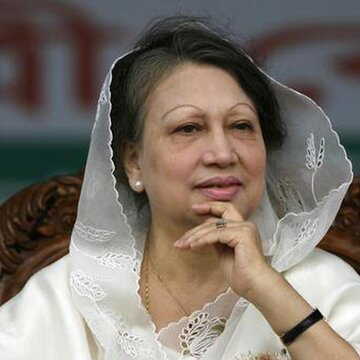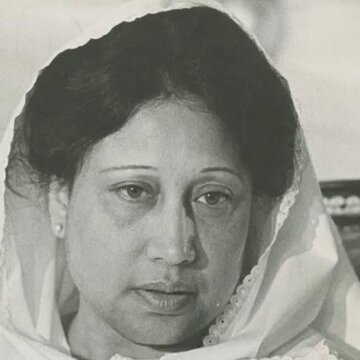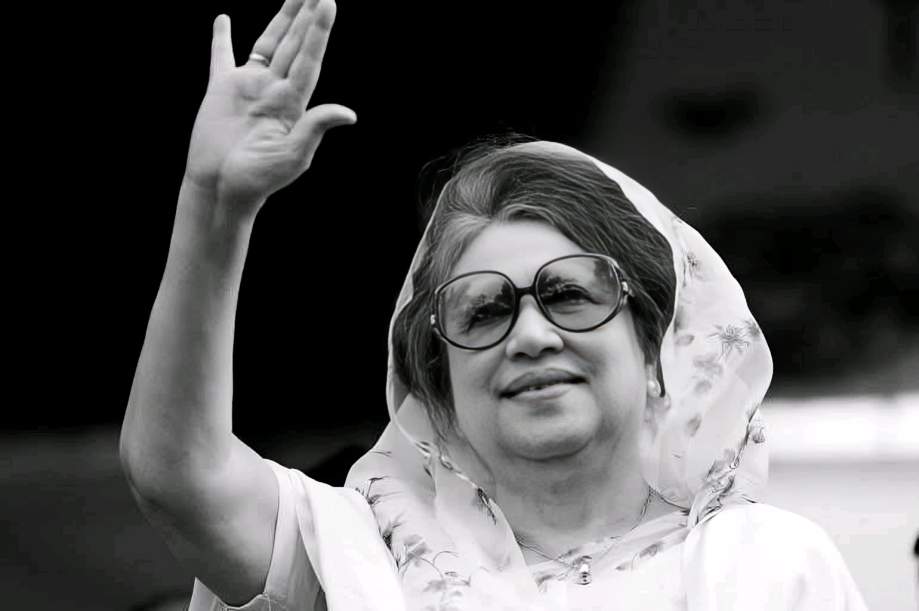
Khaleda Zia, Bangladesh's first woman prime minister and one of the South Asian nation's most powerful political figures, died on Tuesday at the age of 80, after an extended illness, the Bangladesh Nationalist Party (BNP) said in a statement. She had been suffering from several health complications, such as advanced cirrhosis of the liver, arthritis, diabetes, and serious chest and heart problems. She was undergoing treatment at a specialised private hospital in Dhaka.
Who was Khaleda Zia?
Khaleda Zia was born in 1945 in Jalpaiguri, then part of the undivided Dinajpur district under the Bengal Presidency in British India. After the partition, her family migrated to Dinajpur town, now in Bangladesh. She began her schooling at Dinajpur Missionary School and later attended Dinajpur Girls' School from 1960.
Also Read | Khaleda Zia, former Bangladesh PM and BNP Chief, passes away at 80 in Dhaka
From army chief’s wife to opposition leader
She was married to Ziaur Rahman, the former President of Bangladesh, who was killed during a coup in 1981, triggering a nine-year-long military regime. After his assassination, Khaleda stepped into active politics, leading a seven-party alliance to oppose the rule of then army chief General Hussain Muhammad Ershad. She joined the BNP as a general member, became vice-chairperson in 1983, and was elected party chairperson a year later.
Years of detention and defiance against military rule
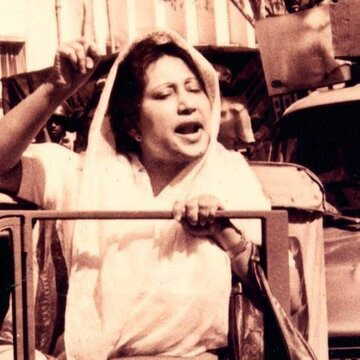
Khaleda rejected the 1986 elections and abstained from the action, unlike the competing parties, which contested under Jatiya Party rule. She was detained seven times between 1983 and 1990 for her unabated opposition.
Becoming Bangladesh's first female prime minister
In 1991, Khaleda Zia became Bangladesh's first woman prime minister through a popular vote. Her government restored the parliamentary form of governance and introduced the caretaker government system to ensure free and fair elections. Major economic reforms followed, including the introduction of value-added tax, or VAT, the Bank Company Act in 1991, the Financial Institutions Act in 1993, and the establishment of a privatisation board. She also played an important role in increasing access to education.
Reform, resistance and return to power
Her second term in February 1996 lasted only a few weeks. She gained power again in 2001 after leading a four-party alliance and undertaking campaigns against corruption and terrorism.
Before stepping down from the office, Khaleda visited India in 2006 and in October 2012, during which she held talks with then President Pranab Mukherjee, Prime Minister Manmohan Singh, and Leader of Opposition Sushma Swaraj. Prime Minister Narendra Modi called on her during his visit to Bangladesh in 2015.
Also Read | From Dhaka to global capitals, 5 key moments when Khaleda Zia’s leadership left foreign leaders taking note
‘Fighter for Democracy’
After the Sheikh Hasina-led government came to power in 2009, Khaleda Zia once again became actively involved in political movements demanding democratic rights. During this period, she was evicted from her residence and placed under house arrest on two occasions for leading pro-democracy campaigns. In recognition of her political struggle, the New Jersey State Senate conferred upon her the title of ‘Fighter for Democracy’ in 2011.
Cases of corruption, imprisonment, and isolation from politics
She was arrested in 2007 on charges of corruption and served a 17-year sentence in 2018 in connection with the Zia Orphanage Trust Case and the Zia Charitable Trust Case. She was freed recently when Sheikh Hasina was overthrown from power. Khaleda had pledged to continue the election campaigns despite being ill for several years, but she was to be relocated to London, England, for treatment due to worsening medical conditions. Khaleda's son, Tarique Rahman, has come back to Bangladesh after 17 years of exile and will contest the upcoming election as the head of the BNP on February 12.