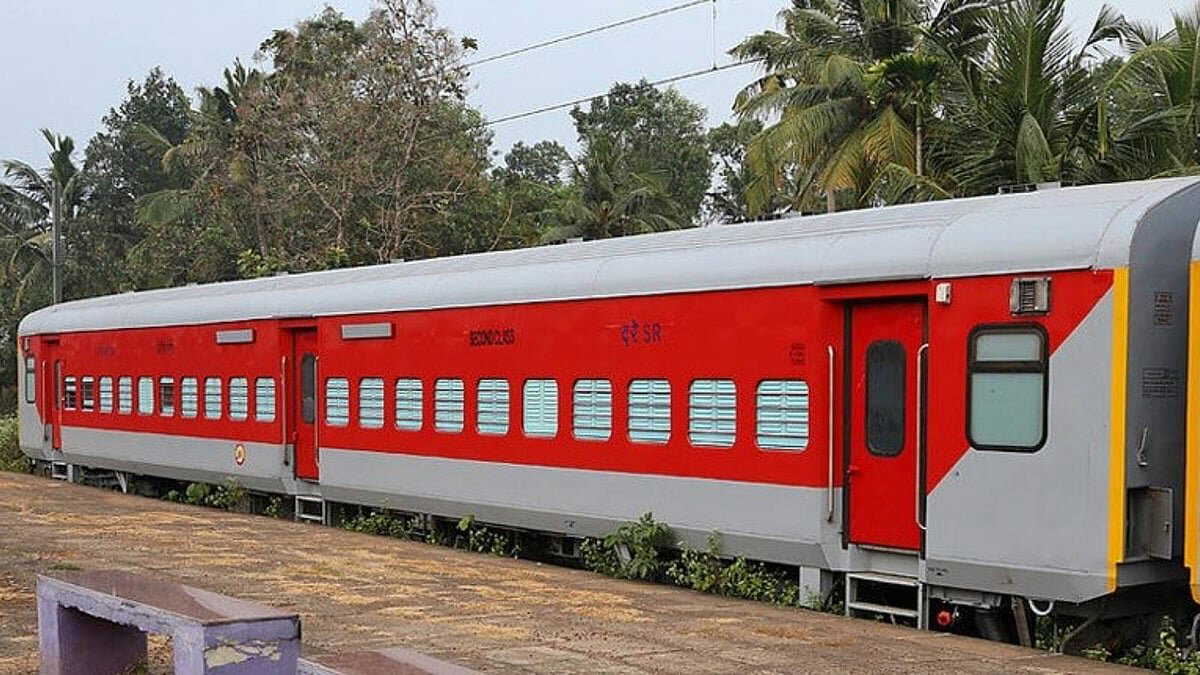
Indian Railways has unveiled an ambitious plan to further enhance passenger safety and service quality across its network. The Railway Ministry has announced a target to manufacture 4,802 Linke Hofmann Busch (LHB) coaches in the 2026–27 financial year. The initiative aims to improve passenger safety, enhance travel comfort, and boost overall operational efficiency.
In a statement issued on January 6, Indian Railways highlighted that it has already set a record in the production of general and non-AC coaches. These newly manufactured coaches are equipped with modern, passenger-friendly facilities, enabling the railways to carry more passengers at lower fares. According to officials, this has not only improved travel comfort but also significantly increased the carrying capacity of coaches.
Also Read | Vodafone shares jump 9% in weak market after AGR dues update
The Railways further stated that a continuous coach production programme is underway for both the current and the next financial years. The objective is to modernise passenger coaches and make them more robust to meet growing demand.
As per railway data, the target for the 2025–26 financial year was to manufacture 4,838 new LHB general and non-AC coaches. For the 2026–27 financial year, the target stands at 4,802 LHB coaches, including 2,638 LS coaches and 2,164 LSCN coaches.
Over the past 11 years, Indian Railways has produced more than 42,600 LHB coaches. In the 2025–26 financial year alone, up to November 2025, 4,224 LHB coaches were manufactured—around 18 per cent more than during the same period last year.
Also Read | US-India trade tensions resurface following Donald Trump comments
Railway officials have pointed out that LHB coaches offer improved safety systems, lower maintenance costs, and higher operational efficiency. Production is being ramped up to meet future requirements, while older ICF coaches are being phased out. The large-scale manufacturing of LHB coaches using indigenous technology is also contributing to the government’s Atmanirbhar Bharat and Make in India initiatives.