Delhi’s Cabinet has approved the Delhi Electric Vehicle Policy 2026-2030, setting a staged transition to cleaner mobility in the capital. The policy will apply from the date of notification and runs through March 31, 2030.
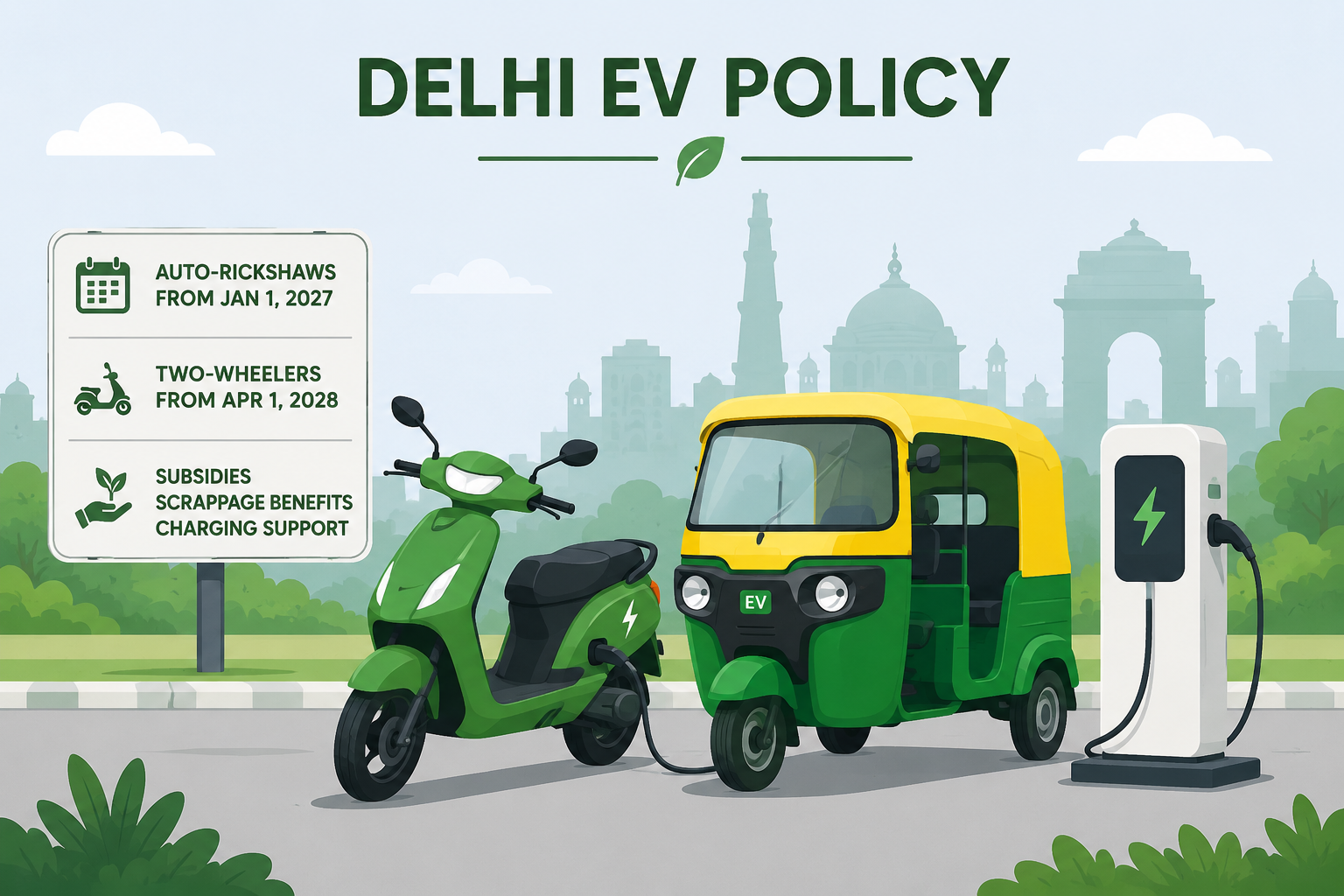
Under the new framework, only electric three-wheelers will be permitted for new registration from January 1, 2027, while only electric two-wheelers will be allowed for new registration from April 1, 2028.
Also Read | No China permit, no onward journey: Why dozens of Kailash pilgrims are stuck in Nepal
VIDEO | All electric cars with an ex-showroom price of Rs 30 lakh or less registered in the national capital will be granted 100 per cent exemption on road tax and registration fees, as the Delhi government approved a new EV policy on Monday.
— Press Trust of India (@PTI_News) June 29, 2026
Under the new policy, people buying… pic.twitter.com/Uc8TE39CTh
Air pollution rationale
The policy document ties the move to Delhi’s air-pollution burden. It cites the Commission for Air Quality Management’s latest report, which identified vehicular emissions as the largest contributor to winter pollution in the city at 23%, and notes that two-wheelers account for roughly 67% of Delhi’s total vehicle stock.
On that basis, the government says faster electrification of two-wheelers, three-wheelers, commercial cars and goods vehicles is essential to improve air quality.
Chief Minister Office Delhi (@CMODelhi) posts, "The Delhi Cabinet has approved the new Delhi EV Policy 2026, a landmark initiative to curb vehicular pollution and accelerate the transition towards clean, sustainable mobility in the national capital. The policy will come into… pic.twitter.com/xJEntgOgsh
— Press Trust of India (@PTI_News) June 29, 2026
Sweeteners with a spark
The policy also lays out a package of incentives. Electric two-wheelers will be eligible for purchase support on a per-kWh basis, capped at ₹30,000 in the first year from notification, with the amount tapering in subsequent years.
Electric auto-rickshaws will get up to ₹50,000 in the first year, while electric N1 goods vehicles will receive up to ₹1 lakh in the first year. In a direct incentive for scrappage, the policy provides ₹10,000 for electric two-wheelers, ₹25,000 for electric three-wheelers, ₹50,000 for electric goods carriers and ₹1 lakh for electric cars priced up to ₹30 lakh, subject to eligibility rules.
It also grants all electric vehicles registered in Delhi during the policy period a “100% exemption from road tax and registration fees".
The machinery behind the ambition
The government has paired the policy with an infrastructure push. Delhi Transco Limited will act as the nodal agency for planning and implementation of public charging and battery-swapping infrastructure, while a high-powered committee under the chief secretary will oversee coordination across departments.
The policy also requires OEMs operating in Delhi to set up at least one public charging station per dealer, with minimum charging points for two-/three-wheelers and four-wheelers.
On the fleet side, all hired or leased GNCTD vehicles will have to be electric, and all new intra-state buses inducted by DTC and the Transport Department will also be electric, subject to limited exceptions for cleaner fuels such as hydrogen if introduced later.
Also Read | 'Integrated coaching is not recognized': Maharashtra warns of action against dummy schooling
FAQs
Q1: When will Delhi allow only electric two-wheelers to be registered?
Ans: Delhi will permit only new electric two-wheelers to be registered from April 1, 2028, under its EV Policy 2026–2030.
Q2: What are the key changes under Delhi's new EV policy?
Ans: The policy mandates electric-only registration for new auto-rickshaws from January 1, 2027, electric two-wheelers from April 1, 2028, and offers subsidies, scrappage incentives, and tax exemptions.