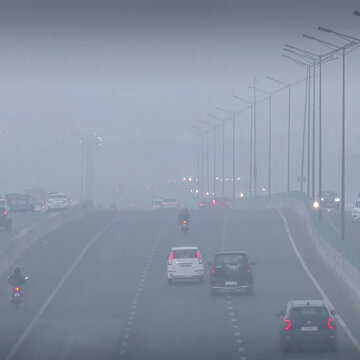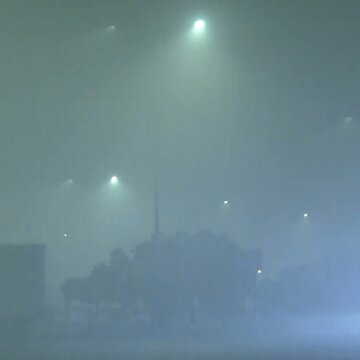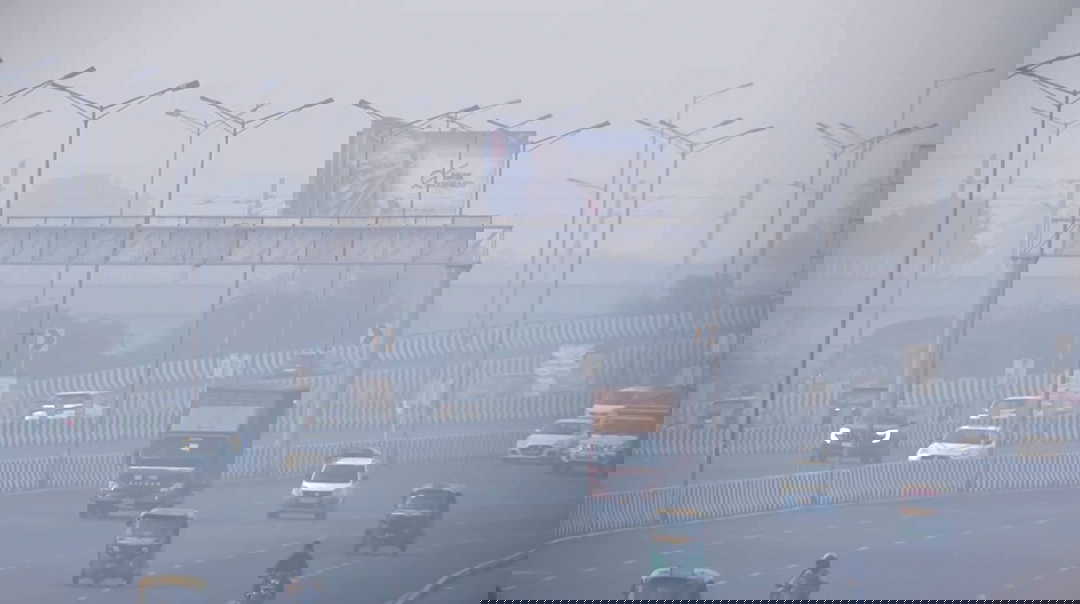
Delhi's air quality deteriorated again on Monday, inching closer to the 'very poor' bracket, barely a day after strong winds had given some respite. The city's AQI, at 7 am, was recorded at 298, still in the 'poor' category, as a mixture of fog and smoke engulfed the capital, according to the Central Pollution Control Board (CPCB).
Delhi had recorded its second-best AQI of the month at 279 on Sunday, after the 202 reading on November 5, according to the CPCB's Sameer app. However, even during that brief improvement, 22 of the city's 39 monitoring stations remained in the 'very poor' range.
Also Read | 'Forgive me for pleading again': Kiran Bedi urges PM Modi to take action on Delhi air pollution
Pollution hotspots spike again
CPCB categorises air quality as follows: 0–50 ‘good’, 51–100 ‘satisfactory’, 101–200 ‘moderate’, 201–300 ‘poor’, 301–400 ‘very poor’, and 401–500 ‘severe’.
On Monday, Nehru Nagar reported the worst air in Delhi with an AQI of 351, firmly placing it in the ‘very poor’ band. The cleanest reading was posted by NSIT Dwarka at 195, falling under ‘moderate’. A few pollution-prone pockets, namely, Anand Vihar (323), Bawana (337), Burari Crossing (304), Jahangirpuri (319), Mundka (330), Punjabi Bagh (326), Shadipur (325) and Wazirpur (321), also remained trapped in the ‘very poor’ range.
How NCR fared
Among the NCR cities, the most polluted was Noida with an AQI of 316 (‘very poor’). Greater Noida, at 288, and Ghaziabad, at 291, remained in the ‘poor’ bracket. Faridabad had the lowest level in the region at 208, classified as ‘poor’.
Best Jan–Nov average AQI since 2018 (excluding 2020)
Despite the latest dip, the Commission for Air Quality Management said Delhi's average AQI from January to November stood at 187 - its best for the period since 2018 if the Covid-affected year 2020 is excluded. Only three days this year entered the 400+ ‘severe’ category, and none crossed 450.
Also Read | Pedal Power for Mental Wellness: Thousands cycle at Mumbai Cyclothon 2025
PM2.5 levels through November 27 averaged 85 µg/m³, the lowest since 2018 and comparable to 2020. PM10 levels similarly recorded their lowest Jan–Nov average since 2018 (excluding 2020), at 183 µg/m³.
Coldest November in five years
Delhi too started the day with a razor-sharp chill, its minimum temperature plummeting to 8.3°C, two notches below normal. The maximum was recorded at 24.3°C, two notches below the seasonal average, the IMD said. With an average minimum of 11.5°C this November also remained the city's coldest since 2020. Forecasts for Monday show temperatures hovering around 24°C (max) and 8°C (min).