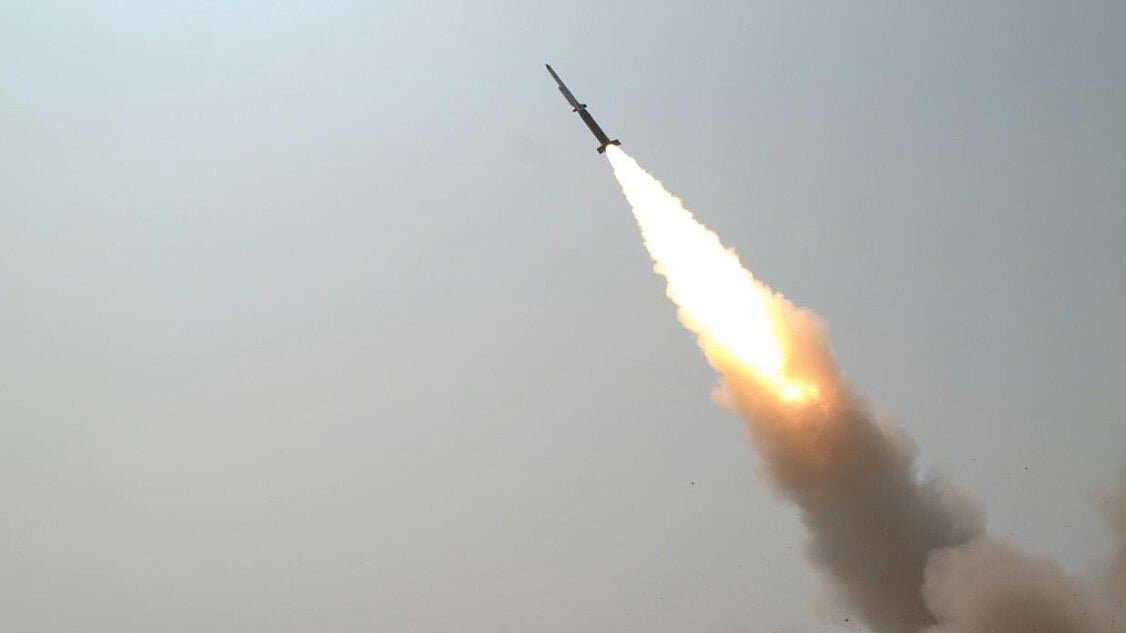
India has successfully tested its SFDR missile technology, achieving a major milestone for the nation's defence technology. On Tuesday, around 10:45 AM, the missile successfully took off following a short countdown sequence from Chandipur Integrated Test Range in Odisha. After the loud take off, the missile headed towards the Bay of Bengal, leaving a thick smoke trail behind.
What is SFDR?
The successful test involved a long-range missile propulsion system known as Solid Fuel Ducted Ramjet, or SFDR. Only a handful of countries in the world have mastered this technology. With this achievement, India has gained the ability to fly missiles at four and a half times the speed of sound, or Mach 4.5, and hit targets located between 50 and 350 kilometres away. At a speed of about 5,558 kilometres per hour, a missile can reach a target 350 kilometres away in just 3 minutes and 47 seconds.
Also Read | President’s Rule officially over in Manipur as assembly session convenes today
Why SFDR a rare technological milestone?
Scientists explained that SFDR is a propulsion system that makes air-to-air missiles far more effective. It uses oxygen from the atmosphere to keep fuel burning during flight. This allows the missile to maintain supersonic speed for a longer time and strike targets at extended ranges. In aerial combat, especially in Beyond Visual Range situations, this technology gives Indian fighter aircraft a clear advantage.
The system works efficiently from sea level up to an altitude of 20 kilometres. It also has vertical snap-up and snap-down capability up to 10 kilometres. Along with this, it offers a wide no-escape zone, strong tail-chase ability, and high G manoeuvring power. These features make it extremely difficult for enemy aircraft to evade the missile.
A boost for self-reliance in defence
After Operation Sindur in 2025, India’s defence budget saw a sharp rise. Over the past few years, efforts have been focused on reducing dependence on foreign weapons. Missiles like BrahMos, developed jointly with Russia, have already drawn global attention. DRDO’s Pinaka rocket launcher also proved its strength when Armenia used it effectively in conflict against Azerbaijan.
Also Read | 'Sorry, Papa...we cannot leave Korea': Ghaziabad sisters leave chilling suicide note with crying emoji
In this backdrop, the successful SFDR test has added fresh confidence among Indian scientists. Until now, only the United States, Russia, France and China had achieved this level of propulsion technology. With the Chandipur test, India has firmly joined that select group.