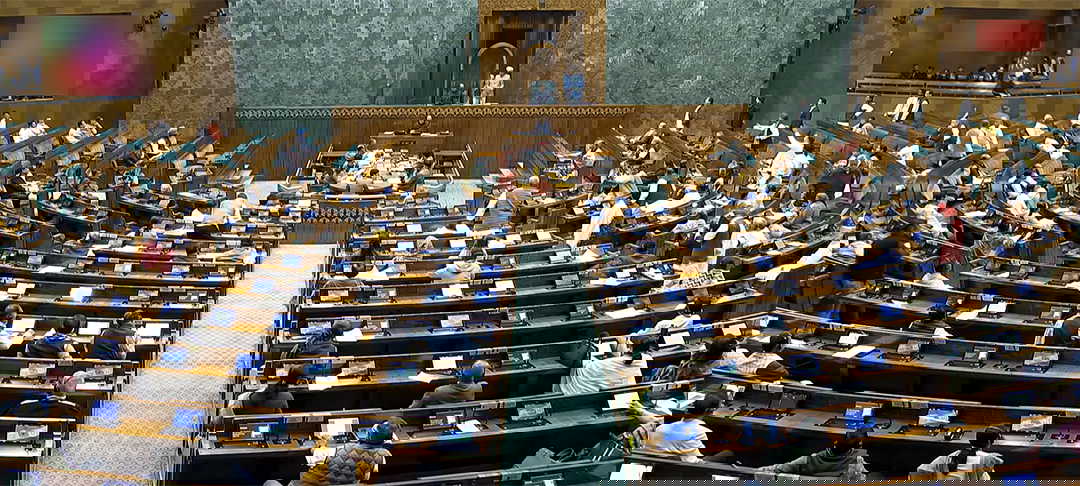
Parliament has passed the Viksit Bharat Guarantee for Rozgar and Ajeevika Mission (Gramin), or VB-G RAM G Bill, 2025, replacing the Mahatma Gandhi National Rural Employment Guarantee Act (MNREGA), 2005. The Bill was cleared by the Lok Sabha amid strong opposition protests and was passed by the Rajya Sabha later the same night after a midnight debate. Opposition parties said the new law weakens the original promise of guaranteed jobs for rural workers.
Workdays guaranteed
Under MNREGA, rural households were entitled to 100 days of work in a year. The new VB-G RAM G law raises this limit to 125 days, aiming to provide more employment opportunities in villages.
Also Read | India tops global doping list again with 260 violations in 2024: WADA report
How and when wages are paid?
Earlier, wages had to be paid within 15 days. Under the new law, payments will be made weekly. If wages are delayed beyond 15 days, workers will receive compensation at the rate of 0.05% of the unpaid amount for every extra day of delay after the 16th day.
Planned break
The law allows State governments to announce 60 days in advance during which no work will be provided. This is meant to avoid labour shortages during key farming seasons like sowing and harvesting. States can decide different no-work periods for different regions based on local farming needs.
Sharing the cost
MNREGA was fully funded by the Central Government. VB-G RAM G is now a centrally sponsored scheme. The Centre will pay 60% of the cost, while States and Union Territories will pay 40%. For hilly and North-Eastern States, the Centre’s share will be 90%, with States paying 10%. Union Territories without legislatures will be fully funded by the Centre. States will continue to pay unemployment allowance when work is not available.
Also Read | Kanakadurga temple to roll out TTD-like online services after Bhavani Deeksha rush
Deciding work and funds
Earlier, districts prepared labour budgets based on local demand. Under the new system, the Central Government will decide state-wise funding limits each year. If a State spends more than this limit, it will have to bear the extra cost. National and State Level Steering Committees will guide the scheme, after which Panchayats will carry out the work at the local level.
The new law brings higher work guarantees and faster payments but shifts more responsibility and control to the centre and states.