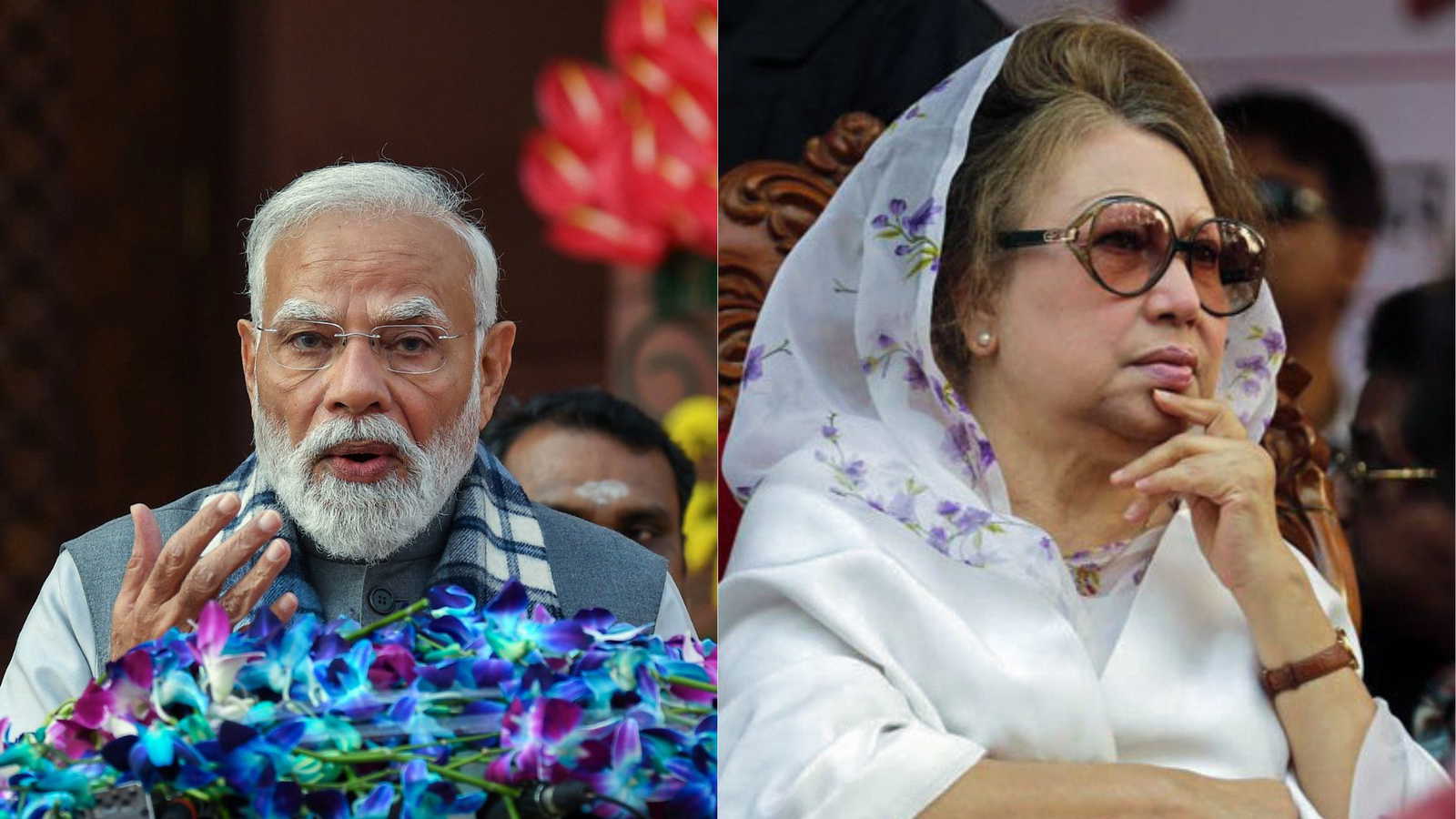
The news of Khaleda Zia, the former Prime Minister of Bangladesh and long-time head of the Bangladesh Nationalist Party (BNP). Her illness has sent waves far beyond her country’s borders. She is 80 years old. She was hospitalised with a severe chest infection that rapidly worsened, which affected both her heart and lungs and putting her in critical condition under ventilation.
In the middle of the growing concern in Bangladesh, a public message of support from India’s PM Narendra Modi altered a personal medical crisis into a geopolitical moment.
A message of concern and diplomatic weight
Narendra Modi took to X (formerly Twitter) to convey his serious concern over Zia’s deteriorating health on December 1, 2025. He recognised her decades-long contribution to Bangladesh’s public life and offered India’s “all possible support” for her recovery.
PM Modi wrote, "Our sincere prayers and best wishes for her speedy recovery. India stands ready to extend all possible support, in whatever way we can."
Khalida Zia is viewed as a rival of Bangladesh’s ruling lineage. This gesture brings forward layers of significance. It isn’t just a compassionate note; it is also a signal of India’s readiness to engage with all political shades across Dhaka’s spectrum. It is a situation in which diplomacy often hinges on symbolic gestures as much as on realpolitik. Modi chose a kind word at a fraught moment, which can resonate loudly.
ALSO READ | Winter session opens with Modi praising VP Radhakrishnan; Kharge quotes Sarvepalli Radhakrishnan
The reaction from the BNP was swift and warm. The party conveyed “sincere gratitude,” and claimed Modi’s outreach as a timely act of goodwill. This public gratitude might signal the doors of quieter channels of communication and renewed willingness for cross-border courtesy. It is a subtle thaw in an often tense atmosphere.
Beyond health: What does this mean for Bangladesh–India dynamics?
Zia is not just any ailing politician. She is an 80-year-old veteran leader whose illness restores memories of turbulent decades in Bangladesh’s politics. Her condition is already described as “extremely critical.” It has prompted prayers and concern across the nation. India’s supportive posture could be interpreted in several ways.
This exchange might be a humanitarian gesture, but it also poses a strategic overture to a key leader whose party may once again play a major role in Bangladesh’s reshuffled political landscape. The willingness to publicly recognise an opposition leader’s distress and extend support signals a diplomatic tone. It values human empathy alongside state interest.