The Rouse Avenue Court on Friday discharged Aam Aadmi Party national convenor and former Delhi Chief Minister Arvind Kejriwal in the Delhi Excise policy case.
Former Deputy Chief Minister and AAP leader Manish Sisodia was also discharged in the matter, which pertains to the nearly decade-long excise policy case.
In addition, the court declined to take cognisance of the CBI chargesheet filed in connection with the excise policy-linked corruption case.
ALSO READ | After Trump tariff shock, US Commerce Secretary makes surprise India visit — what's brewing?
Soon after the court’s decision, Kejriwal’s wife Sunita Kejriwal responded on X, saying that “truth shall prevail.”
“In this world, no matter how powerful one becomes, one cannot rise above Shiva Shakti. Truth always prevails,” Sunita Kejriwal said in a post on X.
¤ ¤ ¤ ¤ ¤ ¤ ¤ ¤® Â¥ ¤ ¤ Â¥ Â¤Ë Â¤ ¤¿ ¤¤ ¤¨ ¤ ¤ ¥ ¤¶ ¤ ¥ ¤¤ ¤¿ ¤¶ ¤ ¤² Â¥ ¤ Â¥ ¤ ¤ ¤¯ Â¥, ¤¶ ¤¿ ¤µ ¤¶ ¤ ¥ ¤¤ ¤¿ ¤ Â¥ ¤ ¤ª ¤ ¤¨ ¤ Â¥ ¤ ¤ Â¥ ¤ ¤ ¤¤ ¤ ¥¤ ¤ ¤ ¤ Â¥ ¤ ¤® Â¥ ¤¶ ¤ ¤ Â¥ ¤¤ ¤ Â¥ ¤¤ Â¥ ¤ Â¥Ë Â¥Â¤
” Sunita Kejriwal (@KejriwalSunita) February 27, 2026
The court observed that the allegations in the case had “failed judicial scrutiny” and stated that there was “no criminal intent” on the part of Manish Sisodia. It also remarked that the alleged conspiracy theory “cannot survive against one constitutional authority.”
The ruling has come as major relief for Arvind Kejriwal, who had spent a considerable period in jail during his tenure as Delhi Chief Minister in connection with the case.
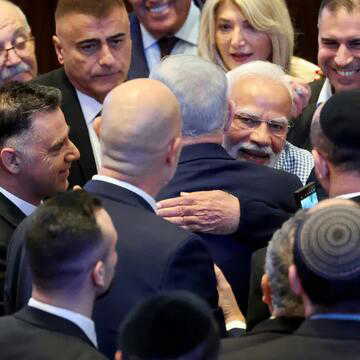
“I am not corrupt. The court has said that Kejriwal and Manish Sisodia are honest,” Kejriwal said after the verdict, becoming emotional as he embraced his close aide and former deputy Sisodia, according to media reports.
What is the Delhi excise policy case?
The case relates to the Delhi government’s Excise Policy 2021-22, introduced by the AAP government as a significant overhaul of the capital’s liquor trade. Under the new policy, the state exited the retail liquor business, allowing private players to run retail outlets, while the government continued to regulate wholesale licensing and oversight.
The AAP government maintained that the policy aimed to reduce corruption, improve the consumer experience and boost revenue by dismantling the alleged liquor “cartel” system that had operated earlier.
However, controversy arose in 2022 when Delhi Lieutenant Governor V K Saxena recommended a CBI investigation, citing alleged procedural lapses and financial irregularities in how the policy was framed and implemented. Following this, the Delhi government withdrew the policy and returned to the earlier excise system.
The CBI subsequently registered an FIR alleging irregularities in modifications to the policy, including claims of undue advantages to certain liquor licensees and an alleged Rs 100 crore payment by a “south lobby” to influence decisions. The agency filed its first chargesheet in 2022, followed by several supplementary chargesheets.
Based on the CBI’s case, the Enforcement Directorate (ED) also initiated a parallel money laundering probe.
Sisodia, who was handling the excise portfolio at the time, was arrested by the CBI in February 2023 after multiple rounds of questioning and later resigned from the Delhi cabinet. Kejriwal was later arrested by the ED in connection with the money laundering investigation, leading to political protests by the AAP.