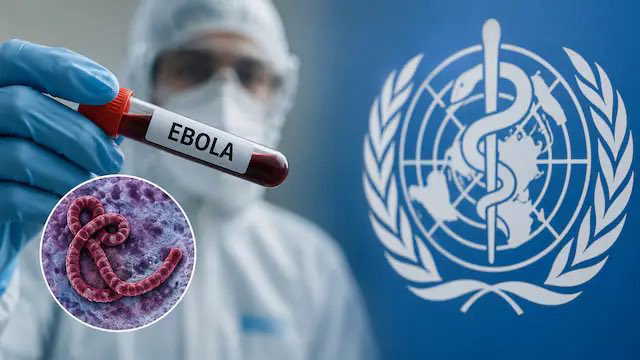
Health authorities in Telangana are closely monitoring two suspected Ebola cases after a second Sudanese national was admitted to a specialised isolation facility in Hyderabad. The development comes amid heightened vigilance across Indian airports and hospitals following concerns about Ebola outbreaks in parts of Africa.
The latest patient, a Sudanese student in his twenties, was shifted to Gandhi Hospital from a private healthcare centre on Thursday evening after developing a fever. Officials said his condition improved overnight, and he was free of fever by Friday morning. Authorities have advised his attendant to remain in home isolation as a precautionary measure.
The admission follows the hospitalisation of another Sudanese national, aged 35, who was identified during thermal screening at Rajiv Gandhi International Airport after arriving in Hyderabad for knee surgery.
Both patients currently stable
According to the Hindustan Times, the 35-year-old traveller was found to have a fever upon arrival and was transferred to an isolation ward for further evaluation. However, by Friday morning, he reportedly showed no symptoms and remained clinically stable.
Laboratory samples from both individuals have been collected, and authorities are awaiting confirmation through specialised testing. Until results are available, both cases are being treated as suspected infections under established public health protocols.
Officials have emphasised that neither patient has been confirmed to have Ebola at this stage.
Also Read | Why is Indore feeling unusually cool while monsoon marches across India?
Telangana strengthens preparedness measures
According to the Hindustan Times, in response to the potential threat, the Telangana government has established a dedicated 10-bed Ebola isolation ward at Gandhi Hospital to handle suspected cases and ensure rapid containment if required.
Last month, Hyderabad airport issued a public advisory outlining enhanced screening measures in line with directives from the Directorate General of Civil Aviation and the Ministry of Health and Family Welfare.
The advisory applies to passengers arriving from or transiting through countries and regions identified as high-risk, including Uganda and the Democratic Republic of the Congo. Travellers from affected areas may be required to complete self-declaration forms and undergo additional health screening.
Also Read | PM Modi marks World Environment Day, applauds India's environmental progress
Understanding Ebola and its transmission
According to the World Health Organisation, Ebola Virus Disease is a severe and often life-threatening illness that affects humans and certain animal species.
The virus is believed to originate in wild animals such as fruit bats and can spread to humans through direct contact with infected animals. Human-to-human transmission occurs through contact with blood, bodily fluids, contaminated surfaces, clothing or bedding used by infected individuals.
Common symptoms include fever, weakness, muscle pain, headache and sore throat, which may later progress to vomiting, diarrhoea and, in severe cases, internal or external bleeding.