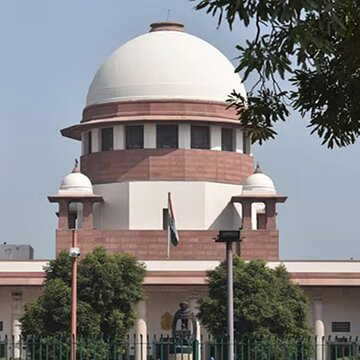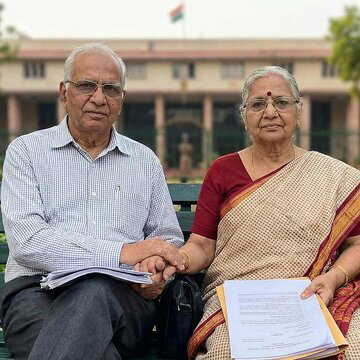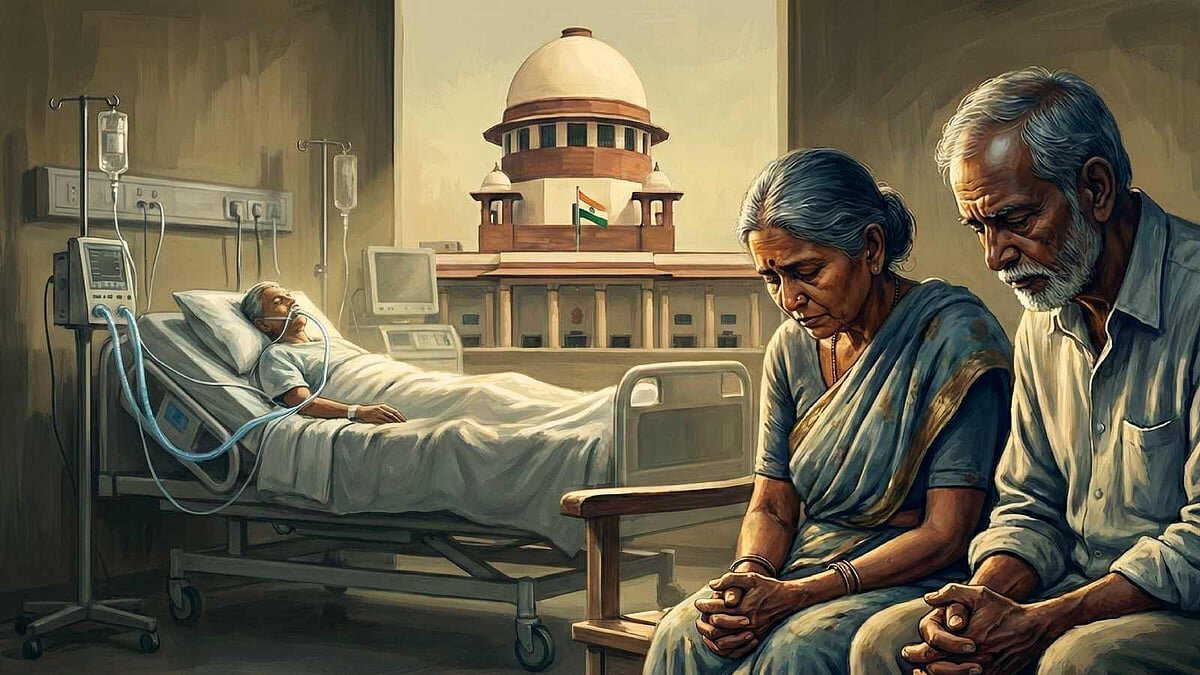
The parents of 32-year-old Harish Rana, who has been bedridden for 13 long years, have applied for “passive euthanasia” or mercy killing. Harish remains in a “permanent vegetative state” or comatose condition. The apex court has deferred the verdict in this case for now. However, the Supreme Court Bench of Justices J.B. Pardiwala and K.V. Viswanathan observed that mortality is inevitable for everyone and questioned who has the authority to decide matters of life and death, underlining the extreme sensitivity of the issue.
Also Read | Delay in restarting 100-day work scheme draws Calcutta High Court's ire
Thirteen years in a permanent vegetative state
Harish, a resident of Delhi's Mahavir Enclave, was a vibrant young man. He was studying at a college in Chandigarh. His life came to a standstill on August 20, 2013. He suffered serious head injuries after falling from the fourth-floor balcony of his residence. The accident left him completely disabled and bedridden.
Harish has been alive for more than a decade now. Liquid food goes through a tube in his nose. He breathes artificially with the help of machines. That's all. Unable to bear their son's “inhuman” suffering any longer, his elderly parents approached the court. Before the hearing, the judges also spoke separately with Harish's parents.
Both the amicus curiae representing Harish's parents in court and Additional Solicitor General(ASG) Aishwarya Bhati on behalf of the Centre argued in favour of Harish's mercy killing. The ASG informed that Harish's body now has “nothing but bones and skin.” Prolonging this agony in the name of treatment is actually contrary to a person's “right to dignity” or the “right to live with dignity.”
However, Harish's parents are seeking indirect mercy killing, not direct mercy killing. The amicus curiae on their behalf informed the court that in this process, life support would be withdrawn. Harish would be kept under “palliative care.” He would be given sedatives so that he wouldn't feel any pain. In this way, he would be allowed to die peacefully.
Also Read | Army objects to hospital near Bangladesh border, Supreme Court asks to find 'balanced solution'
Legal background of passive euthanasia in India
Notably, direct mercy killing is illegal in India. However, in 2011, the Supreme Court recognised passive euthanasia in the Aruna Ramchandra Shanbaug vs Union of India case. The nurse at Mumbai's KEM Hospital had gone into a coma after being sexually assaulted and remained in that condition for 40 years.
Following the Supreme Court orders, Aruna Shanbaug's life support was withdrawn, and she died of pneumonia in 2015. Guidelines for passive euthanasia were created in 2018.