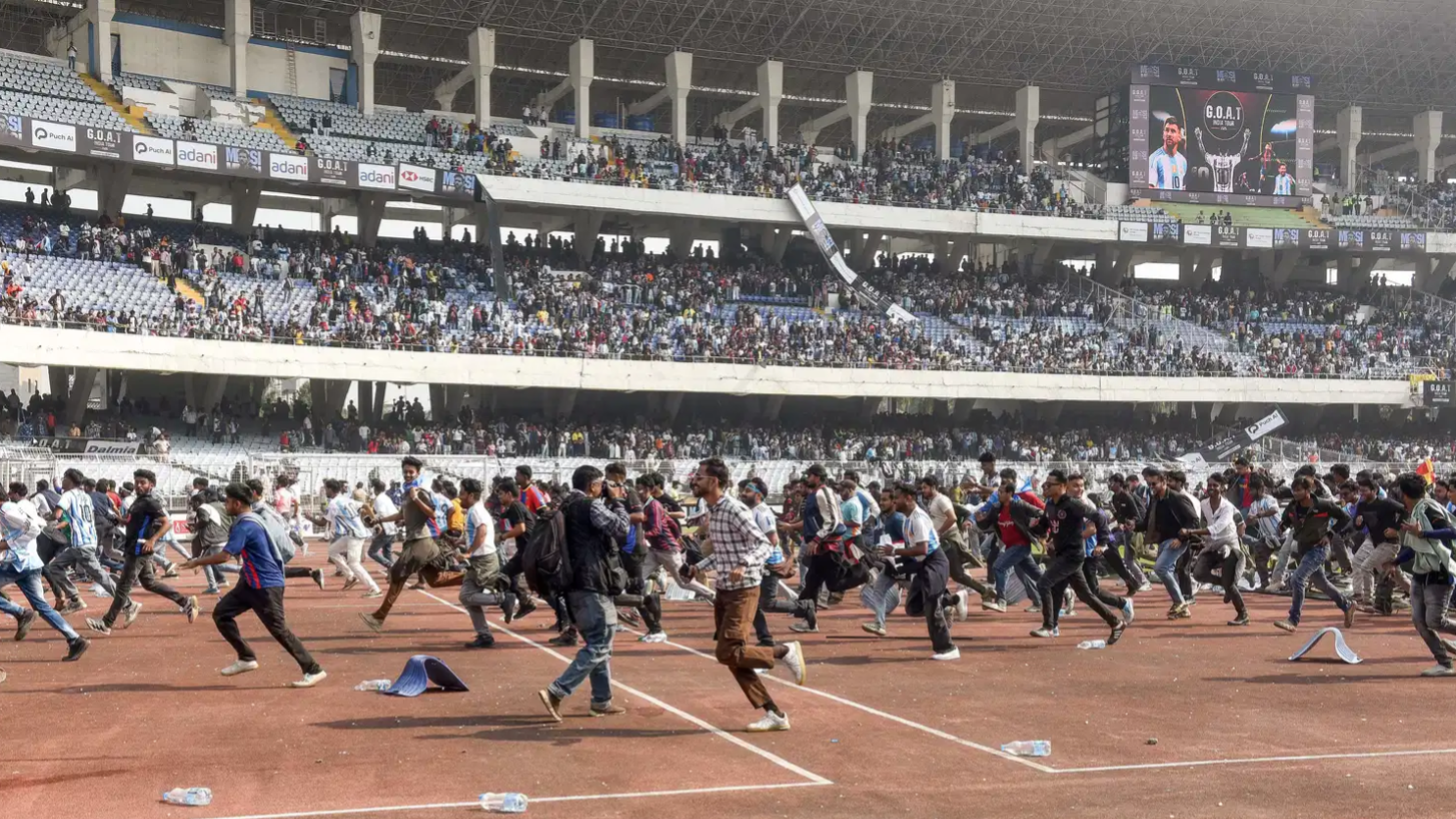
Saturday's commotion and subsequent vandalism at Lionel Messi's Kolkata leg of the G.O.A.T. India Tour have led the city's head to hang in shame. When the football legend suddenly left the ground within a short period of arrival, fans erupted in anger and disappointment. People had come from different parts of the country, paid hefty fares just for a glimpse of the football legend.
Moments after Messi left Kolkata's Salt Lake Stadium, fans who had been waiting from early morning started protesting, which quickly turned violent. Fans were seen vandalising the seating arrangements of the gallery, breaking gates, jumping fences, and marching onto the ground. They were seen taking carpets, destroying tents, and throwing things at security personnel. As a result, the beautifully decorated stadium turned into a conflict-ridden ground.
Are there legal provisions that can determine the consequences for those responsible for vandalising government property? Let's take a look at some legal provisions and the consequences of such actions.
Legal grounds involved in the Salt Lake Stadium vandalism
BNS Section 192
If someone knowingly or carelessly commits an act that provokes others and leads to a riot, the law can hold that person responsible. If a riot actually takes place, the punishment can be up to one year in jail, or a fine, or both.
Even if no riot happens, provoking others in this manner can still lead to up to six months in jail, or a fine, or both.
BNS Section 324 (4) & (5)
Under this section, damaging public property, vandalising someone’s belongings, or altering property in a harmful way can amount to mischief.
Under the sub-section (4), if mischief results in a loss or damage of ₹20,000 or more but less than ₹1 lakh, the offence is punishable with imprisonment of up to two years, or fine, or both.
According to sub-section (5), if the loss or damage caused is ₹1 lakh or more, the punishment may extend to five years of imprisonment, or fine, or both.
BNS Section 326 (e)
The clause states that destroying, removing, or tampering with any landmark fixed by a public servant, or doing anything that makes such a landmark less useful, is a punishable offence. The punishment may extend to imprisonment of up to one year, or fine, or both.
BNS Section 132
The section underlines that attacking or threatening a police officer, government official, or civic worker while they are on duty or if the assault is in response to an act lawfully done by the public servant, it can lead to up to 2 years of jail time or a fine or both.
BNS Section 121 (1) & (2)
The law deals strictly with violence against public servants on duty.
As per sub-section (1), causing hurt to a public servant while they are performing their duty, or to stop them from doing so, is punishable with imprisonment of up to five years, or fine, or both.
While under sub-section (2), causing grievous hurt to a public servant in the same circumstances attracts rigorous punishment, with imprisonment of not less than one year and up to ten years, along with fine.
BNS Section 45 & 46
Section 45 outlines, encouraging, planning, or knowingly helping someone commit an offence, even indirectly, can make a person legally responsible for abetment.
According to Cambridge dictionary, the act of helping or encouraging someone to do something wrong or illegal is considered abetment.
While section 46 states who is an abettor, even if someone doesn't commit the crime themselves, helping or pushing someone else to do it can still make them legally responsible.
West Bengal MPO Act Section 9
Section 9 states that a person committing a devastating act can be punished with imprisonment of up to ten years, or fine, or both.
PDPP Act Section 3
The law highlights that anyone committing any act causing damage to public property can be punished with up to five years’ imprisonment and a fine.
However, besides these legal grounds, the legal system has major provisions to punish someone responsible for public unrest leading to massive outcry, as the legal system relies on statements and evidence presented from both sides to reach a just conclusion.