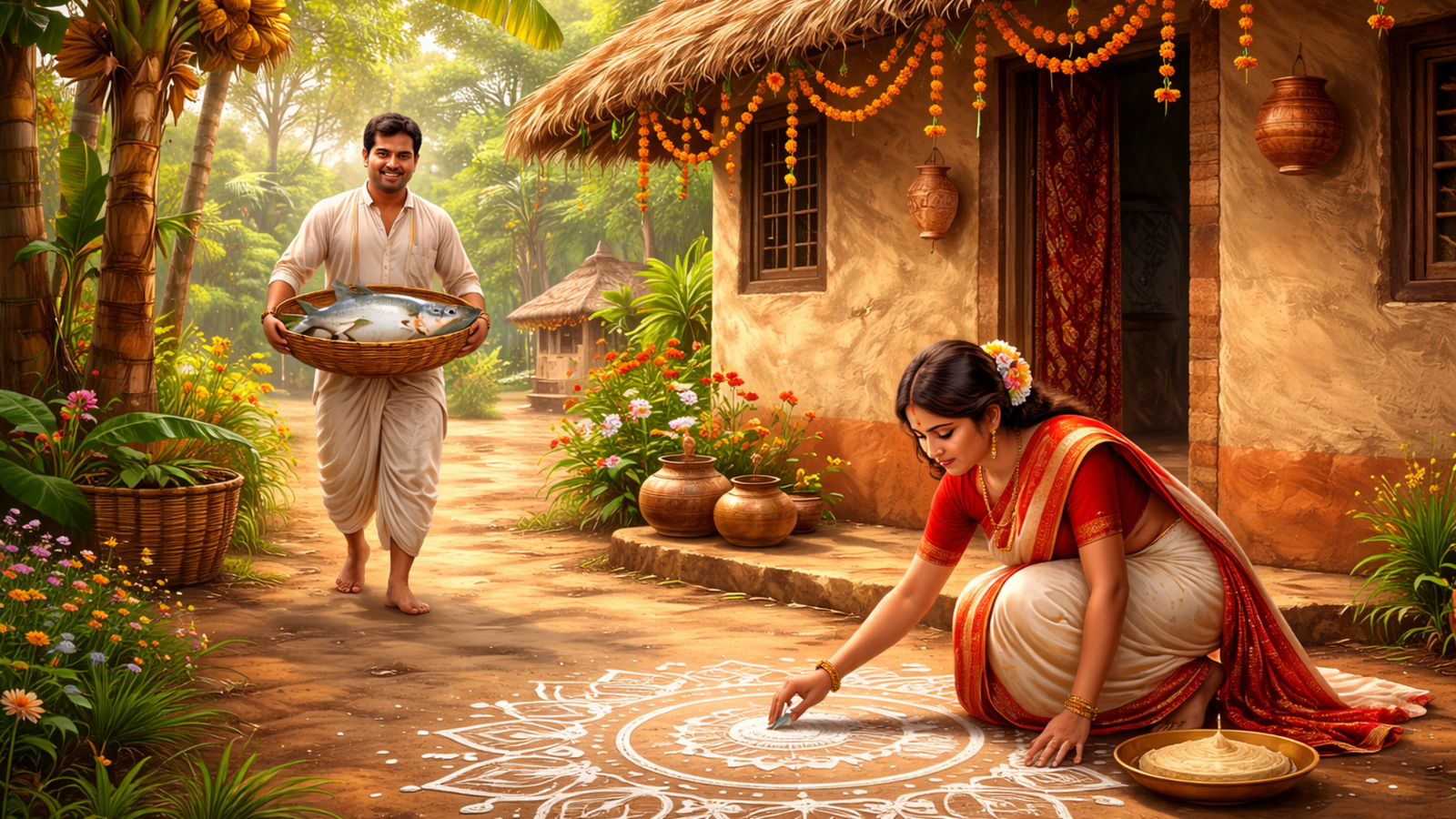
Poila Boishakh, the Bengali New Year, arrives with a burst of colour, culture, and quiet hope, usually on April 14 or 15. “Esho he Boishakh, esho esho…”, as Rabindranath Tagore wrote, the timeless call of renewal fills the air, as Bengal steps into the new year with open hearts and a celebratory spirit. Across Bengal, the day unfolds in a vibrant rhythm, with new beginnings, festive gatherings, and traditions that feel both timeless and alive. This year ushers in 1433, carrying with it aspirations of prosperity and fresh possibilities.
People dress in traditional attire, participate in cultural events, and share festive meals with family and friends. The ritual of Haal Khata, where businesses open new account books, symbolises a fresh financial start, making the day both culturally and economically significant.
What is the meaning behind 'baro mashe tero parbon'?
Following the spirit of Poila Boishakh, the phrase “Baro Mashe Tero Parbon” emerges as a defining feature of Bengali life. It literally translates to thirteen festivals in twelve months, symbolising the continuous presence of celebrations throughout the year. It reflects a mindset that finds joy in every season and occasion.
Also Read | Looking for silence in the hills? Lamahatta and Simana village might be it
The story behind Bengal’s year-round celebrations
The concept traces back to agrarian Bengal, where festivals were closely linked to agricultural cycles and seasonal changes. Celebrations marked important moments such as harvests, monsoons, and religious observances. Festivals like Nabanna, celebrating the arrival of new crops, brought communities together in gratitude and shared joy.
Celebrations that colour every month
Bengal’s calendar is filled with diverse festivals, each carrying unique traditions. The grandeur of Durga Puja represents the peak of celebration with elaborate decorations and rituals. Kali Puja illuminates the night with devotion, while Saraswati Puja holds special significance for students and educational institutions. Each festival adds colour and meaning to the yearly cycle.
Also Read | THIS quiet hill village is now a must-visit near Darjeeling: Here’s why
Where festivals become a way of life
Festivals in Bengal are not only religious but also social and cultural events that strengthen community bonds. They bring people together regardless of differences, encouraging unity, creativity, and shared joy. Traditional music, dance, art, and food play an essential role in enhancing the festive atmosphere.
Even in today’s fast-paced world, the essence of “Baro Mashe Tero Parbon” remains strong.