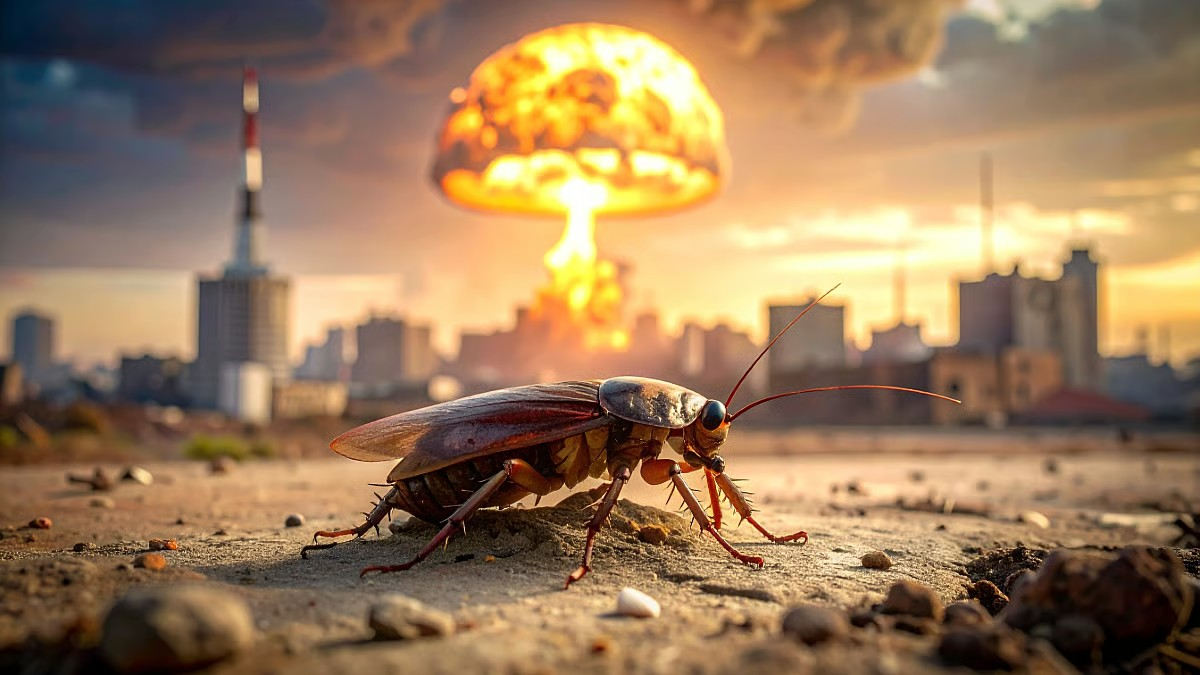
The city burnt by the flames. Structures turned to ashes. Nothing living in sigh, except for an insect that suddenly crawls out of those ashes.
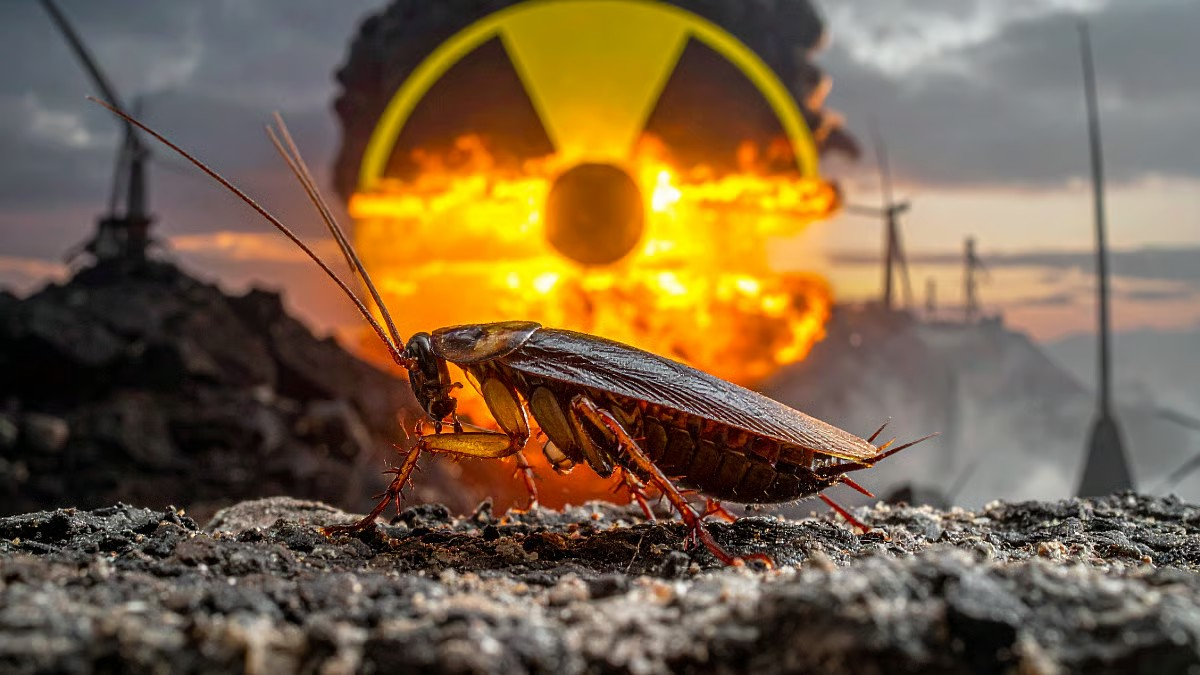
For years, films, internet jokes, and popular culture have been circulating one popular belief: if there ever occurs a nuclear war that leads to humanity's extinction, the cockroach would be the survivor.
Also Read | Thailand revises visa rules: Indians now eligible only for Visa on Arrival
 AI
AI
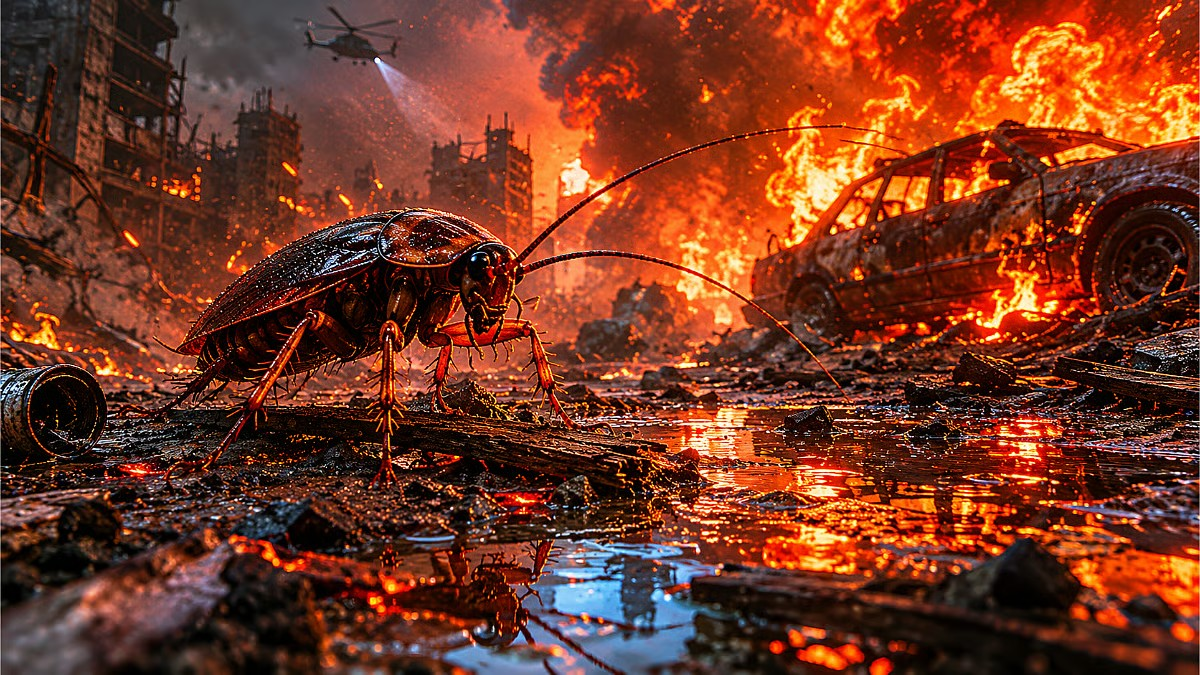
Now, amid the sudden rise of India’s viral “Cockroach Janta Party” trend online, the survival myth about cockroaches in case of a nuclear attack comes back into social media discussions. But can cockroaches survive a nuclear explosion? According to science, the answer is both yes and no.
Why cockroaches are considered radiation-resistant
The idea mostly stems from the events of World War II, when Japan was devastated following the use of atomic weapons on Hiroshima and Nagasaki in 1945.
The researchers observed that despite the extensive destruction brought about by the bombings, several species of bugs, such as cockroaches, appeared sooner or later in these locations. As time passed, this phenomenon turned into a common notion that cockroaches were able to withstand a nuclear explosion better than people.
 AI
AI
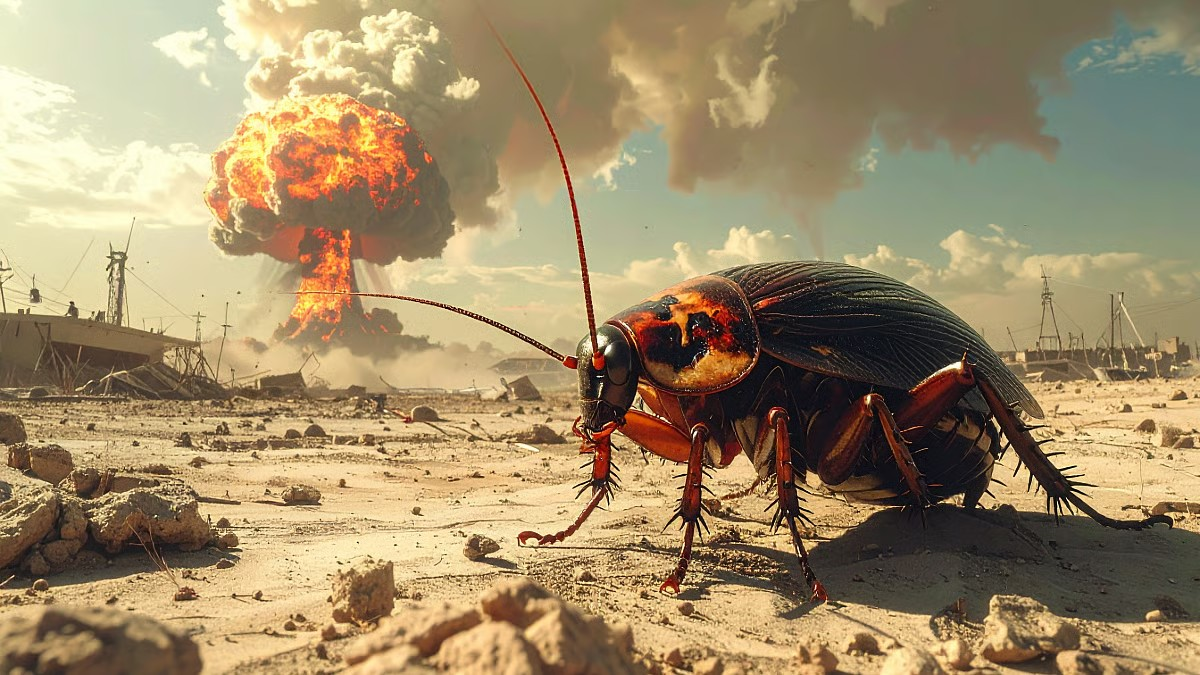
As it appears from research conducted by specialists, cockroaches are actually more resistant to radiation than humans.
A key reason for this lies in the much slower reproduction of their cells compared to people whose cells reproduce faster, which makes people more susceptible to radiation.
Nevertheless, studies have demonstrated that cockroaches were able to survive even those levels of radiation that would cause death among people.
The explosion would still kill them
It is important to note that surviving exposure to radiation is vastly different from surviving the blast itself of a nuclear weapon.
The intense heat, fire, and shockwave generated during an atomic explosion will likely lead to the deaths of cockroaches at the epicentre of such an event, as well as all other living things present in the vicinity.
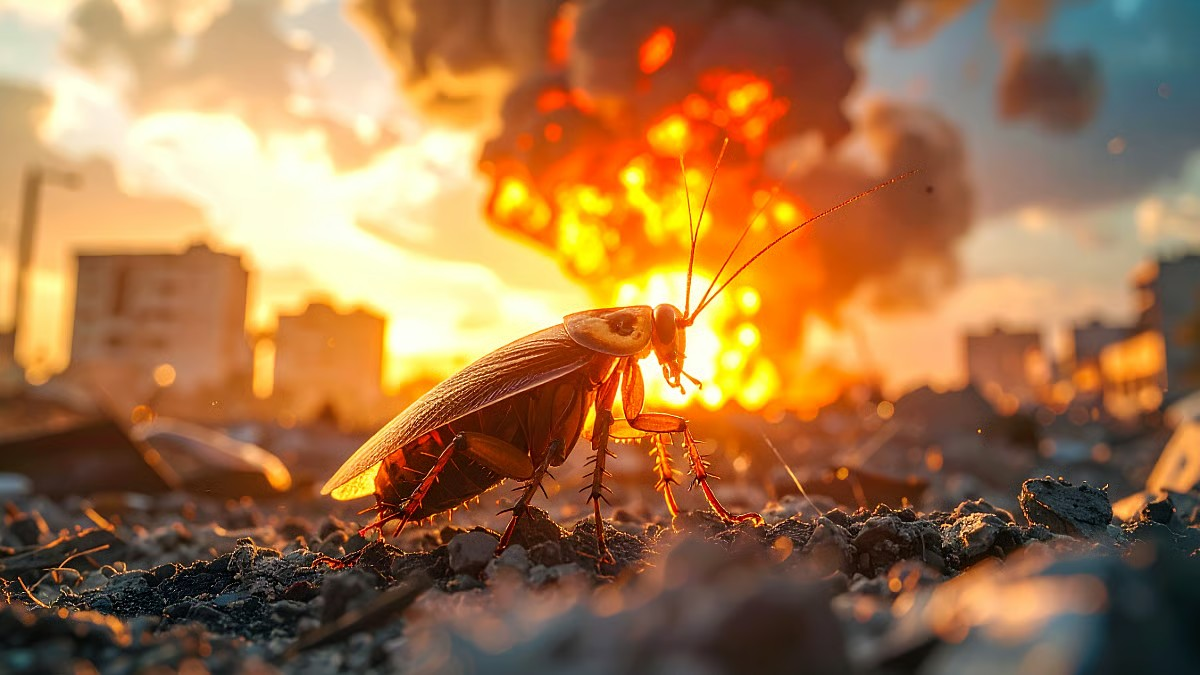
On the other hand, cockroaches sheltered sufficiently far away in underground crevices or sewers will likely survive better than most humans since they need less food and can thrive under difficult circumstances.
 AI
AI
Cockroaches’ ability to survive is, in fact, related to their evolutionary history.
According to scientists, cockroaches have been around for about 300 million years, surviving multiple periods of extinction in which millions of other species have been killed.
This made cockroaches seem almost invincible.
Not even the toughest survivors in nature
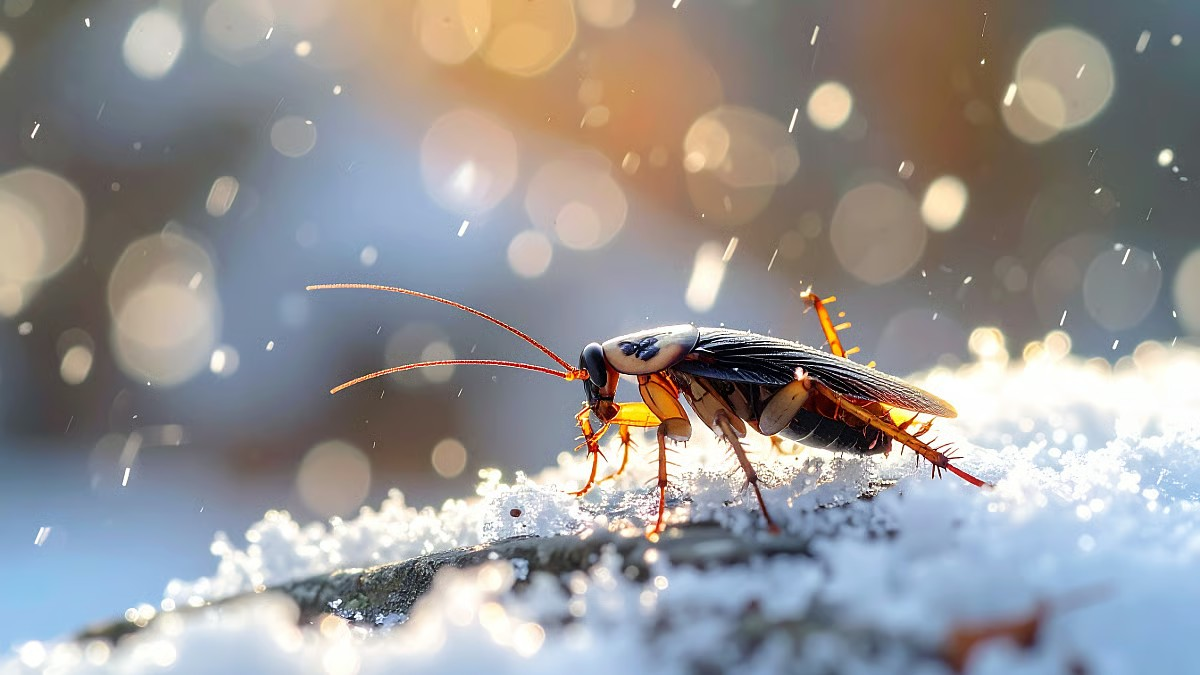
Scientists also clarify that cockroaches are not the most radiation-resistant organisms on Earth.
Certain bacteria, fungi and microscopic organisms called tardigrades can survive conditions far more extreme than what cockroaches can tolerate.
 AI
AI
Cockroaches do possess unusual survival traits. They can live for days without their heads, survive on minimal food and thrive in difficult environments where many species struggle. But researchers maintain that the idea that “only cockroaches will survive nuclear war” is scientifically exaggerated.
Why the myth became so popular
Experts say the myth grew stronger during the Cold War era when fear of nuclear conflict shaped films, comics and popular culture worldwide.
Cockroaches became symbols of survival because they were often seen in dark corners, abandoned buildings and damaged environments where humans found it difficult to live. That cultural image eventually turned into one of the internet’s most repeated scientific myths.
Also Read | Taking protein powder? These 4 common mistakes could harm your health
What is India’s Cockroach Janta Party?
The renewed discussion around cockroaches comes as India’s satirical “Cockroach Janta Party” continues gaining traction online.
The internet-driven political parody group describes itself as “a political front of the youth, by the youth, for the youth” and claims to represent the “voice of the lazy and unemployed.”
 AI
AI
Its mock manifesto includes unusual demands such as banning retired chief justices from Rajya Sabha nominations, introducing 50 per cent reservation for women in Parliament without increasing total seats and imposing a 20-year political ban on elected representatives who switch parties.
The group’s bizarre branding and meme-heavy campaign quickly pushed cockroaches back into online political humour — along with the famous nuclear survival debate attached to them.