The contrast is so striking that it cannot go unnoticed. The characteristics of residents of China, Japan, Korea, in short, the 'Mongoloid features' include small and slanted eyes, flat noses, high cheekbones, and jet-black straight hair. But the residents of Liqian village in China's northern Gansu province are a brilliant exception to this.
Their irises are green or blue, and most have wavy golden hair. Why the residents of Liqian display such 'Caucasian features' instead of what are called 'Mongoloid features' has long puzzled anthropologists. Historians have also sought answers.
Also Read | 'Roster dating' trend among Gen Z sparks debate on modern relationships
It is believed that they are descendants of a Roman legion that disappeared two thousand years ago. DNA tests conducted on Liqian residents have found traces of European ancestry in their bodies. Even the name 'Liqian' is thought to be a corruption of the Roman word 'Legion'.
How did a group of soldiers from distant Rome reach that area? China was never under the Roman Empire, so how? Historians have constructed a possible explanation for this. US sinologist Homer Dubs was the proponent of this theory in the 1950s. According to it, in 53 BC, Roman forces led by Roman general Marcus Licinius Crassus were defeated by the Parthians at the Battle of Carrhae.
The location falls in present-day Turkey. Ancient documents show that several captured Roman soldiers were sent eastward as mercenaries for border defence. It is believed that they travelled from there across Central Asia to reach the edges of the then Han Empire of China.
Also Read | Howler monkeys: Meet the loudest primates roaring across Central and South America
The Han dynasty maintained contact with Western countries through the Silk Route. According to ancient Chinese documents, soldiers in that country would form a special formation that was much like the Romans' 'testudo' or 'tortoise formation'.
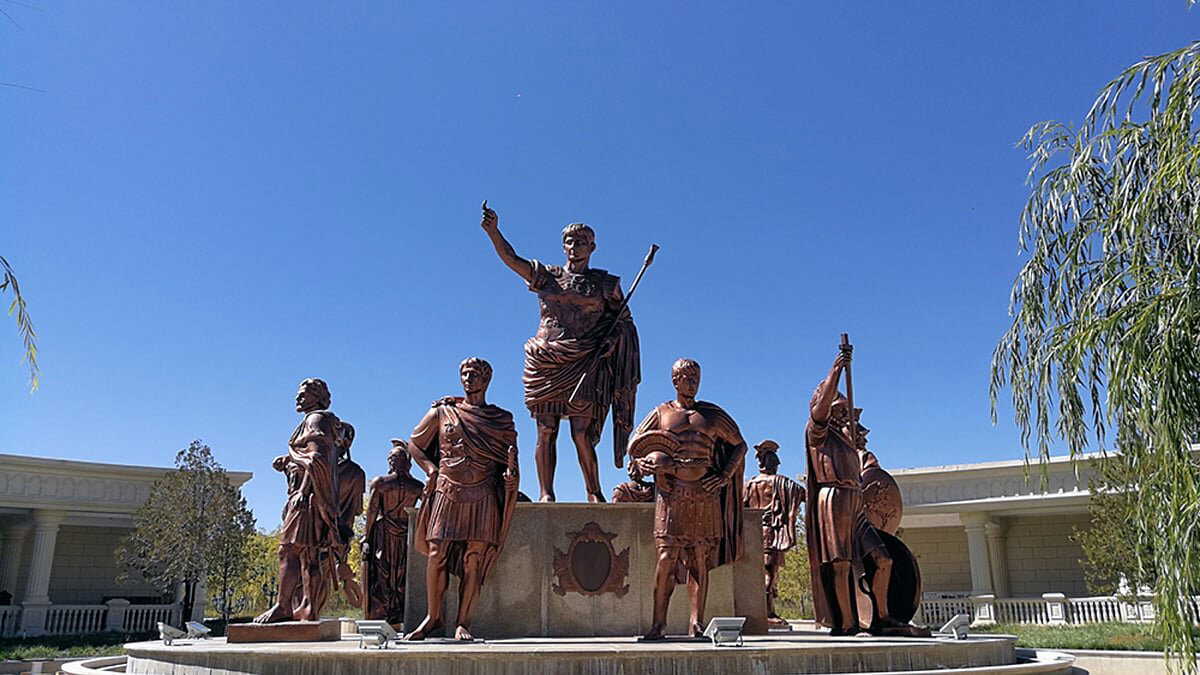
The legend of the Roman army's arrival in that village was already finding place in common people's beliefs due to the eyes, hair, and facial structure of Liqian residents. Later, when genetic research found traces of Western Eurasian ancestry among locals, the belief became stronger. And that Liqian has now been turned into a proper tourist centre, decorated with Roman-style sculptures.