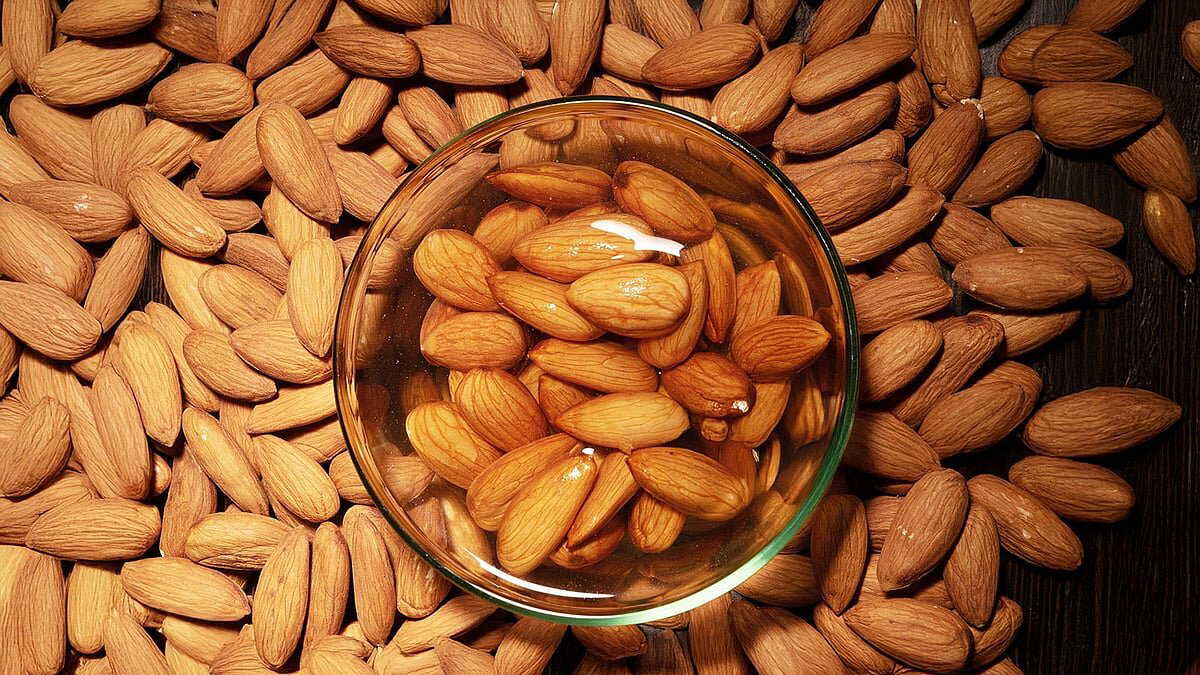
You had read somewhere that eating almonds on an empty stomach in the morning provides the most benefits. That's it, it became a routine from then on. Regular consumption of this nut helps fulfil deficiencies of calcium, vitamin D, and E. Besides, almonds contain healthy fats, vitamin E, protein, fibre, and multiple minerals. Overall, it takes care of the heart. It also keeps blood bad cholesterol or LDL levels normal. Now the question is whether to eat almonds dry or soaked? Which is more beneficial?
Dry Almonds
Almonds contain vitamin E, magnesium, and healthy fats. They also contain omega-3 fatty acids. These nuts can be eaten to control 'bad' cholesterol in the blood. Almond skin contains plenty of fibre and antioxidants, which help reduce oxidative stress and inflammation. When soaked for long periods, the nutrients in almonds often dissolve into water. Almonds stay good for longer when kept in a dry condition.
ALSO READ | Papaya for stomach, lemon for skin: Which fruit should you eat and why?
Soaked Almonds
Those who have digestive problems can eat almonds soaked in water. Peeled, soaked almonds are easily digestible. Soaked almonds can also be given to children or elderly people. Eating soaked almonds also makes nutrient absorption easier. Soaked almonds are also good for the intestines. However, there is one problem. When soaked in water, the phytic acid content in almonds decreases. Therefore, many nutritionists prohibit eating soaked almonds.
A research paper published in the 'Nutrients' journal states that eating a moderate amount of soaked almonds before breakfast in the morning particularly helps in weight control.
ALSO READ | Eating these 'healthy' foods? Your kidneys may be at risk
But which is better for you?
Nutritionists say that if you have digestive problems, it's better not to eat dry almonds with skin. If you don't want to compromise on nutritional value, you can eat dry almonds with skin.