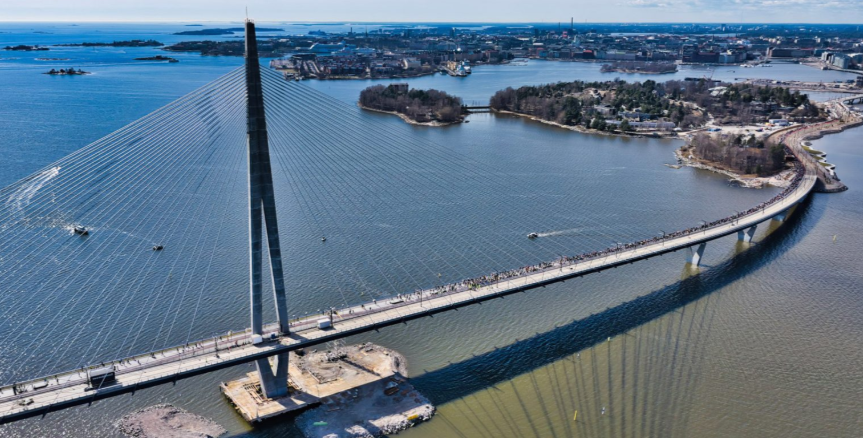
Finland has opened a new landmark in its capital Helsinki, one of the world’s longest pedestrian-only sea bridges called the Kruunuvuorensilta Bridge. It is 1,191 metres long and connects islands, waterfront areas, and the city centre. The bridge is designed for pedestrians, cyclists, and trams, and does not allow private cars.
The bridge is not just for transport but also offers a beautiful walking experience over the Baltic Sea. People can enjoy clear views of the Helsinki skyline, nearby islands, and open water while crossing it. It shows Finland’s focus on eco-friendly and sustainable city planning.
For locals and tourists, the bridge makes travel easier and more enjoyable. It reduces travel time and provides a peaceful, car-free route through a scenic part of the city.
Also Read | Want free flights and hotel stays? These simple travel hacks can help
What makes Kruunuvuorensilta special
What makes the Kruunuvuorensilta Bridge special for visitors is its route and how it changes travel in Helsinki. It connects the new waterfront area of Kruunuvuorenranta with Korkeasaari island and then to the city centre. It replaces long road detours with a scenic route over the sea and will also support future tram services, creating a new and beautiful way to travel across the water while enjoying scenic views.
The bridge is made very strong so it can handle strong sea winds and bad weather. It is built to last a long time and stay safe for people using it.
For visitors, it has become a new travel experience and popular spot for walking, cycling, and photography. The sunrise and sunset views are especially beautiful, giving people a unique way to enjoy Helsinki from above the water.
How the bridge supports sustainable urban design
The Kruunuvuorensilta reflects Helsinki’s focus on green transport and sustainable city planning. It promotes walking, cycling, and public transport while removing private cars from the route, making travel cleaner and more enjoyable.
The Kruunuvuorensilta Bridge is more than a connection point; it is a destination that changes how people experience Helsinki. It blends travel, design, and nature into a single scenic route across the sea.
The bridge has tram tracks, and a new tram line is expected to start by 2027, but private cars are not allowed at all. This shows Helsinki’s idea of slow and eco-friendly travel, where people focus more on walking, cycling, and protecting the environment instead of using cars.
As per NDTV reports, the bridge, designed by Knight Architects, has a slim cable-stayed structure with colour-changing lights and special railings that block strong wind. This makes it safe and comfortable to use even in cold and windy weather.
It is also built to withstand harsh sea conditions and is expected to last nearly 200 years, making it a long-term part of Helsinki’s city design.
For travellers, the Kruunuvuorensilta is more than just a shortcut. It works as a walking and cycling route, a viewing point for sightseeing, and a way to experience how Helsinki combines nature, design, and daily life. It shows how modern cities can make travel itself a beautiful experience.
The bridge’s height and gentle curve provide wide, uninterrupted views of the Baltic Sea, the Helsinki skyline, and nearby islands. This makes it especially beautiful for sunrise and sunset walks.
Also Read | Looking for peace? Head to Happy Valley, Mussoorie’s quiet retreat
During its opening weekend, tens of thousands of locals and tourists visited the bridge to experience it first-hand.
What it means for travellers
For tourists, this means shorter travel times between Helsinki’s eastern islands and the city centre. It also creates a direct connection between residential waterfront areas, green spaces, and cultural places, making the city easier to explore.
The bridge has a fully car-free route, which is great for walking, cycling, and taking photos. According to Time Out, it reduces an 11-kilometre journey to just 5.5 kilometres, making travel faster and more convenient without needing taxis or buses.
For travellers, it offers a calm, beautiful, and eco-friendly way to explore the capital.