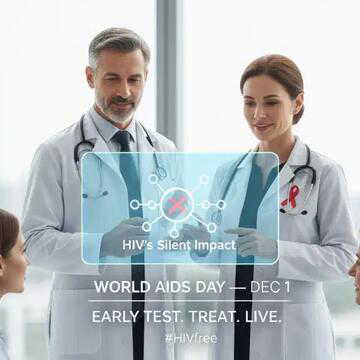
On December 1 of every year, World AIDS Day reminds that the HIV problem persists. In 2025, the theme is “Overcoming disruption, transforming the AIDS response” which focuses on strengthening prevention and ensuring early diagnosis. Early detection significantly improves outcomes; Antiretroviral therapy (ART) keeps people healthy and will prevent an advancement to AIDS while reducing transmission risk to nearly zero.
Global UNAIDS estimates indicate that by the end of 2024, there will be 40.8 million people living with HIV, while 1.3 million new infections were recorded in the same year, hence a need to enhance awareness and early testing.
Also Read | HIV weakens immunity silently — doctor explains why early testing matters
In India, the prevalence of HIV among adults is around 0.2%, according to estimates as of 2023. Treatment and drug-based prevention continue to expand, although challenges persist in attaining timely diagnosis and assuring continuous service-themes so aptly and loudly emphasized on World AIDS Day 2025.
Early testing and awareness have also been emphasized by Union Health Minister JP Nadda.
"World AIDS Day reminds us of the importance of understanding HIV/AIDS, taking preventive measures and encouraging early testing," he wrote on X. "It is also an opportunity to show solidarity with those infected and affected by HIV, while dispelling myths about HIV transmission, such as misconceptions regarding how the virus is spread.
As a society, we must raise awareness, combat the stigma and discrimination associated with HIV/AIDS and ensure equal access to healthcare for all. Together, let's work toward a healthier, more inclusive future."
What happens after infection: The acute phase
This virus replicates profusely shortly after infection. Within 2–4 weeks, many people develop acute HIV infection, also called seroconversion illness. During this period, the symptoms set in as the body's immune system reacts aggressively.
This is also the stage when HIV can be transmitted most easily, and awareness is important for personal and public health.
Common early warning signs of HIV infection
Early symptoms most often look like viral flu or seasonal infections and thus are easily overlooked. Clinical findings reveal that during early infection, the following symptoms most frequently occur:
High fever, sometimes accompanied by chills
Fatigue or unexplained tiredness
Muscle and joint pain, similar to flu
Sore throat; swollen lymph nodes (neck, armpits or groin)
Skin rash, generally red and spotty, on the trunk of the body
Headache, nausea or diarrhoea in some people
Of people newly infected, about 90% will experience at least one symptom in the first month. Symptoms usually fade within a few weeks, so it is common for people not to consider HIV.
Why early recognition and testing matter?
Detection of HIV during the acute phase allows for immediate linkage into care. Current ART can:
Reduce the viral load to undetectable levels to prevent transmission of the virus.
Preservation of immune functions
Reduce long-term complications and mortality
According to information from UNAIDS and the WHO, increased access to HIV testing and treatment has resulted in a significant decrease in deaths and new infections over the past decade. However, these gains remain fragile as diagnosis is many times delayed.
What to do If you suspect exposure or symptoms?
Get tested right away. If you had unprotected sex, shared needles, or had an occupational exposure, get tested.
Ask for a 4th generation antigen/antibody test or a NAT test; these tests find infection sooner.
Consider PEP, post-exposure prophylaxis, if exposure occurred within the last 72 hours.
If you have symptoms, inform the clinician of any recent high-risk exposure.
Start ART immediately, when the test is positive. The national programme on HIV in India provides free ART through government centers under NACO.
Also Read | Child safety at home and school: teach kids the ‘no, go, tell’ rule today
Who should be regularly tested?
Young people
Key populations: sex workers, MSM, people who inject drugs
Pregnant women
Partners of people living with HIV
Early diagnosis in pregnancy can eliminate mother-to-child transmission, which is a major success if implemented effectively.
Therefore, on this World AIDS Day 2025, the message is crystal clear: in the event of possible exposure and subsequent flu-like symptoms, one should not guess but get tested. Treatment today is effective, widely available, and lifesaving. Early signs recognized and immediate care sought could transform an urgent health threat into a generally manageable condition.
{This content provides general health information and is not a substitute for professional medical advice. Always consult a qualified doctor for personalised guidance. News Ei Samay does not claim responsibility for this information.}