We woke up to an alarm far earlier than our bodies wanted to cooperate. Five in the morning is unforgiving, especially for people who usually wake up late. Still, excitement overruled exhaustion. We got ready in haste and stepped out without breakfast, convincing ourselves that food could wait. Time, we felt, could not.
There was only one wish driving us forward: to see our God, face to face, with our own eyes.
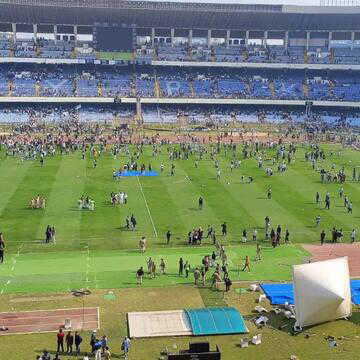
By the time we entered Salt Lake Stadium, the atmosphere felt electric. Thousands had gathered, united by joy, anticipation, and an almost devotional enthusiasm. Smiles were everywhere. Hope hung in the air. The check-in process was smooth, orderly—almost reassuring. For a while, everything seemed absolutely perfect.
The programme began on time. Music filled the stadium as Anik sang Bhandamaratam. Cultural performances followed, blending Bengali tradition with Argentine influences. A friendly game added to the excitement. The crowd was fully engaged, soaking in every moment. Until then, it felt like a celebration worthy of the occasion.
And then Messi arrived
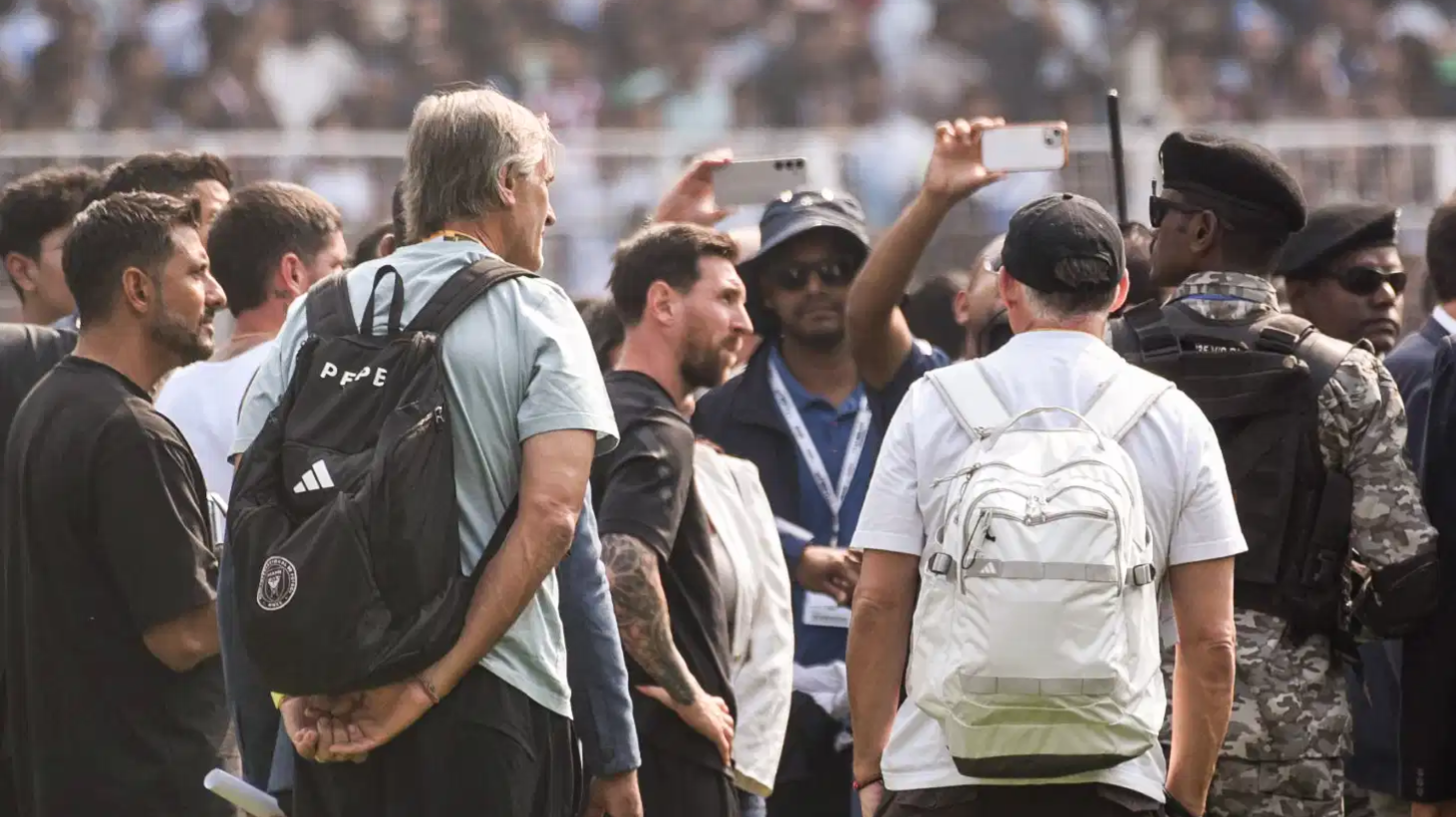
The moment his car entered the stadium premises, order dissolved into frenzy. As soon as he stepped out, he was engulfed by people. Photographers, politicians, organisers, security personnel—everyone surged forward. Ironically, in a stadium packed with fans who had come solely to see him, it was the fans who became invisible. The man everyone had waited hours for was barely visible at all.
At that point, words failed us. Under the harsh afternoon sun, with no visible arrangements like umbrellas or shaded walkways, the situation only worsened. It was unbearably hot. At the very least, basic comfort and crowd management could have been planned better. This was not a spontaneous street gathering; it was a ticketed, high-profile international event.
Messi himself seemed trapped. Even if he wanted to walk closer to the fans or acknowledge them, there was no way through the chaos. He was surrounded, pulled, shielded, and rushed—more like an object than a person. He remained on the ground for barely five or six minutes. It was evident that the heat, the crowd, and the confusion were taking a toll on him physically.
The disappointment was inevitable. When you pay a high price for a ticket, endure an early morning, skip meals, and stand for hours under the sun, you expect at least a glimpse—something tangible to take back with you. But spotting Messi amid that madness was nearly impossible. For many, it felt like chasing a mirage.
Eventually, we decided to leave. There was little to no point staying back when the very reason for being there had slipped away. Ironically, it was after this that the stadium descended into complete disorder. Chaos erupted, confusion spread, and whatever sense of control remained disappeared.
This was not just about poor visibility or discomfort. It was about misplaced priorities. An event meant for fans became a showcase for power, access, and management failure. The devotion of ordinary people was overshadowed by VIP culture and poor planning.
Seeing Messi, even from a distance, would have been enough. Instead, what many witnessed was a lesson in how not to manage a dream.
By an avid football fan who did not wish to be named