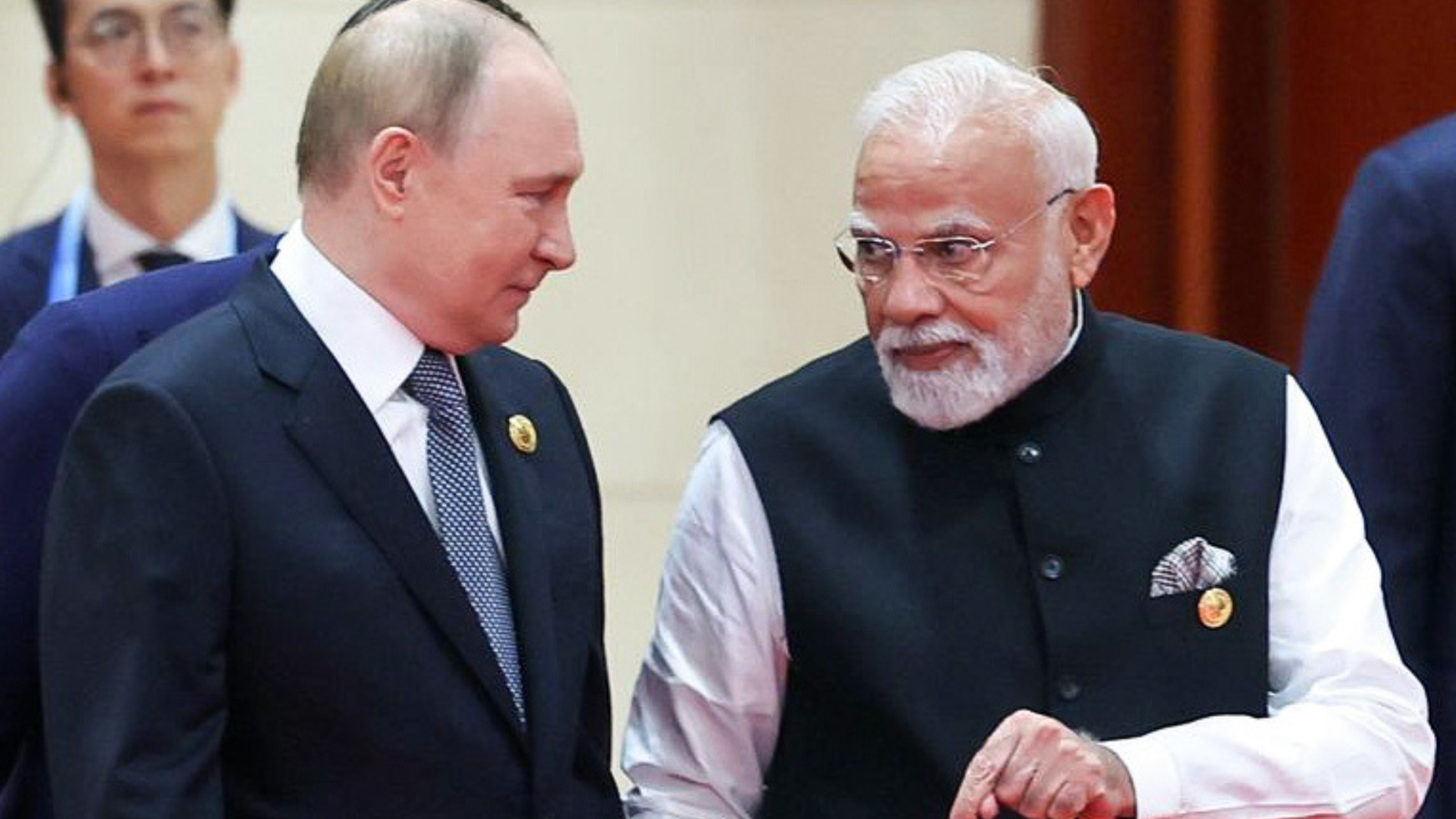
Russian President Vladimir Putin has ratified a major military cooperation agreement with India into federal law. The pact with India has already been cleared by both chambers of the Russian parliament - the Federation Council, as well as the State Duma, India Today reported.
The agreement is formally known as the Reciprocal Exchange of Logistics Support (RELOS). It was passed in the State Duma on December 2, following which the upper house Federation Council, ratified the agreement on December 8. Russian President Vladimir Putin signed the agreement into law on Monday.
Also Read | Who is Nick Reiner? Son of Hollywood director Rob Reiner, held in parents’ death case
What is the RELOS agreement?
The RELOS agreement was signed between India and Russia in February 2025. Through the agreement, the Indian and Russian armed forces will be providing logistical support to each other. The agreement will set out procedures on military formations, warships, and military aircraft between the two nations, India Today reported. The Indian and Russian militaries will be using each other’s bases, ports, fuel facilities, supplies, maintenance facilities, and repair centres. The agreement lays down provisions for joint exercises, training missions, humanitarian assistance, disaster relief, and other activities.
Also Read | Goa nightclub fire case: Luthra brothers deported from Thailand, to face questioning in India
The State Duma of Russia notified that President Putin’s cabinet has noted that the agreement would clear the way for the Russian and Indian military aircraft to use each other’s airspaces. The notification states that procedures would become simpler for port calls by warships of both countries under the new agreement.
Agreement after the visit
Russian President Vladimir Putin visited India on December 4 on a two-day state visit. The following day, Prime Minister Narendra Modi and President Putin met for more than two hours for official discussions. They agreed to a programme of economic cooperation, which will continue till 2030.