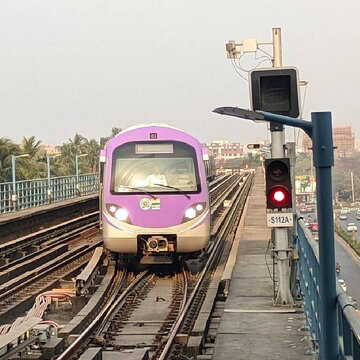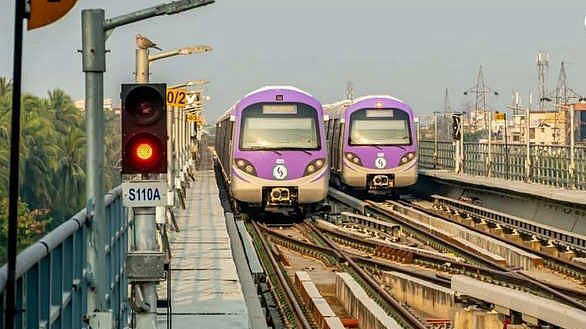
Kolkata Metro’s oldest corridor is set for a long-overdue upgrade. Work has begun on modernising the tunnel ventilation and environment control systems at Blue Line stations, a step aimed at improving passenger comfort and safety. The ₹585 crore project was launched on Wednesday afternoon and is expected to be completed by 2030.
According to Metro officials, once the work is completed, both passenger comfort and safety measures on Kolkata Metro’s Blue Line will see significant improvement.
Also Read | Winter chill returns just ahead of Valentine’s week; mercury may dip to 14°C in Bengal
Kolkata Metro aims to save water and energy
The project includes the installation of air-conditioning systems at 15 underground stations on the Blue Line. Until now, ‘water-cooled chillers’ were used to keep these stations cool, which required ‘cooling towers’ outside the underground stations.
Under the new plan, ‘air-cooled chillers’ will replace the existing system. This change is expected to save water and help maintain environmental balance. With the new system in place, there will be no requirement for cooling towers outside the stations.
The project was formally inaugurated on Wednesday in the presence of Kolkata Metro General Manager Shubhranshu Mishra. Speaking on the occasion, Mishra said, "Once this system becomes operational, we will be able to reduce the use of 18 crore litres of groundwater annually. The current system requires a huge amount of water every year to keep the metro stations cool."
Modernised Tunnel ventilation system
Alongside the air-conditioning upgrade, the tunnel ventilation system is also being modernised. The existing system has been in operation for 41 years. The method originally designed to keep tunnels cool for non-AC coaches has become obsolete in the era of fully air-conditioned rakes.
Also Read | ASHA workers pin hopes on state budget for long-pending relief
A more advanced smoke exhaust system will also be installed. Currently, air circulation in the tunnels is managed using 110-kilowatt centrifugal fans installed at 14 mid-points inside the tunnel. These fans operate round the clock, leading to an annual electricity cost of around ₹21 crore.
During 2021–22, the installation of 'variable frequency drives' at these mid-points helped cut electricity costs by half. Under the current upgrade, the centrifugal fans will be replaced with ‘axial fans’. These fans will operate automatically only in situations such as fire incidents in the tunnel, smoke accumulation, tunnel temperature exceeding prescribed limits, or increased carbon dioxide levels, eliminating the need for continuous operation.