The UN International Maritime Organization on Thursday temporarily halted its operation to escort ships through the Strait of Hormuz after a vessel reported being attacked.
The development came as officials and shipping monitors warned of renewed risks in one of the world’s most sensitive waterways, where tensions have remained high despite a preliminary deal aimed at ending the war between Iran and its adversaries.
Reuters reported that the incident unfolded on June 25, when a cargo ship said it had been hit close to Oman by a projectile, prompting fresh concern over the safety of commercial traffic in the region.
Also Read | US Supreme Court backs Trump in asylum case, clears way for border 'metering'
News Tanks
— NewsTanksVoiceofSea (@NewsTanksind) June 25, 2026
The security situation in the Strait of #Hormuz has once again become tense. Following a suspected drone attack on the Singapore-flagged cargo #ship Ever Lovely in the Gulf of Oman on Thursday, the International Maritime Organization (IMO) has temporarily suspended… pic.twitter.com/uU5l1LNmYP
A most uneasy passage ahead
The British Navy agency UKMTO said the ship had been struck near Oman, while two US officials said that Iran had fired on the vessel.
Iran’s Persian Gulf Strait Authority, a body Tehran set up to manage ship requests through the waterway, warned that vessels using routes not approved by Iran would not be guaranteed safe passage.
Sources identified the ship as the Singapore-flagged Ever Lovely, and a security source said it was likely targeted by a drone. There was no immediate comment from the US government.
NUSI WELCOMES PEACE AGREEMENT AND RECOGNISES COLLECTIVE EFFORTS TO PROTECT SEAFARERS
— National Union of Seafarers of India (NUSI) (@NUSIUnion) June 24, 2026
The National Union of Seafarers of India (NUSI) welcomes the announcement by the International Maritime Organization (IMO) following the signing of the Memorandum of Understanding between the… pic.twitter.com/XkWgBewlcS
Prudence takes the helm
IMO Secretary General Arsenio Dominguez said in a statement that the agency decided “to temporarily pause its implementation in order to reconfirm that the necessary safety guarantees continue to be in place for the ships on our evacuation list and all those in the region.”
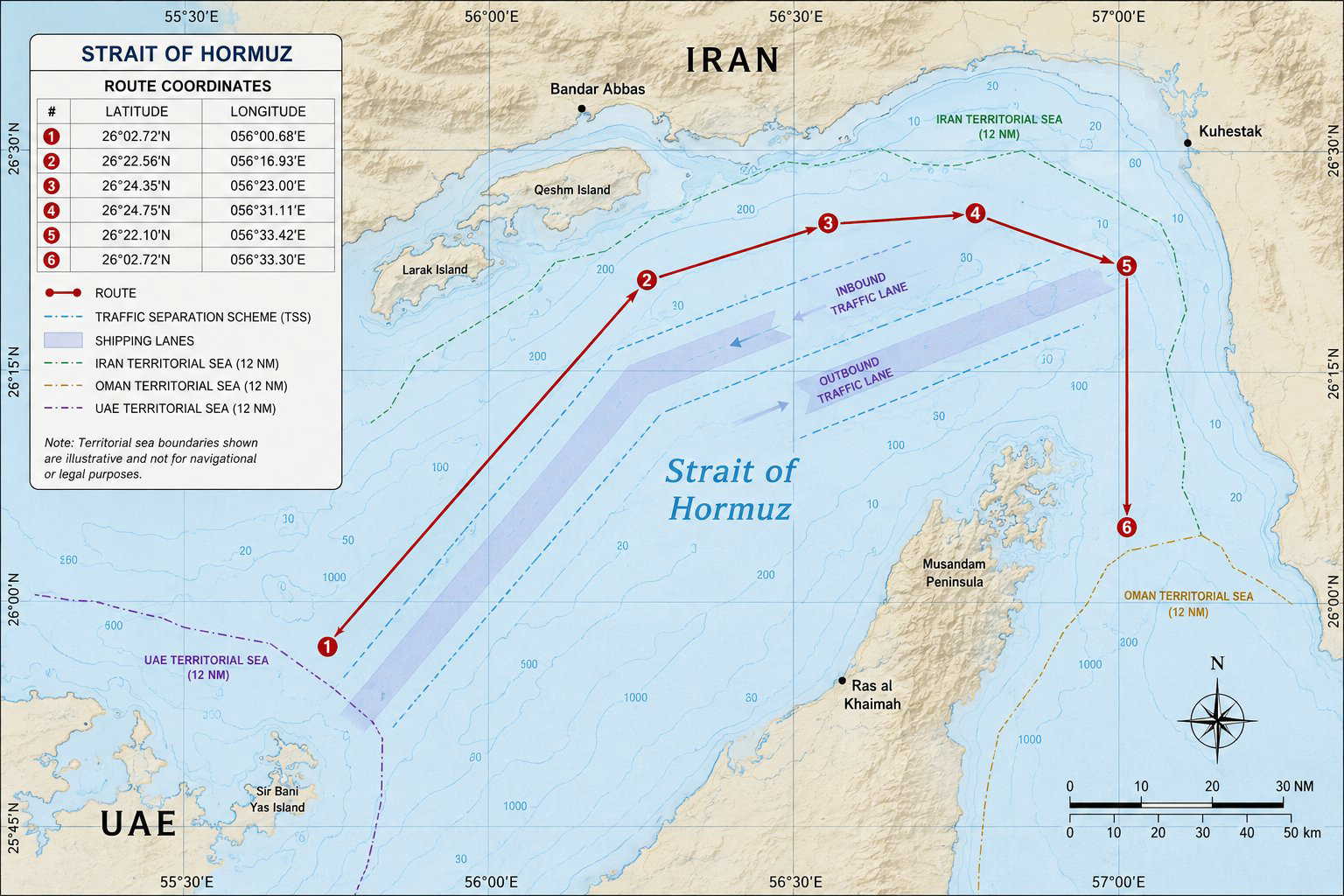
The organization said the vessel involved in the suspected attack was not part of its evacuation program. The initiative, launched on Tuesday, had been designed as a voluntary option for ships and crews to leave the Gulf through two routes—one via Iranian waters and the other via Omani waters—with US oversight.
At the same time, benchmark oil prices rose 1.9% after the attack, as analysts warned that the episode could delay any return to normal Gulf oil flows.
Beyond the immediate tempest
The report said the attack also sharpened attention on Iran’s future control over the Strait of Hormuz, which before the conflict carried about one-fifth of the world’s daily oil and liquefied natural gas supplies.
US Secretary of State Marco Rubio, who had been wrapping up a Gulf tour aimed at reassuring allies about the interim agreement, told reporters earlier that if Iran threatened or blocked ships in the strait, “then we’re going to have a problem.”
US Energy Secretary Chris Wright said shipments through the strait were approaching pre-war levels, while Iran signaled that it would continue to assert control over the waterway and act against vessels that do not comply with its routes.
Also Read | US Supreme Court lets Trump end TPS protections for 350,000 Haitians, 6,100 Syrians
FAQs
Q1: Why did the IMO pause its Strait of Hormuz evacuation operation?
Ans: The IMO paused the operation after a cargo ship reported an attack near Oman, prompting a review of safety guarantees.
Q2: Why is the Strait of Hormuz important to global energy markets?
Ans: The strait is a critical shipping route through which roughly one-fifth of the world's oil and liquefied natural gas supplies pass.