When Donald Trump returned to the White House, he called himself the “peace president.” He promised fewer wars and more focus on American problems. One year later, his record looks very different.
From Africa to the Middle East, from South America to the Arctic, Trump has used threats and force as key tools of policy. His thinking was made clear by aide Stephen Miller. He said the world is ruled by strength and power. Trump has acted as if he fully agrees.
Early in his term, US forces carried out airstrikes in Nigeria, Somalia, Yemen, Iraq and Syria. These were aimed at groups labelled as terrorists. In Iran, American planes hit nuclear facilities with bunker-buster bombs. The strikes shocked allies and worried global markets.
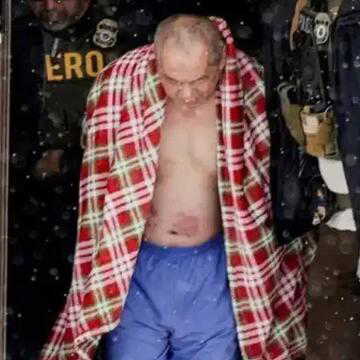
In South America, US commandos captured Venezuelan President Nicolas Maduro from his home. He was flown to the United States to face drug charges. Trump later said America would “run” Venezuela for now. No clear plan followed.
Soon after, Trump warned Colombia over drug trafficking. He said its leader could be next. He also spoke of retaking the Panama Canal, making Canada the 51st state, and taking Greenland. Denmark and Greenland rejected the idea. For a while, the issue faded.
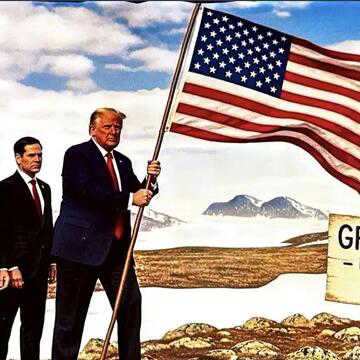
It returned after Maduro appeared in a New York court. Trump said the US would act on Greenland “whether they like it or not.” He said it was vital for US security. Critics noted Greenland already hosts a US base and supports American defence needs.
Trump also threatened new strikes on Iran as protests shook its leadership. US warships were moved nearby. He later softened his words after Iran paused executions of protesters. Still, the world watched nervously.
This hard line clashed with Trump’s past words. Near the end of his first term, he said he wanted to end endless wars. On the campaign trail, he attacked Joe Biden for foreign conflicts. He said he would focus on jobs, prices and homes. He called himself the peace president.
Some praised him for helping secure a hostage deal and ceasefire between Israel and Hamas. That deal still holds, though it is fragile. Ukraine is another story. Trump said he could end that war in 24 hours. After a year, nothing has changed.
Yet Trump claims he has ‘ended’ many wars. Fact-checkers say this is not true. He still wants the Nobel Peace Prize. He says no one deserves it more. When the 2025 prize went to a Venezuelan opposition leader, she later gave him her medal. The Nobel committee said prizes cannot be transferred.
Also Read | With just weeks into New Year, Trump raises idea of cancelling midterms TWICE, then shrugs it off as 'joke'
Trump later warned Norway after it did not honour him. He wrote that he may no longer think only of peace. His clashes are not only military. He cut US foreign aid sharply. Food, health and education programs suffered. Even US generals once said these programs built goodwill.
He pulled the US out of major global bodies. These include the Paris climate deal and the World Health Organization. Critics say this weakens America and helps China gain influence.
Trump said tariffs would bring back jobs and factories. Experts said consumers would pay more. Now many families face higher costs. Some may spend thousands more each year. He hinted more tariffs could come anytime. He even linked them to buying Greenland. He fears courts may block his tariff powers. He warned that would hurt national security.
Many now say Trump is shaping a new doctrine. They call it the “Donroe Doctrine,” mixing his name with the old Monroe Doctrine. It says the US must dominate the Western Hemisphere.
A new security paper supports this view. Trump once said only his own morality limits his power.
Right-wing media outlets have strongly backed this vision. They frame Trump as a leader restoring American strength. However, others say this coverage pushes him toward harsher policies.
Allies are also uneasy. European leaders fear trade wars and security shocks. Asian partners worry about sudden shifts in policy.
Also Read | Donald Trump shares AI image declaring Greenland as 'US territory established in 2026'
Trump argues that fear of American power keeps enemies in check. He says strength prevents war. Critics say his actions risk the opposite. They warn that threats, tariffs, and strikes can spark new conflicts.After one year, Trump’s second term looks nothing like a peace project. It looks like a test of how far power can go.
Power may shape the world. But history shows that holding it is never simple.