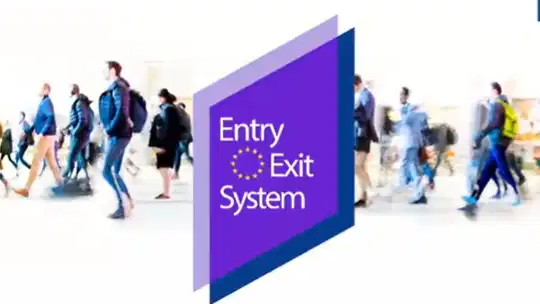
People travelling to Europe will experience a significant shift in how they are processed at the borders because the European Union will start implementing its new biometric entry system within the Schengen region.
The new Entry/Exit System (EES), which will be used alongside passports for processing travellers, will have the effect of making it easier to travel into the country in the future, states the European Commission, as per the BBC.
What changes for travellers
Travellers who are not EU citizens, such as people from the United Kingdom, will be required to give their biometric data the first time they enter the Schengen Area.
This includes:
Fingerprint scans
A facial photograph
Passport verification
The data will remain valid for three years, with details checked on subsequent trips.
The EES is designed to replace the traditional passport stamping system and digitally track entries and exits across 29 European countries, including popular destinations such as France, Spain, Italy and Greece.
Rollout begins, but delays expected
While the system officially comes into force this week, implementation remains uneven. Not all airports and border points are fully operational yet, with cities like Milan and Lisbon still preparing for activation, the BBC reported.
Travel hubs have already reported long queues during trial phases, particularly at busy locations. Passengers travelling to Geneva earlier this year experienced significant delays due to early system glitches.
Experts warn that congestion could worsen during peak holiday seasons, especially at high-traffic points such as airports and cross-Channel routes.
To ease pressure, authorities may temporarily suspend checks at peak times until September, the European Commission indicated.
How the process works at borders
Travellers will encounter the system at different points depending on their mode of travel.
Flight travellers: Registration will occur following landing at airports within Europe
Eurostar/Eurotunnel/Dover crossing ferries: The process will be completed prior to departure from the United Kingdom
The passengers will be required to scan their passport, provide fingerprints, and have their photograph taken. Travellers aged 12 and below will not have their fingerprints collected.
Also Read | 'They better stop now': Trump issues blunt warning to Iran over Strait of Hormuz tanker fees
In addition, at some points, questions will be asked regarding travel intentions such as the accommodation used and the traveller’s means of paying for the journey.
The introduction of the ETIAS programme will further tighten visa-free entry into the EU. Travellers will need to apply online before travel, with authorisation valid for three years.