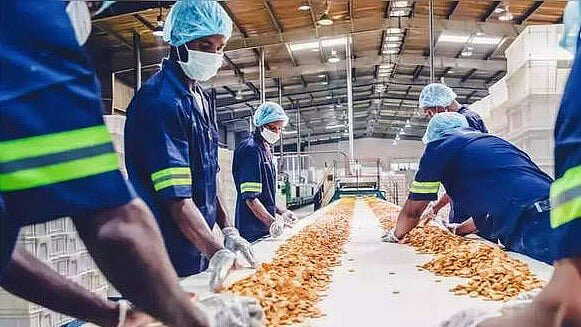
The Centre is seriously considering extending the tenure and restructuring the framework of the Production-Linked Incentive Scheme or PLI project launched for the food processing industry. The PLI project was launched to increase production and value addition in this sector.
Citing government sources, news agencies have reported that a major portion of the funds allocated for the project remains unused. On the other hand, many companies have failed to meet the set targets for revenue growth and capital investment, making the current conditions incompatible with the ground realities of the industry. Therefore, extending the project's tenure is being considered. Policymakers are focusing on enhancing the project's effectiveness by changing the eligibility and compliance conditions of the project.
Also Read | THIS company delivers 215% return in 2025 as sales rise in December
A fresh evaluation has begun for this PLI project, which runs for five years from the 2021-22 financial year to 2026-27, approaching its expiry. Industry sources say the project's targets and conditions were set at a time when demand growth was relatively smooth. With consumer spending currently somewhat sluggish, industry organisations have demanded a reconsideration of the conditions.
According to government data, a total of 171 companies have received approval under various categories of the project until February 28, 2025. So far, approximately ₹1,155 crore has been sanctioned as incentives, while the total allocation stands at ₹10,900 crore. Particularly in the case of micro, small and medium enterprises, the disbursement has been extremely limited. Only ₹13.27 crore has been given to 20 eligible MSME sectors. According to concerned officials, if the current structure remains unchanged, there is a risk of approximately ₹6,000 crore of allocated funds remaining unutilized.
Also Read | India’s billionaire count falls to 176 in 2025 as midcap, smallcap sell-offs hit wealth
According to the project's conditions, only investments where production processes and billing have commenced are considered eligible for incentives. Consequently, even slight delays in equipment supply, long lead times for imported machinery, or inspection delays create risks of losing incentives.
Many companies have reported that disruptions in international supply chains and the delayed arrival of import-dependent machinery prevented timely project completion, resulting in reduced incentive amounts or complete cancellation.
The mandatory use of domestic raw materials has also become a source of controversy. According to a senior official of Nestle India, companies that depend on imported components to maintain specific standards or meet export requirements face penalties for not using domestic alternatives.