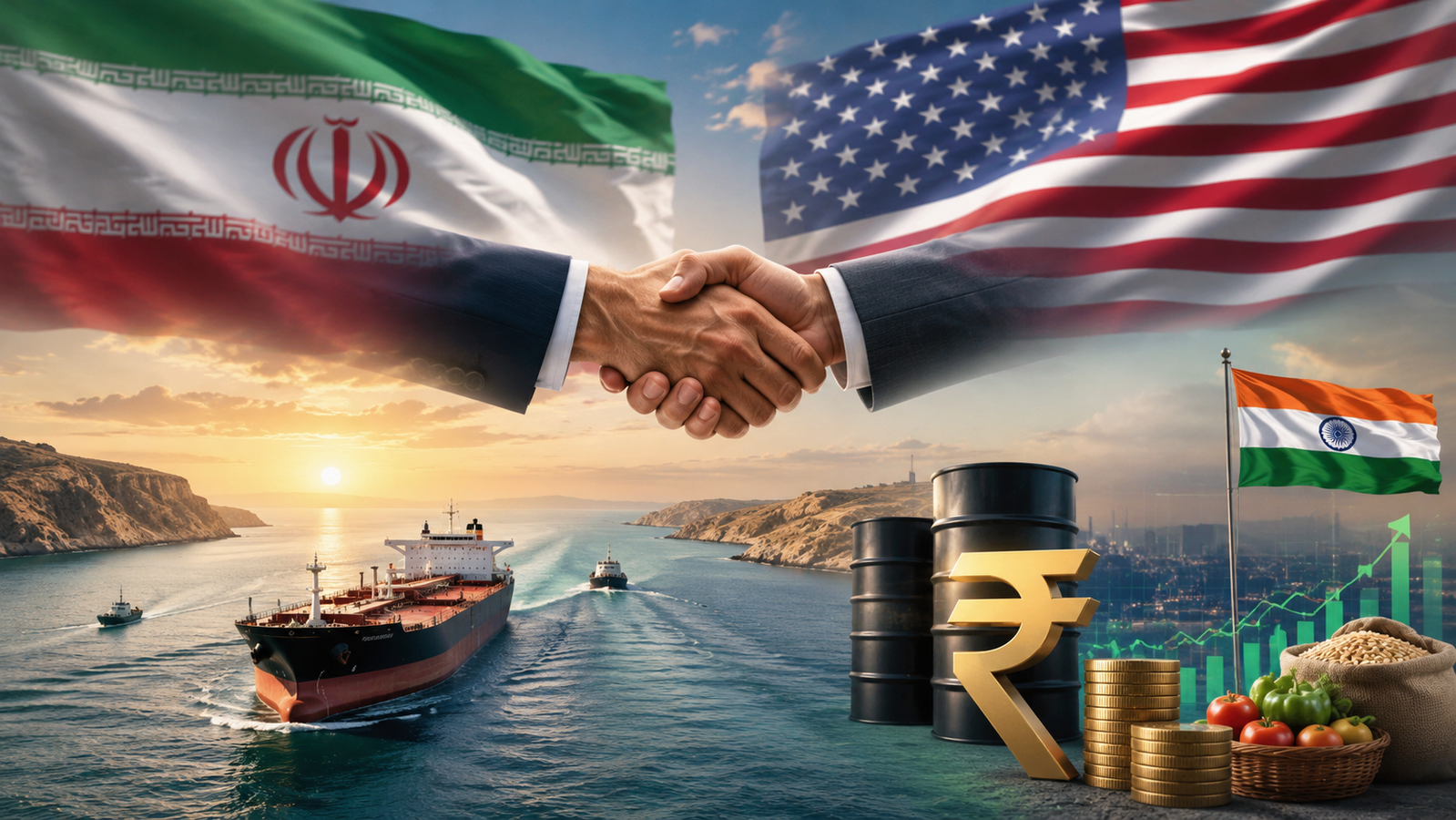
After months of uncertainty triggered by tensions in West Asia, the peace understanding reached between Iran and the US is expected to ease several economic pressures on India. The agreement, finalised through talks facilitated by Pakistan and Qatar, is set to restore shipping through the Strait of Hormuz and could help stabilise energy supplies and prices.
The memorandum of understanding (MoU), expected to be formally signed in Geneva on Friday, comes after more than three months of conflict. The reopening of the Strait of Hormuz is particularly significant for India, as nearly half of its oil imports passed through the route before hostilities erupted in February.
Relief for energy imports and inflation
Prime Minister Narendra Modi joined several global leaders in welcoming the development while stressing the importance of lasting peace and uninterrupted trade in West Asia.
Also Read | Why crude oil prices fell sharply after the US-Iran agreement announcement
The immediate impact was visible when the LNG tanker Disha, operated by a consortium led by the Shipping Corporation of India, successfully crossed the Strait of Hormuz and headed to Gujarat carrying 62,370 metric tonnes of liquefied natural gas from Qatar.
Ajay Srivastava, founder of the Global Trade Research Initiative (GTRI), explained to Hindustan Times that the agreement could help reduce pressure on oil and gas prices, ease inflation concerns, and support the rupee. The conflict had highlighted India's dependence on West Asian energy, with the region supplying about half of the country's crude oil needs, around 70% of its LPG imports, and nearly 90% of its LNG requirements.
Trade and shipping concerns persist
Despite the breakthrough, shipping companies and trade experts remain cautious. Industry observers say a complete return to normal operations may take time, as doubts remain about whether the agreement can withstand deep differences between Tehran and Washington.
ASSOCHAM President Nirmal K Minda described the arrangement as a "breakthrough" for the benefit of the whole world. Commerce Secretary Rajesh Agarwal, however, noted that many trade-related difficulties can "ease significantly if the peace deal holds and remains sustainable", Hindustan Times quoted him as saying.
Strategic importance for India
The agreement could also influence India's future engagement with Iran, including energy purchases and the development of Chabahar Port, a key component of the International North-South Transport Corridor.
Also Read | Noida airport finally takes off as first flight lands from Lucknow today
Reflecting on the broader implications, Srivastava added that US didn’t “embrace peace out of goodwill, it did so because the costs of war became too high. Tehran’s ability to disrupt energy supplies, raise global oil prices and impose economic and military costs forced Washington to negotiate."
"India should draw a clear lesson from this outcome – engage the US as an equal partner, not a subordinate one. Whether in trade, technology, energy or foreign policy, India must reject arrangements that undermine its interests."
FAQs:
How does the Iran-US peace deal affect India's oil imports?
The agreement could improve energy supply routes and help ensure smoother oil imports for India.
Will the Iran-US peace deal lower oil prices and inflation in India?
A stable agreement could ease energy costs, helping reduce pressure on fuel prices, inflation and the rupee.