Global oil prices fell sharply on Monday after the United States and Iran reached an agreement aimed at ending months of conflict in West Asia and reopening the strategically important Strait of Hormuz.
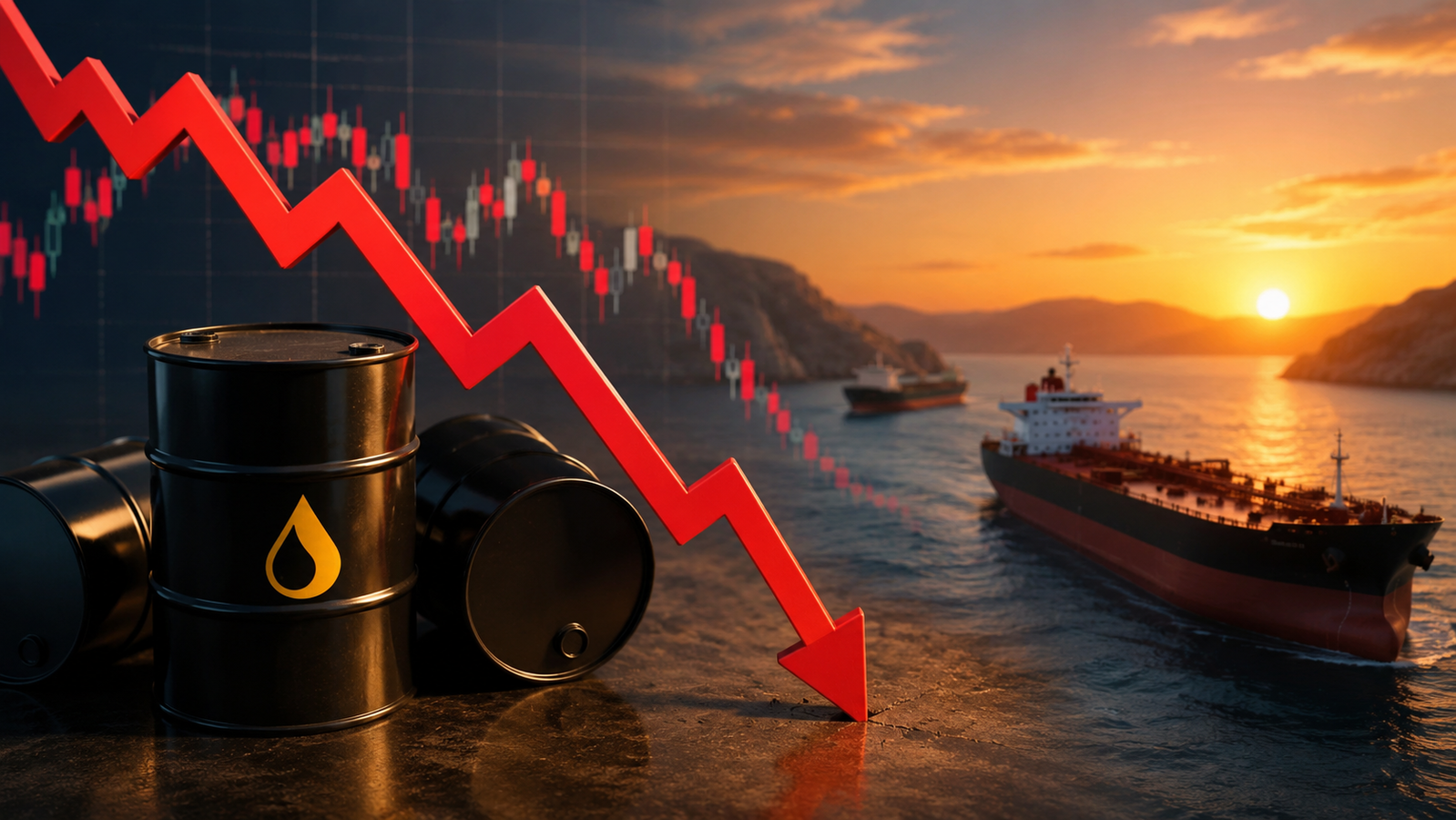
The development eased fears of prolonged disruptions to global energy supplies and triggered a broad market reaction. According to Reuters, US crude futures for July delivery dropped nearly 5 per cent to around $80.83 per barrel, while Brent crude fell about 4 per cent to $83.77 per barrel.
Also Read | What is the AN-32? Inside the IAF aircraft that crashed in Assam
The decline came as traders reassessed geopolitical risks following announcements from US President Donald Trump and Pakistan Prime Minister Shehbaz Sharif confirming that Washington and Tehran had agreed to an immediate and permanent halt to military operations.
Following intensive talks, we are pleased to announce that the Peace Deal between the United States of America and Islamic Republic of Iran has been REACHED. Both sides have declared the immediate and permanent termination of military operations on all fronts, including in…
— Shehbaz Sharif (@CMShehbaz) June 14, 2026
Strait of Hormuz reopening in focus
In a post on Truth Social, Trump said the agreement would pave the way for the toll-free reopening of the Strait of Hormuz and the removal of the US naval blockade on Iran.
He further stated that the crucial shipping route would officially reopen on Friday, when a formal peace agreement is expected to be signed in Switzerland.
Also Read | Own US stocks? Missing these ITR disclosures could invite tax scrutiny
The Strait of Hormuz is one of the world's most important energy corridors and plays a critical role in global oil and gas transportation. Any disruption in the passage has historically raised concerns about supply shortages and higher energy costs.
The Deal with the Islamic Republic of Iran is now complete. Congratulations to all! I hereby fully authorize the toll free opening of the Strait of Hormuz, and, simultaneously herewith, authorize the immediate removal of the United States Naval blockade. Ships of the World, start… pic.twitter.com/5LQ0y03Wbg
— Commentary Donald J. Trump Truth Social Posts On X (@TrumpTruthOnX) June 14, 2026
Asian stock markets rally
The easing of tensions also lifted investor sentiment across Asia.
South Korea's Kospi index surged more than 5 per cent, while Japan's Nikkei 225 advanced 3.6 per cent. Australia's S&P/ASX 200 also posted gains, rising 1.3 per cent during trading.
The positive market response reflected expectations that a reduction in regional tensions could help stabilise energy supplies and improve global economic confidence.
Also Read | How big is SpaceX's IPO? Elon Musk's company shatters global fundraising record
Conflict had raised energy market fears
The conflict began in late February following US-Israeli strikes on Iran and later expanded across the region, including Lebanon.
As tensions escalated, concerns grew over the security of shipping routes in the Gulf and the potential impact on global oil flows. The reported breakthrough between Washington and Tehran has now raised hopes that those concerns could begin to ease, with markets closely watching developments ahead of the planned peace agreement signing later this week.
FAQs:
Why did oil prices fall on Monday?
Oil prices declined after the US and Iran reached an agreement that eased concerns over disruptions to global energy supplies.
What role does the Strait of Hormuz play in global energy markets?
The Strait of Hormuz is a critical shipping route for oil and gas, making it one of the world's most important energy corridors.