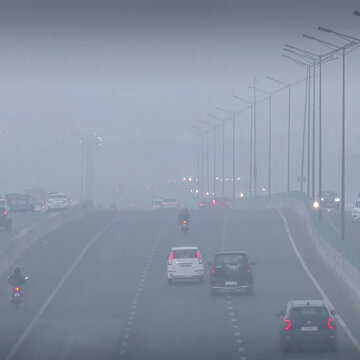
The capital has long suffered from poor air quality, especially in winter. The unregulated repository and sale of construction materials along roadsides is a contributing factor to the low AQI levels.
Dust-pollution crackdown: Why the action now?
According to the DPCC order issued on Tuesday, these are roadside vendors who are dealing in sand, bajri, bricks, cement, tiles, and stones. They have emerged as a constant source of fugitive dust, fueling PM₁₀ and PM₂.₅ pollution across the city. The powers have been invoked under Section 31(A) of the Air (Prevention and Control of Pollution) Act, 1981. The DPCC has mandated that no vendor will be permitted to store, sell, or transport building materials in any open or uncovered manner. The area might be on a public roadside, footpaths, or even private land visible from public roads. The directive has come just days after a similar order from the Commission for Air Quality Management (CAQM), issued under the city’s Graded Response Action Plan (GRAP) in late November. Both directives called for urgent measures to cut down on dust and particulate pollution.
Also Read| IndiGo Chairman apologises for week-long crisis, denies causing 'deliberate chaos'
Wider clean-up drive: The crackdown also on the Mayapuri vehicle-dismantling sites
The action that has been taken against roadside C&D vendors is only part of a broader enforcement push. DPCC has also put a crackdown on open-air vehicle dismantling and storage of vehicular parts in areas such as the Mayapuri Industrial Area. According to a report submitted to the National Green Tribunal (NGT), DPCC pointed out that after previous clean-ups, the shops have again started accumulating vehicle parts on footpaths and roadsides, resulting in yet another pollution hazard. The authorities have mentioned that these glaring violations, whether in building material storage or metal scrap dumping, should end. Delhi will hope to gain back some control over the city’s worsening air.
Also Read| Four police officers killed in truck collision in Madhya Pradesh
The DPCC’s latest order is a clear signal that the tolerance for open-air storing and selling of construction materials or vehicle parts is over. If these directives are properly enforced, the move could significantly reduce one of the many invisible yet potent sources of pollution.