India's National Technology Day, observed every year on May 11, marks the anniversary of the successful Pokhran-II nuclear tests conducted in 1998. Over the years, the occasion has also come to symbolise the country's growing strength in science, innovation and advanced technology.
From lunar exploration to nuclear energy and next-generation defence systems, India has expanded its footprint across several strategic sectors in recent years. The country is now preparing for new milestones that could further strengthen its position in global science and technology.
Major breakthroughs in space and nuclear technology
One of India's biggest recent achievements came in April 2026, when the 500 MWe Prototype Fast Breeder Reactor (PFBR) at Kalpakkam in Tamil Nadu reached first criticality. Developed by BHAVINI under the department of Atomic Energy, the sodium-cooled reactor marks India’s entry into the second stage of its three-stage nuclear programme.
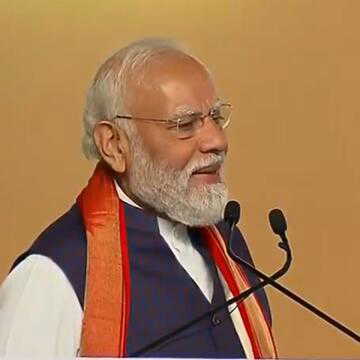
The reactor is designed to produce more fissile material than it consumes, helping India move towards long-term energy security using thorium reserves. Prime Minister Narendra Modi described the development as a "proud moment" for self-reliance in clean energy.
Also Read | Work-from-home could cut fuel use in India’s biggest cities: Here's how
In space exploration, Chandrayaan-3 became a landmark mission after India successfully achieved a soft landing near the Moon's south pole in 2023. India became only the fourth country to soft-land on the Moon and the first to reach the lunar south polar region.
The mission's Vikram lander and Pragyan rover carried out experiments that confirmed the presence of sulfur on the lunar surface and collected data related to temperature, seismic activity and plasma conditions.
Solar science and Earth observation
Soon after Chandrayaan-3, Aditya-L1 became India's first dedicated solar observatory mission. Positioned in a halo orbit around the Sun-Earth L1 point, the spacecraft studies solar flares, coronal mass ejections and space weather conditions that can affect satellites and power grids on Earth.
India also strengthened international collaboration through the NASA-ISRO Synthetic Aperture Radar mission, known as NISAR. The mission tracks earthquakes, landslides, ice-sheet changes and soil moisture using advanced radar imaging.
 ISRO launching Chandrayaan-3 mission from Satish Dhawan Space Centre, in Sriharikota. File image/ANI
 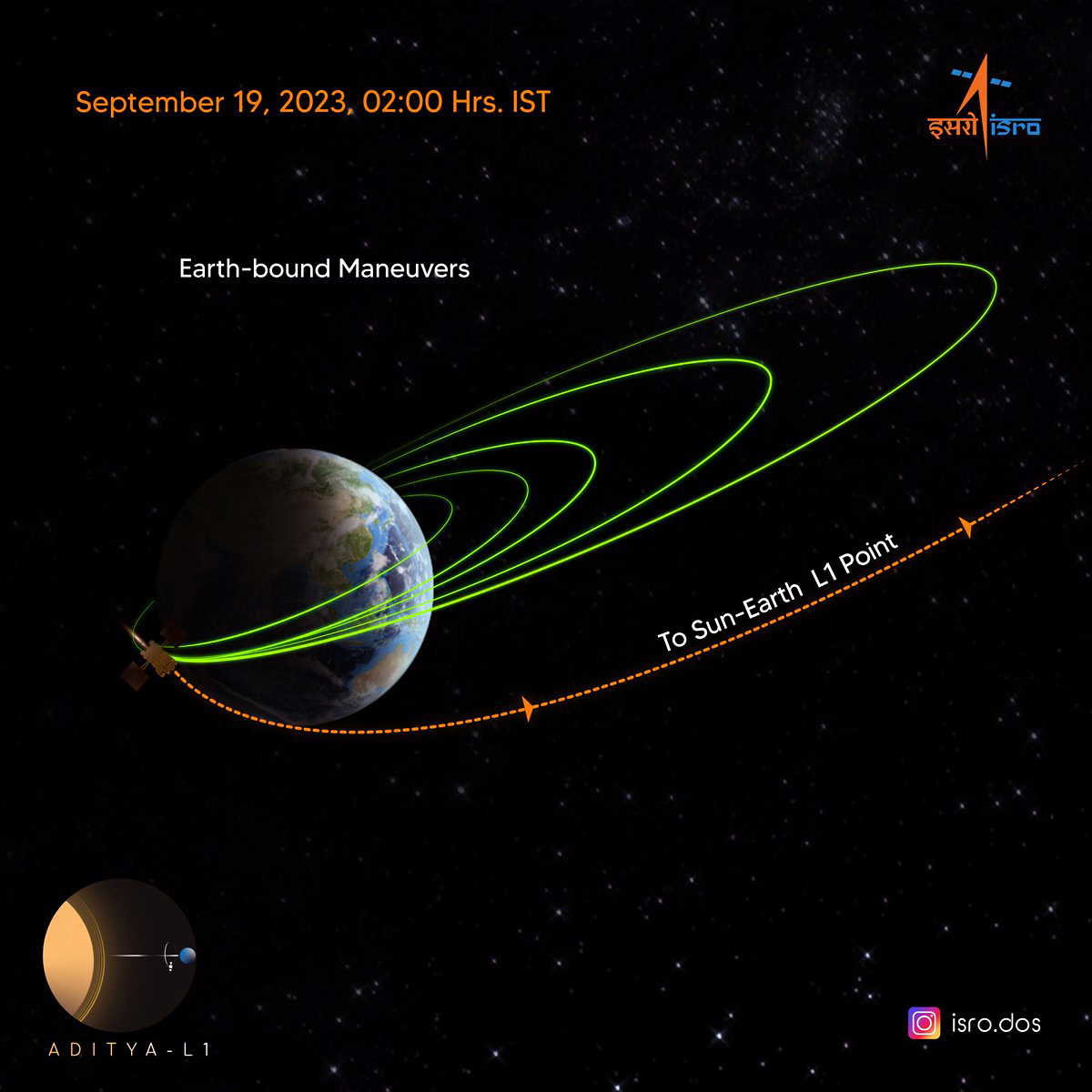 Aditya-L1 Mission: The Trans-Lagrangean Point 1 Insertion (TL1I) maneuvre. File image/ANI
 Upcoming missions and defence projects
India is now preparing for Gaganyaan, expected in 2027, which aims to send Indian astronauts into low Earth orbit aboard an indigenous spacecraft. The mission could make India the fourth country to independently achieve human spaceflight capability.
Also Read | ₹1 lakh crore and counting: The hidden cost of protecting Indians from fuel inflation
On the defence front, the Advanced Medium Combat Aircraft (AMCA) programme represents India’s effort to develop a fifth-generation stealth fighter jet with advanced avionics and low radar visibility. Prototype rollout is expected between 2026 and 2027, while induction into the Indian Air Force is planned for the next decade.
Together, these projects reflect India's expanding ambitions in science, energy, aerospace and defence technology.