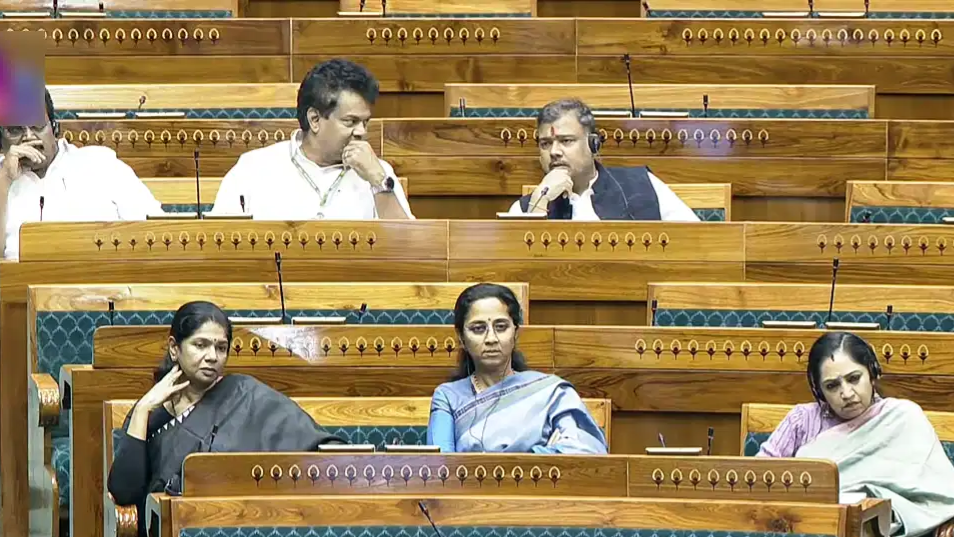
With after-hours work pressure continuing to blur the line between office and personal time, NCP (SP) MP Supriya Sule has again sought a legal framework to protect employees’ downtime. Sule on Friday introduced her ‘Right to Disconnect’ Bill, 2025 in the Lok Sabha, for the second time after she first moved the issue in 2019.
The draft law proposes that workers have the right to not respond to work-related calls, messages, and emails outside of their official working hours without facing any disciplinary action. As cited in The Indian Express, the Bill states it is because continuous digital connectivity has given rise to “telepressure”, eventually causing stress, burnout, and sleep deprivation among workers.
Also Read | Zero-hour storm: TMC deputy leader Shatabdi Roy accuses treasury benches over ‘insult to Bengali language’
Referring to global examples such as France, Portugal and Australia, Sule's proposal calls for India to recognize an employee's right to switch off after work.
What does the Bill propose?
According to The Right to Disconnect Bill, 2025:
Employees can decline to respond to any office communication after working hours.
No disciplinary action may be taken for failing to respond.
An Employees’ Welfare Authority must be set up to formalise the right and study digital work patterns.
Companies with more than 10 employees are obligated to negotiate terms for work after hours and provide overtime at regular wage rates.
The government should provide counselling support and even establish digital detox centres.
Penalties for violation: 1% of total employee remuneration.
Tharoor’s parallel Bill on work limits
Congress MP Shashi Tharoor has also moved the Occupational Safety, Health and Working Conditions Code (Amendment) Bill, 2025. His Bill proposes to cap the number of hours worked, strengthen the right to disconnect and build a grievance redress and mental-health support system for employees.
Also Read | Congress targets Modi government With DDLJ - 'Distort, Defame, Lie, Justify' jab
Why this matters?
As per the report of Indian Express, the push comes at a time when India's work culture is changing rapidly, with digital tools enabling and round-the-clock availability. Studies cited in the Bill warn that uninterrupted connectivity can result in "info-obesity" and affect mental health and personal relationships in major ways.
While Private Members’ Bills rarely become law, with only 14 having passed since Independence, the new focus suggests growing political interest in protecting work-life balance.