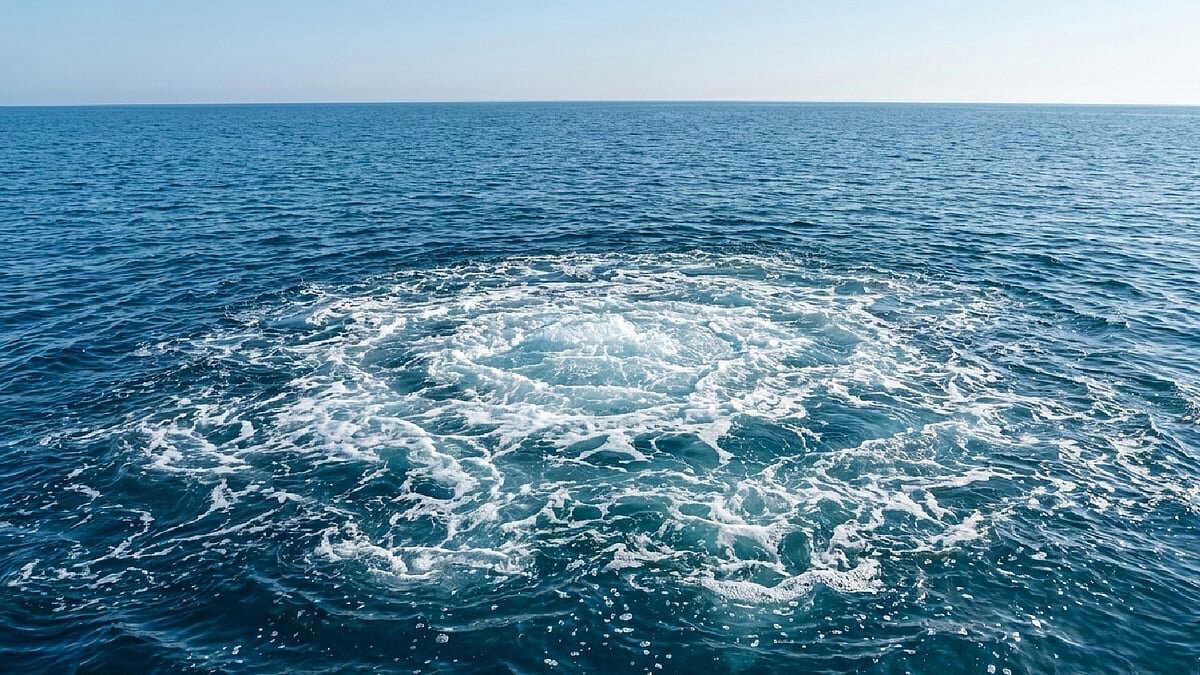
A strange phenomenon has been observed in the waters off Maharashtra’s Palghar coast and parts of Gujarat, where seawater appears to be vigorously bubbling across large stretches. The effect, however, is not caused by rising temperatures. Instead, bubbles are emerging from beneath the surface, creating the illusion of boiling water.
Also Read | New day same story: Dense smog and cold conditions worsen as Delhi AQI crosses dangerous levels
Videos of the phenomenon have gone viral on social media, spreading rapidly and fuelling anxiety among local fishermen. Many of them say the sight has caused fear and uncertainty, with several losing sleep over what the unusual development could mean for their safety and livelihoods.
According to sources from Maharashtra’s Palghar District Disaster Management Department, this phenomenon is occurring across a vast area of the Arabian Sea adjacent to the Gujarat coast. The sight has spread panic among fishermen in the region. However, the Palghar Disaster Management Department has said there is probably no immediate cause for concern.
What officials and experts are saying
The head of the State Disaster Management Authority (SDMA), Vivekananda Kadam, has stated that the situation is highly unusual. He indicated that methane gas may be leaking from the seabed. Gas could also be leaking from a burst ONGC pipeline, rising to the surface in the form of bubbles. What exactly is causing this is currently under investigation.
The fact that the incident is occurring near the Mumbai High Field has further increased concern. This region is one of India’s major oil and gas extraction zones, with countless pipelines running beneath the sea. As a result, the administration suspects that the bubbles may be caused by the rupture of an ONGC oil or gas pipeline.
Also Read | Sabarimala gold theft probe: ED raids Travancore Devaswom Board offices and 21 locations
Alerts issued, investigation underway
If such a rupture has occurred, it could potentially lead to a major environmental disaster. Moreover, if methane or any other combustible gas is leaking, it could pose a serious risk to ships and fishermen passing through the route.
The government has directed a special team from the Indian National Centre for Ocean Information Services (INCOIS) to investigate the phenomenon. It is preliminarily believed that the bubbling could be due to underground tectonic plate movement or methane gas leaks. Until clarity is reached, fishermen have been prohibited from venturing into the affected area. The Indian Coast Guard has also issued an alert, while scientists continue to assess whether this volcanic-like activity in the sea signals a larger environmental threat.