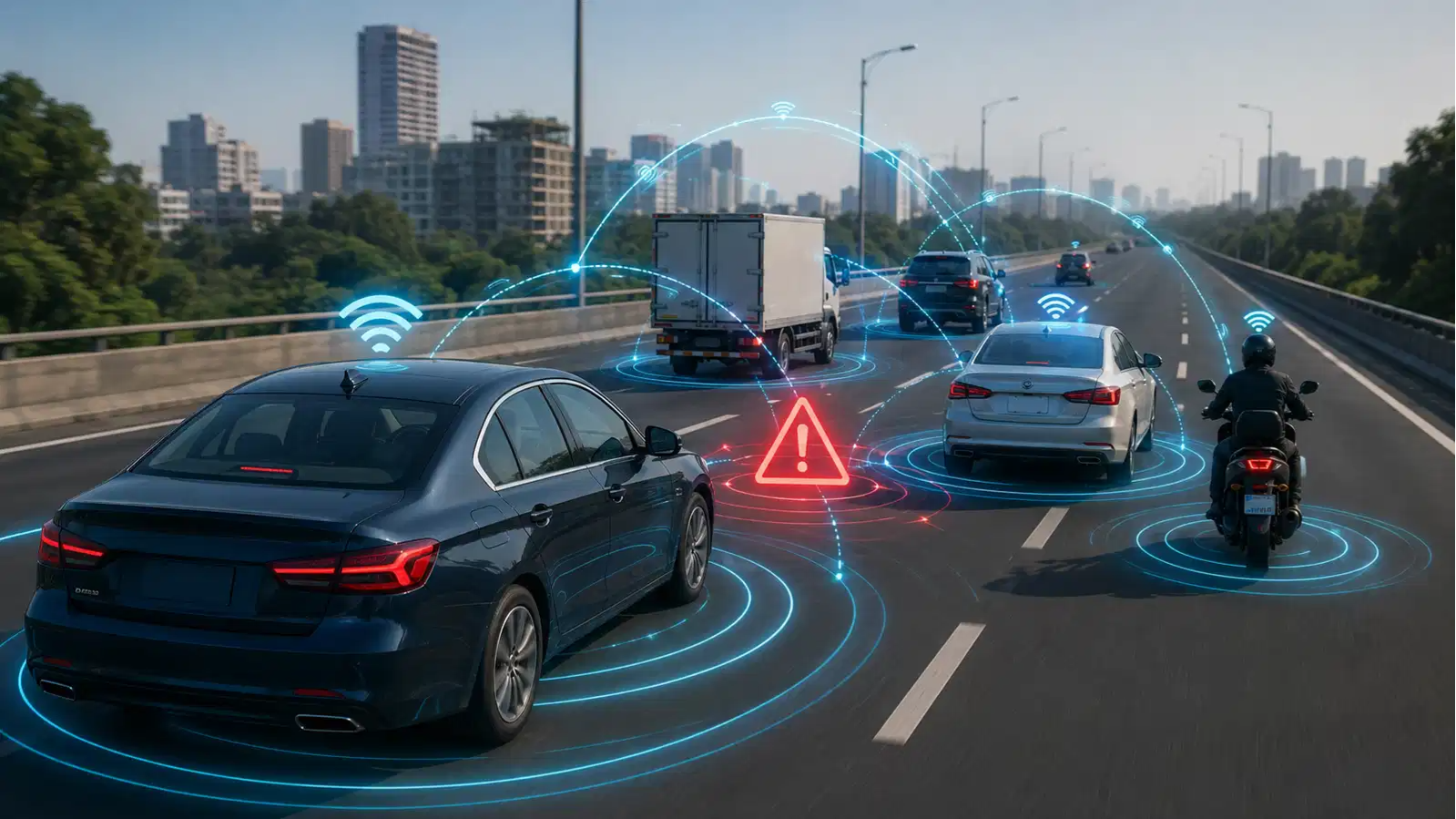
India is taking a significant step toward smarter and safer roads. The Centre has released draft standards for a Vehicle-to-Vehicle (V2V) communication system that would allow vehicles to exchange safety-related information directly with one another in real time.
The proposed framework aims to reduce road accidents by helping vehicles share critical data such as location, speed, direction, acceleration and braking status. The government has invited comments from stakeholders on the draft standard until June 20 before it is finalised.
What the proposed system will do
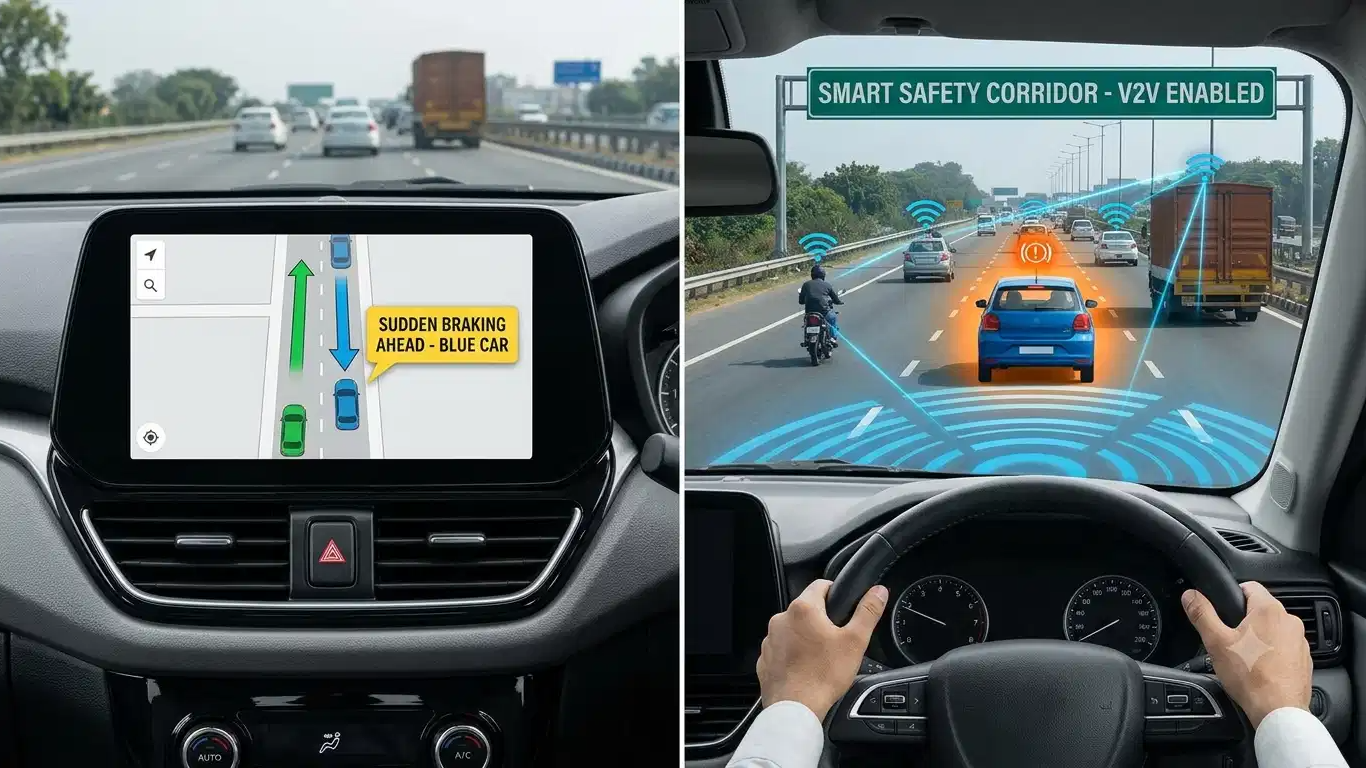
The V2V communication system is designed to alert drivers about potential dangers on the road before they become accidents. Vehicles equipped with the technology would be able to warn each other about sudden braking, stationary vehicles, road hazards and possible collisions, reported CNBC TV18.
Also Read | Red alert in Delhi: Thunderstorms, lightning and 90 kmph winds expected
The draft standard applies to factory-fitted on-board units (OBUs), which are communication devices installed in vehicles. It covers vehicle categories L, M and N, including two-wheelers, three-wheelers, passenger cars and goods vehicles.
The proposal was developed after the CMVR Technical Standing Committee agreed in May 2026 to formulate an Automotive Industry Standard for V2V-enabled vehicles.
How the technology works
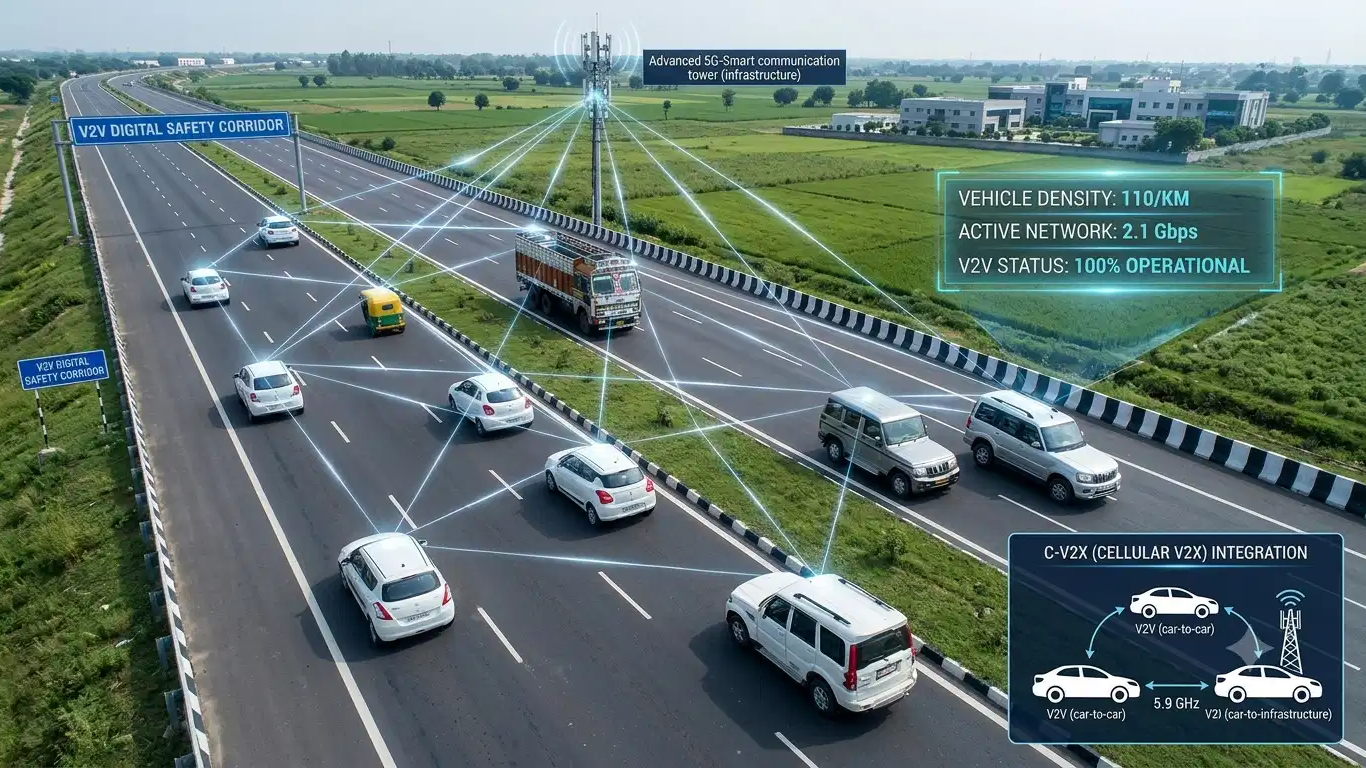
Per CNBC TV18, the system is based on Cellular Vehicle-to-Everything (C-V2X) technology. Unlike conventional communication systems, it allows vehicles to exchange information directly through dedicated radio frequencies without depending on mobile networks.
Also Read | 'Heightened alert': India ramps up maritime security after three sailors killed in Gulf attack
Safety applications under the standard will operate in the 5,875–5,905 MHz frequency band. An additional band between 5,905–5,925 MHz has been reserved for future intelligent transport applications.
At present, the draft focuses only on communication between vehicles. Standards covering communication with infrastructure, pedestrians and networks are expected to be introduced separately.
Navigation accuracy and future plans
The proposal makes satellite-based positioning a mandatory feature. Vehicles will be required to support NavIC, GPS and GAGAN to ensure accurate location tracking.
According to the draft, the system should provide position accuracy of 2.5 metres or better and update vehicle information at least ten times every second. It also includes congestion-control mechanisms to ensure safety messages continue reaching vehicles even in heavy traffic conditions, reported CNBC TV18.
Also Read | New fuel restrictions announced: Who can no longer buy petrol and diesel from pumps?
The V2V system was discussed earlier this year at a meeting of the Transport Development Council chaired by Union Minister Nitin Gadkari. Gadkari described the initiative as "revolutionary" and said it could reduce accidents by 80 per cent.
The estimated cost of installing the equipment is expected to range between Rs 5,000 and Rs 7,000 per vehicle.